
The first sign owners in Valley Stream, NY usually get is a ceiling tile that browns at the edge and lets a few drops fall in a heavy shower, and by then water has been moving through the roof for some time. Valley Stream is a village in the Town of Hempstead, Nassau County, on the Queens line, and the commercial roofs along Merrick Road and Rockaway Avenue carry the building stock we work on. Flat and low-slope roofs here get repaired, coated and replaced, and the work moves from the stain back to the cause one step at a time.
Which streets carry the commercial roofs?
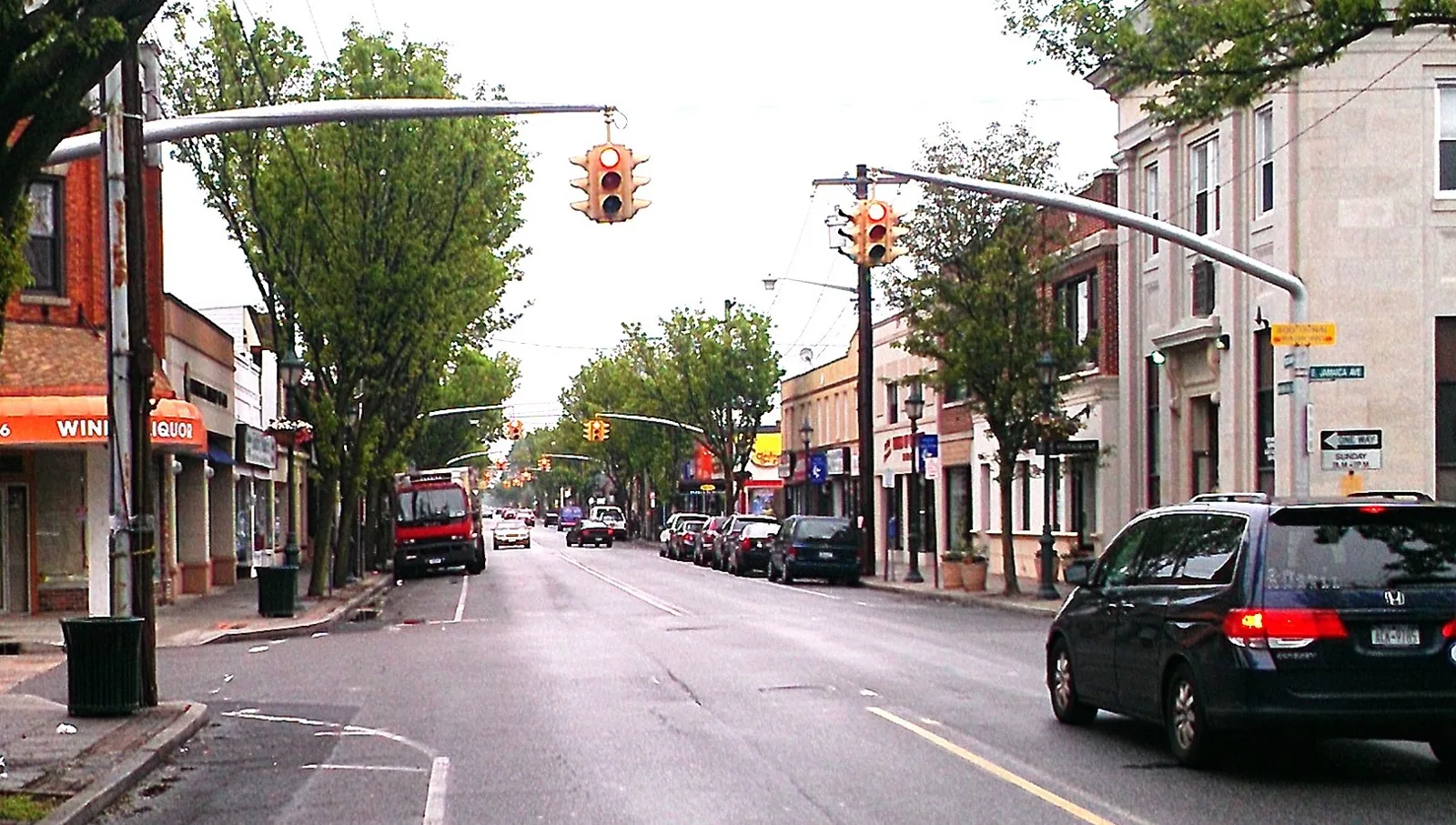
Merrick Road, built in 1853, became a major artery, and the buildings that grew up along an old road like that tend to be a mix of ages: low retail rows, offices over shops, service buildings and the occasional larger block. Rockaway Avenue is described as the village's business section, so storefront and professional-office roofs cluster there as well. Green Acres Mall is partially located in Valley Stream, which adds a large retail presence on the village's edge.
On buildings of these kinds, this is what we look for: a flat or low-slope surface, parapet walls shared with a neighbor, drains that were sized for the building as first built, and rooftop equipment added later by one tenant after another. Older rows often carry several layers of roofing laid on top of one another, and each added layer adds weight and hides the condition of the deck below.
What goes wrong on a retail row?
On a row of shops sharing a roof, the trouble starts at the equipment. Every exhaust fan, condenser and sign bracket is a penetration, and every tenant who adds one cuts another hole in the system. A sealant bead at a curb lasts a few years, then shrinks and cracks, and rain reaches the insulation. Because the roof is continuous, wet insulation can spread across several units before one tenant notices.
The second problem is drainage. A scupper through the parapet or an interior drain that is blocked by debris will pond water against a seam, and a seam that stays wet will find a pinhole. We clear and test each outlet, then check whether the roof actually slopes toward it. Ponding that remains forty-eight hours after rain is a sign of a low spot, not a clogged drain, and the fix is different. Correcting a low spot is a ponding water repair in its own right, usually with tapered insulation or an added drain.
What does a large retail roof ask for?
Green Acres Mall reaches partly into the village, and a roof over a mall is far wider than one over a row of shops, so it fails differently. A wide roof has long drainage runs, and a crowned or sagging area can hold water far from any outlet. It also has expansion movement across its length, which opens seams at joints and at the junction with taller walls. Rooftop units are many and heavy, and their curbs are the most frequent source of entry.
The practical answer is mapping. We walk a large roof in a grid, mark every curb, drain and patch on a sketch, and probe the seams that run through the low areas first. Repairs are then ranked by how much interior is at risk. Where a roof is large enough to justify it, a staged coating or a section-by-section replacement spreads the cost across budget years without leaving any portion exposed. Any new work follows the attachment and wind-uplift rules for the building, and we price each stage with its own materials, access and tenant hours spelled out.
How do we confirm where the water enters?
We begin with the tenant's description and the ceiling stain, then go to the roof directly above. A seam probe tells us whether the welded or adhered laps are tight. A hose at the drain shows how quickly water leaves. At curbs and walls we read the flashing, and where the surface alone cannot answer, an infrared moisture survey maps wet insulation after sunset.
The result is a written roof inspection that lists each finding with a photograph and recommends patch, repair or replacement. A property manager who holds several buildings can rank the roofs by urgency from it, and a prospective buyer can use it to understand the roof before closing.
What weather does a Valley Stream roof take?
Valley Stream sits just across the line from Queens, so the city's climate record is the nearest guide to the weather its roofs endure. Precipitation comes to about 49.5 inches in an average New York City year, snow to about 29.8 inches, and January 23, 2016 alone brought 27.3 inches. Hurricane Sandy's gusts, at hurricane force across the metro area, came in October 2012, and September 1, 2021 brought Hurricane Ida's remnants and the city's first flash flood emergency.
Each of those stresses a flat roof differently. Cloudbursts test drains, snow loads the deck and refreezes at outlets, and gusts lift edges and coping, while a typical July afternoon at Central Park reaches about 85 degrees and the heat island bakes dark membranes and widens seams. A sound plan allows for all four.
What are the options, and what drives the price?
A leak repair makes sense when a few details have failed and the insulation is dry. A coating restoration suits a worn but sound membrane. A recover is possible where code and weight allow, and a full replacement is the route for wet insulation or a roof that has reached the end of its life.
Price follows roof size, the number of penetrations, how much insulation must be replaced, access for materials, and the working hours tenants allow. Any system we price has to meet the building code that applies to the property, and we confirm which edition governs before the scope is written, since attachment and wind requirements can change the membrane and fastening plan.
What is the next step?
Photograph the stain and the nearest drain and send both, with the roof age if you know it. Before price comes up, we will tell you in plain steps what is happening up there. Owners in neighboring Elmont, in Jamaica and in Howard Beach start the same way.
Questions Owners Ask
What building owners and managers usually ask before a roof visit.
Wind-driven rain usually gets in at a vertical edge: the base of a parapet, a loose counterflashing or an open coping joint. Normal rain runs off the flat surface, but sideways rain pushes water behind the metal. We check the upper edge of the flashing and the sealant at wall joints before we look at the field of the roof.
The limit comes from the building code and from what the deck can carry, and both are checked before we add anything. If a core sample shows several layers with wet material between them, tearing off to the deck is the better route, because a new membrane over trapped water will fail early.
Treat it as a pattern. Two leaks in one year from different spots usually mean the whole membrane is aging, not that two details failed by chance. A moisture survey tells you how much of the roof is wet and whether coating, partial replacement or a new roof is the sensible path.
Yes. We stage the work by section, keep walkways and loading areas clear, and schedule noisy tasks for the quietest hours the tenants allow. Each section is made watertight before the next opens.
A patch is a stiff material laid onto a membrane that keeps moving with heat and cold. The edge of the patch becomes a new seam where movement concentrates, and water enters there. We feather the edges, use compatible materials and reinforce corners, and where a roof has many patches, we advise recoating or replacing it instead of adding another.
Related Roofing Work
Other pages that connect to Valley Stream.
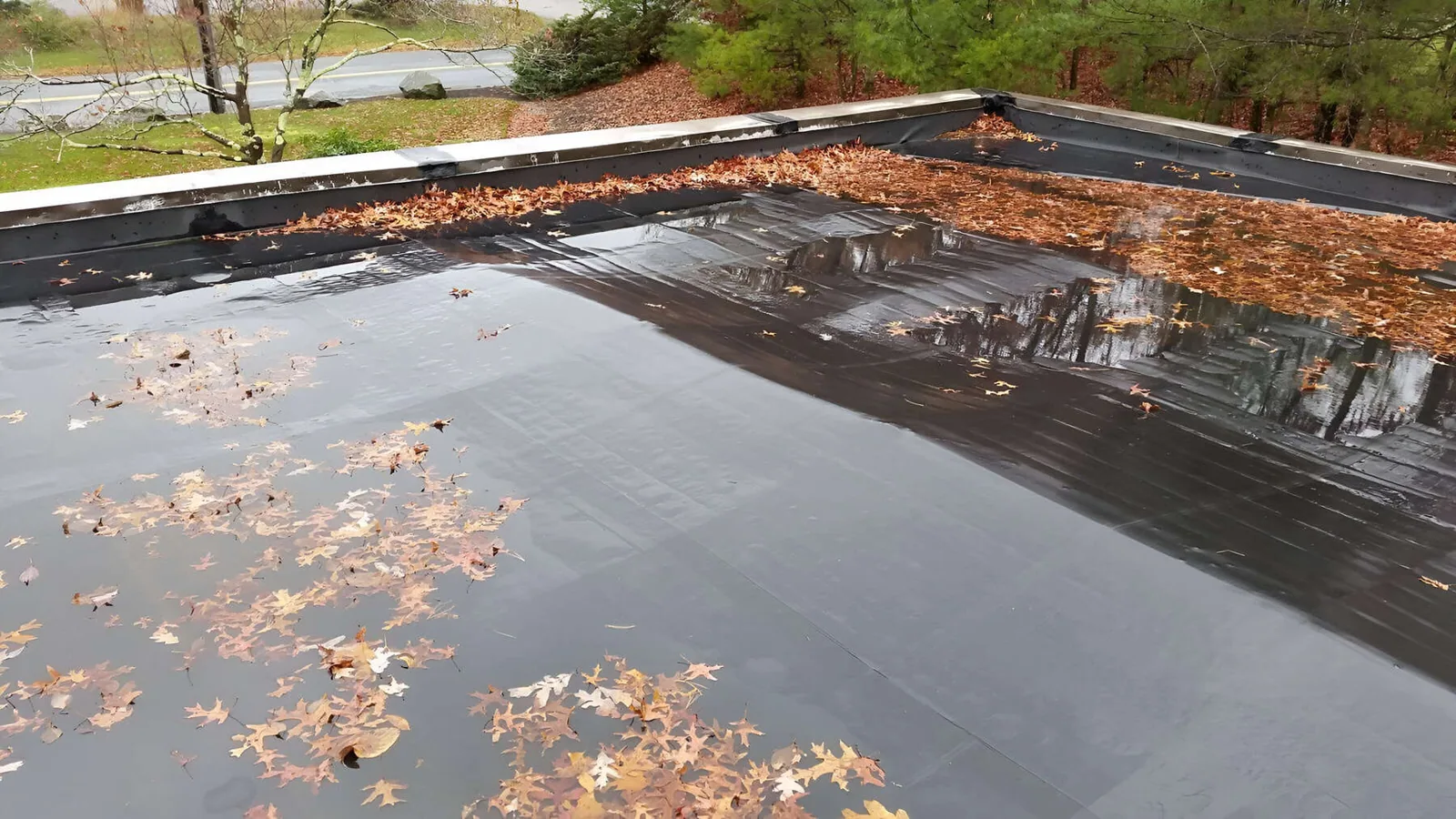
Ponding Water Roof Repair
Ponding water roof repair in Queens, NY: why standing water forms on flat roofs, how it ages the membrane and the drain, slope and insulation fixes that end it.
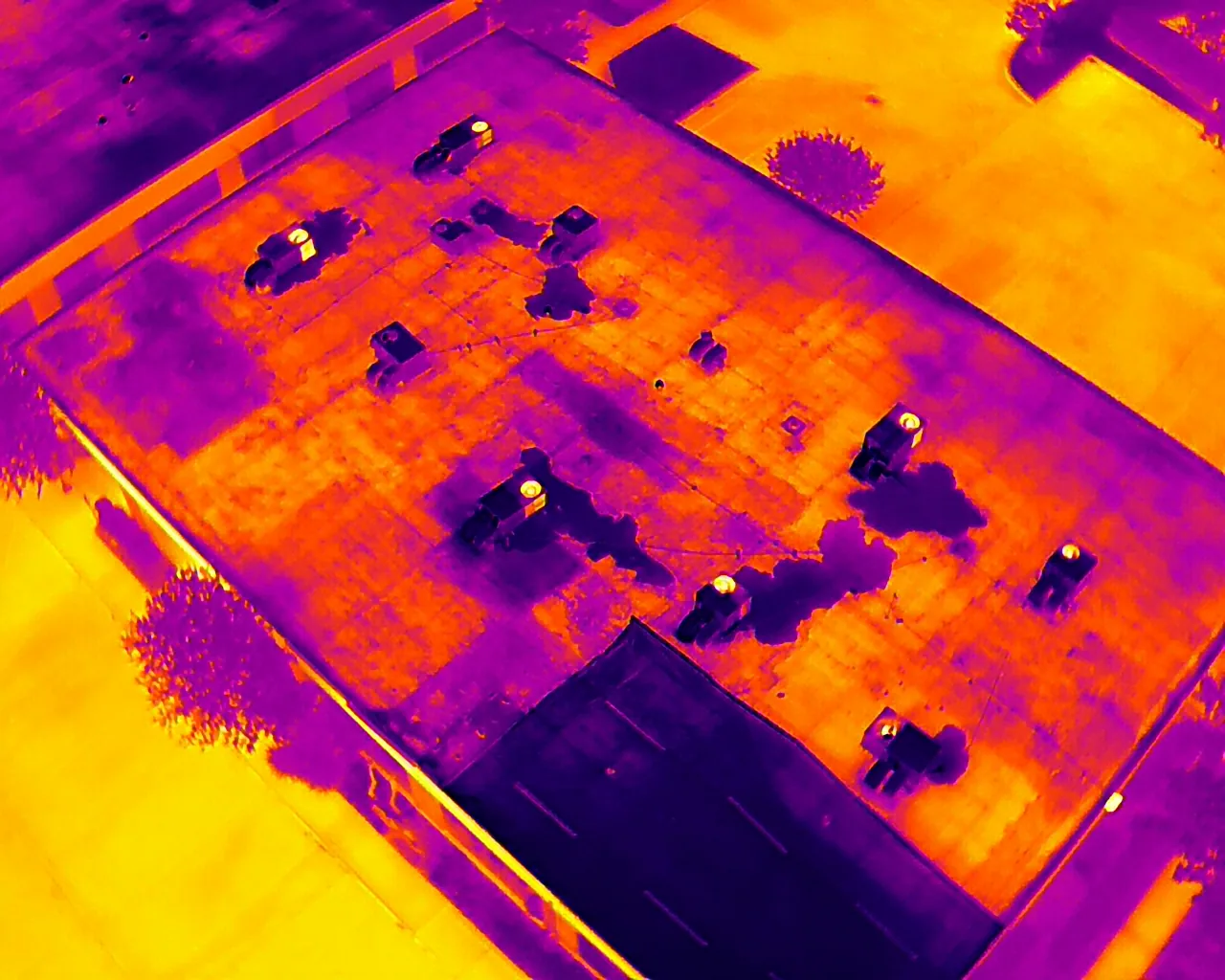
Infrared Roof Moisture Surveys
Infrared scans and core-cut moisture surveys for Queens, NY commercial roofs that locate wet insulation before the owner commits to repair or replacement.
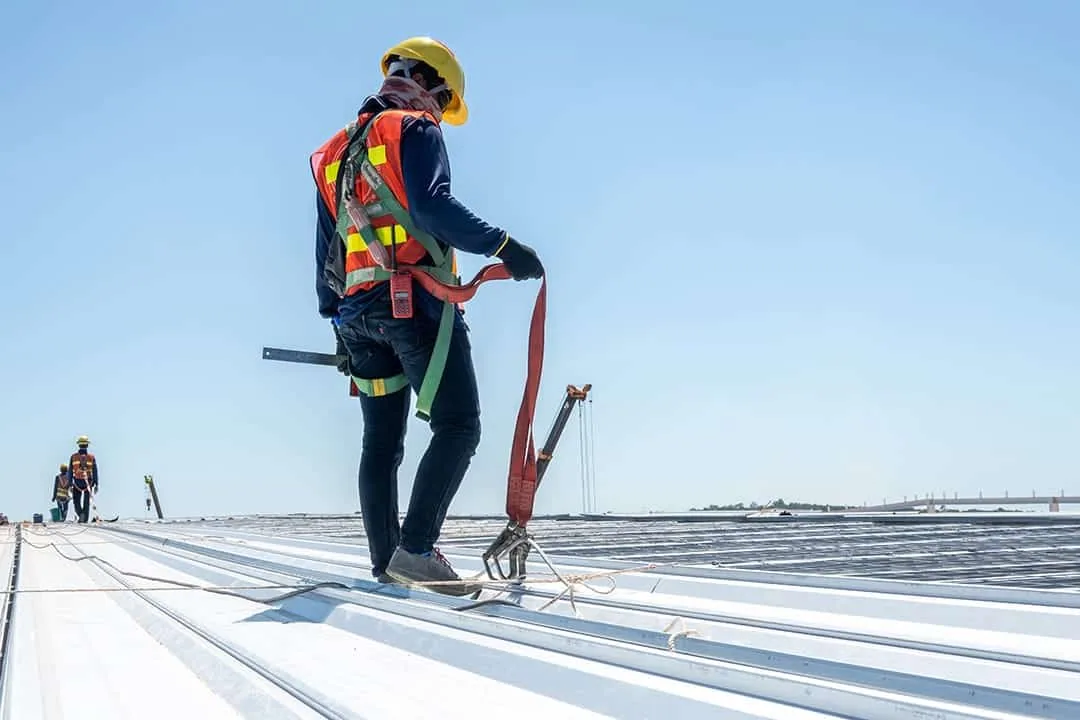
Commercial Roof Inspections
Hands-on commercial roof inspections in Queens, NY, with written findings, photographs and a ranked list of what to fix now and what can wait.
Ready to Talk About Valley Stream?
Tell us about the building and what you are seeing. We will schedule a roof walk and send photos and a written scope.