
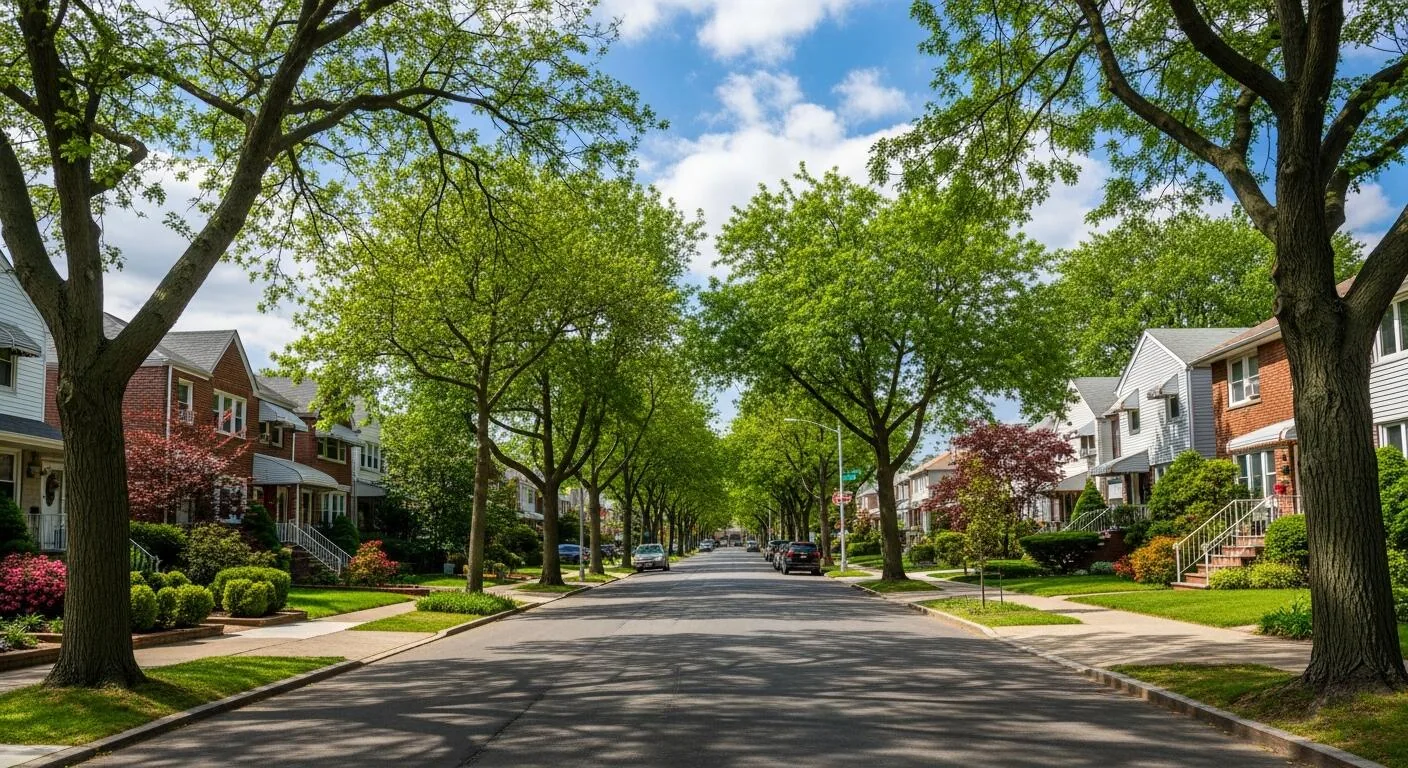
Water still standing on a roof two days after the rain stopped tells us more than the leak does. In Springfield Gardens, Queens, NY, where commercial buildings line Merrick, Springfield, Rockaway, Farmers and Guy R. Brewer Boulevards, a pond like that usually points to a drain that cannot keep up or a deck that has dipped. The water then works at the nearest seam. We repair, coat and replace flat and low-slope commercial roofs in this part of southeast Queens, and our first job is always to find where the water was trying to go.
What does the setting mean for a commercial roof?
John F. Kennedy International Airport bounds the neighborhood on the south. It covers 5,200 acres in neighboring Jamaica and moved more than 1.5 million US tons of cargo in 2025, and a commercial building beside an operation that size still needs what any other needs: a roof that keeps stock, equipment and staff dry. A first visit reads the roof itself, measures its layers and notes its drains before anything is said about what it needs.
Five boulevards carry the neighborhood's traffic, and a roof beside a busy road collects grit, tire dust and debris that settle in drains and low corners. Debris is the quiet cause of ponding: a strainer that is a third blocked still drains in light rain and fails in a cloudburst, the lesson Hurricane Ida's remnants taught the borough in September 2021.
Where does a flat roof fail first?
Water goes after the details before it goes after the field of the membrane. On a low-slope roof, the first places we probe are the perimeter edge, the base of each curb, any pipe or vent boot, and the laps where one sheet overlaps another. Flashing at a parapet wall is the most common weak point because it takes movement from both the wall and the roof deck, and sealant there cracks as the building heats and cools.
The second place is the low spot. A roof that is meant to fall toward a drain will, over years, settle or sag between supports, and the water collects in that shallow bowl. Water sitting on a membrane for more than a day or two stresses seams, leaves mineral deposits and invites growth. A ponding repair may mean adding a drain, building up the low area with tapered insulation, or recovering part of the roof.
What changes in a registered historic district?
Part of Springfield Gardens lies in a registered historic district, and that can affect exterior work on buildings inside it. For a roof, the question is what counts as exterior: visible edge metal, parapet coping, a new rooftop unit that can be seen from the street. A flat roof behind a parapet may be less visible than a pitched one, but the materials of the visible edge are often reviewed.
The way through is to learn early whether a building sits inside the district and which parts of the work would be reviewed, and to price the job with that review time in the schedule. An owner who hands over the address and any prior approvals lets us confirm it before promising a start date. Skipping the question risks a stop-work notice halfway through, with a half-opened roof exposed to the next storm.
How do we confirm what is wet?
We begin with the ceiling and walk up. At the roof, a seam probe tells us whether a lap has opened, and a hose test at the suspect drain shows how quickly it clears. When the surface looks acceptable and the ceiling keeps staining, an infrared moisture survey at dusk shows warm, wet insulation as a pattern we can mark with paint. That saves cutting test squares across a whole roof.
The written roof inspection that follows lists each problem with a photograph, a location on a sketch and a plan marked patch, repair or replace. Owners who run more than one building use it to rank the work, and a lender or insurer reviewing a property can read it without a site visit.
Which weather events should the roof be built for?
New York City gets about 49.5 inches of precipitation in an average year, and the storms matter more than the average. Before Hurricane Sandy arrived in October 2012, the whole Rockaway peninsula was placed under a mandatory evacuation order, and Maspeth ended up with six feet of water. A storm of that kind pushes rain sideways under edge metal and coping, so those parts need fasteners and sealant that can resist uplift as well as water.
Snow comes less often but harder: 27.3 inches fell in one day on January 23, 2016. Membranes stretch and seams pull apart over time under a strong heat island, with July afternoons near 85 degrees on average at Central Park.
What are the repair options, and what do they cost?
A roof with a few failed details and sound insulation suits a leak repair. A coating restoration suits a worn membrane over dry insulation, and it can be done with the building occupied. A recover or full replacement is the route when insulation is wet or several layers have built up.
Price follows roof size, access, the number of penetrations, how much insulation must come out and whether the building sits inside the historic district. Schedule follows weather and tenant hours, and a flat roof cannot be left open overnight when rain is forecast, so we stage the tear-off in sections that can be dried in each day. Chapter 15 of the NYC Building Code governs roof assemblies, so every option has to meet it.
What is the next step?
A photograph of the stain and another of the nearest drain are the way to begin, and the roof age helps if you have it. Once on the roof, we explain in plain steps what it is doing, and a price comes last. Owners in Jamaica and Howard Beach begin the same way.
Questions Owners Ask
What building owners and managers usually ask before a roof visit.
A clear strainer only proves the opening is open. The roof may have settled so the drain sits higher than the low spot beside it, or the pipe below may be partly blocked. We run water to the drain and watch how fast it clears, then check the deck for sag with a straightedge before recommending tapered insulation or a new drain.
It can, if visible exterior parts change. Our plan is to confirm district status at the start and bring any approval work into the schedule. Work that is hidden behind a parapet is typically simpler than work that alters an edge visible from the street.
Coatings work when the membrane is sound and the insulation is dry. We test both first. A reflective coating also cuts surface heat, which helps with the urban heat island effect. If the insulation is wet, coating traps moisture, and we recommend removal or a recover.
Anything that tells us the build-up: the age of the last roof, past repair records, and any warranty paperwork. Core samples from the roof itself fill gaps. Knowing the layers shapes how we plan removal and what the building code requires for the new assembly.
Emergency calls are answered around the clock, including holidays. A temporary seal, a tarp or a patch at the entry point can stop interior damage the same day, and we follow with a full repair plan once the roof is dry.
Related Roofing Work
Other pages that connect to Springfield Gardens.
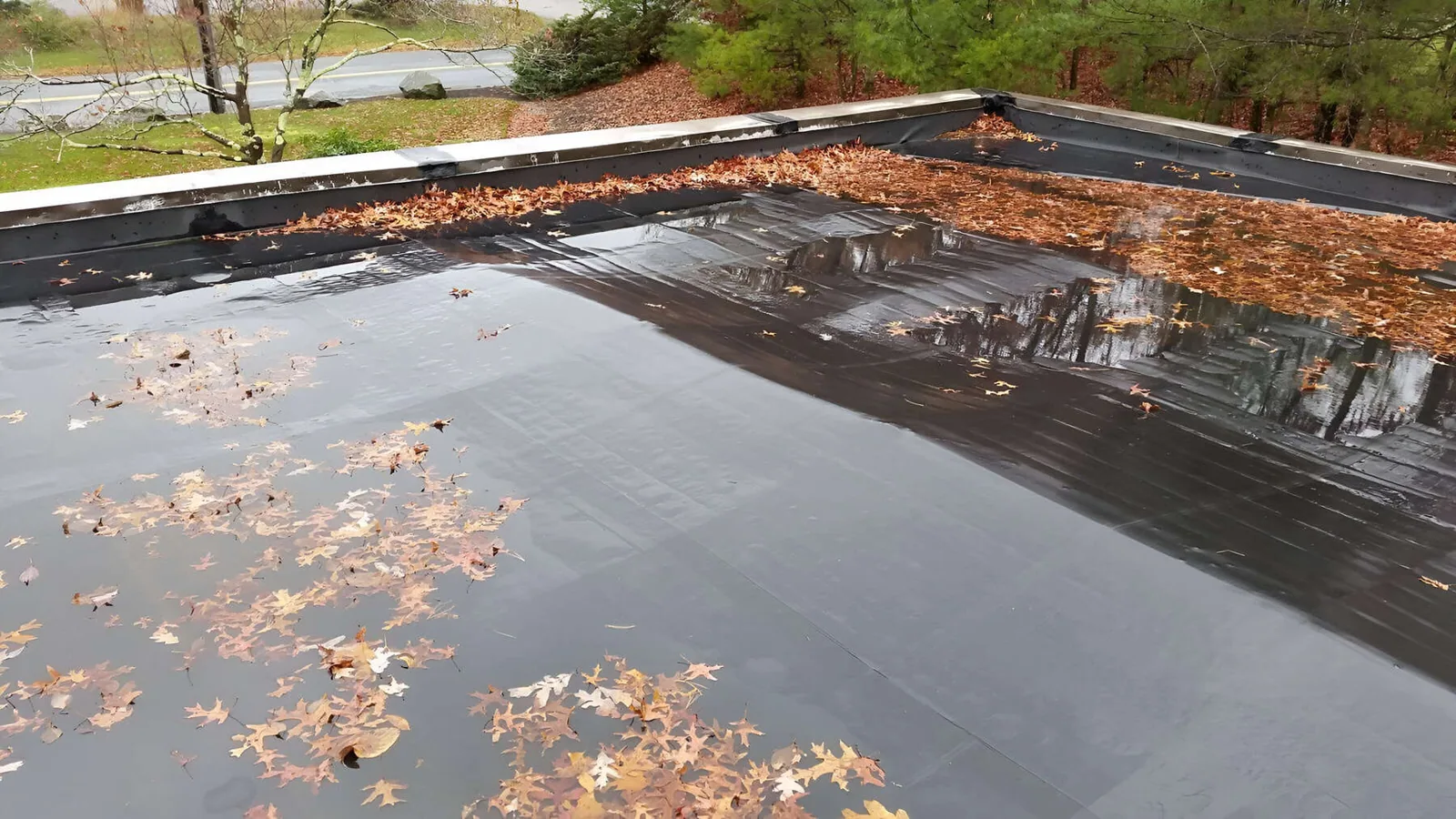
Ponding Water Roof Repair
Ponding water roof repair in Queens, NY: why standing water forms on flat roofs, how it ages the membrane and the drain, slope and insulation fixes that end it.
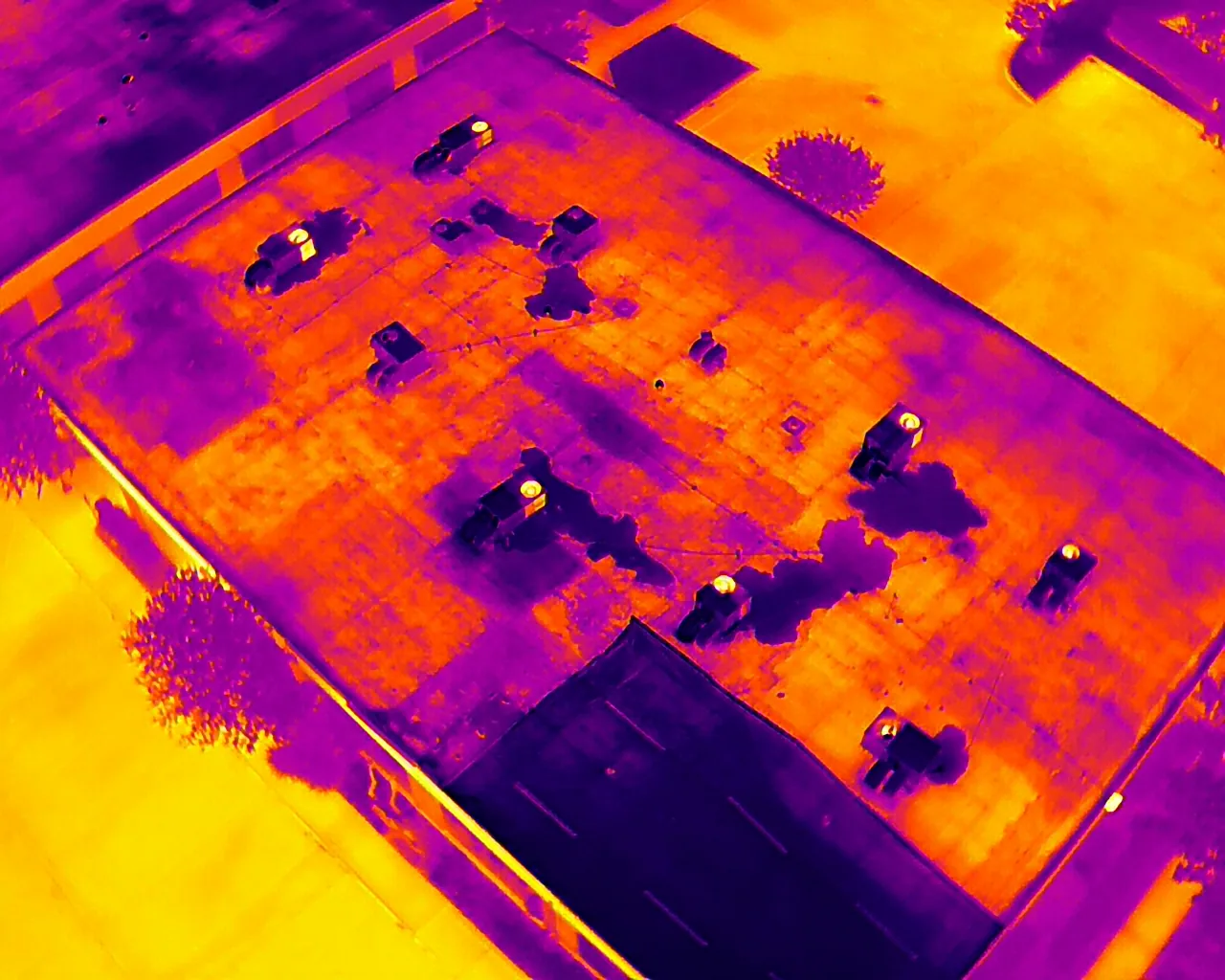
Infrared Roof Moisture Surveys
Infrared scans and core-cut moisture surveys for Queens, NY commercial roofs that locate wet insulation before the owner commits to repair or replacement.
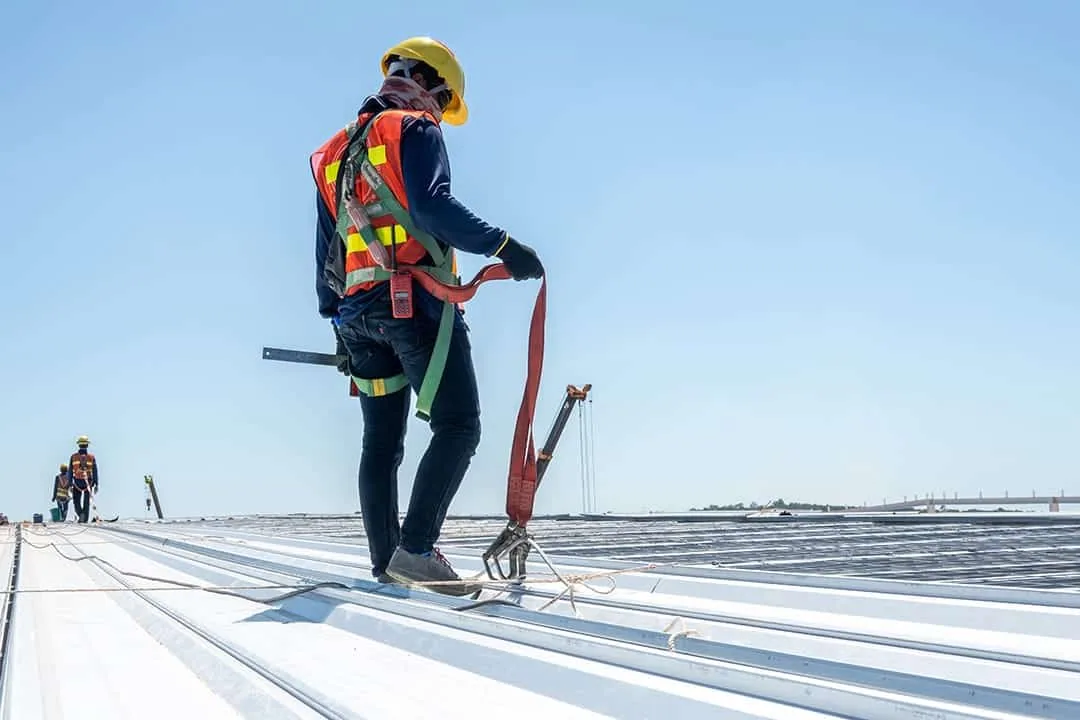
Commercial Roof Inspections
Hands-on commercial roof inspections in Queens, NY, with written findings, photographs and a ranked list of what to fix now and what can wait.
Ready to Talk About Springfield Gardens?
Tell us about the building and what you are seeing. We will schedule a roof walk and send photos and a written scope.