
The usual first sign is a bucket under a drip in the back room of a shop, set under a spot that lines up with nothing on the roof. Where small commercial buildings crowd busy streets, as in Corona, Queens, NY, the roof above a storefront can be a single flat surface with one drain, a few vents and a parapet shared with a neighbor. The water that fills the bucket came in somewhere else and ran along the deck before it fell.
Corona's main thoroughfares are Corona Avenue, Roosevelt Avenue, Northern Boulevard, Junction Boulevard and 108th Street. Along streets like those, buildings are close together, roofs are close to the street, and access is tight. We start every job by finding out how the roof is reached, then by finding out where its water goes. The first tells us how the work will be staged, and the second tells us what to fix.
What are the roofs like on the main streets?
The construction of a given building is learned on the roof, but a flat storefront roof has predictable needs. The drain is a single point, and if it clogs the whole roof ponds. The parapet is the main edge, and its cap and base flashing take most of the weather. Rooftop items such as exhaust fans, air conditioners and signs each pierce the roof. Roofs that serve a ground-floor business with apartments above also carry vent stacks and sometimes a stair bulkhead.
The first walk covers those items in order: drain, parapet, penetrations, then the field. If a leak shows only in wind-driven rain, we test the flashing from the windward side. If it shows after any rain, we test the drain and the low points. Following the order saves us from replacing a sound roof when a single detail has failed.
Shared walls are the other recurring issue. Two shops that share a parapet share its flashing, and a roof that ends in a taller neighbor's wall sheds water against it. Where we find ponding against a shared wall, we check whether the neighbor's work has changed the slope, and we record the heights on both sides so the owners can settle practical questions with facts.
What does a pedestrian plaza change?
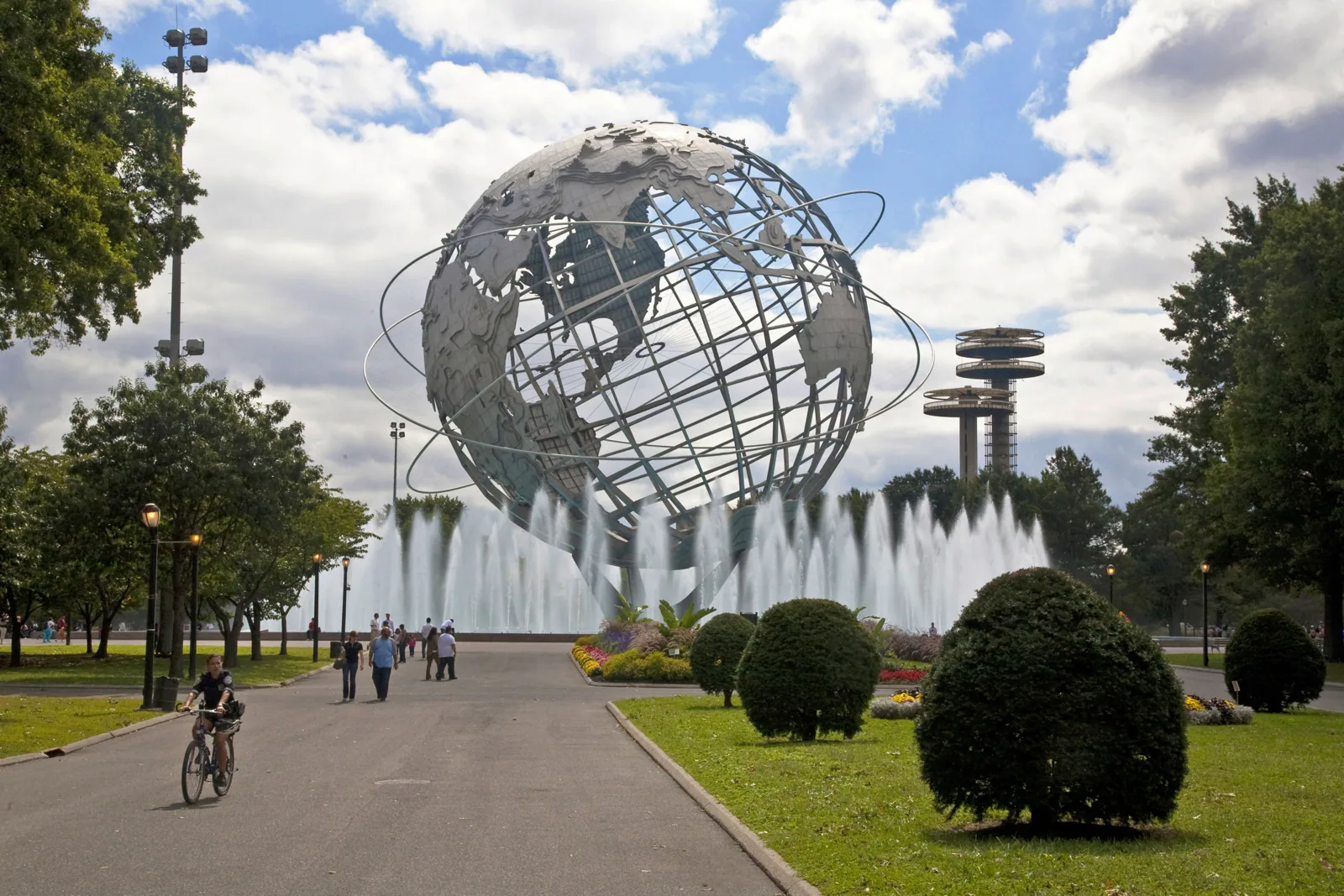
Corona Plaza was an underused lot and truck route before it became a pedestrian plaza, completed in early 2018. A change like that alters how nearby buildings are reached and used, so deliveries may shift to a different side and uses may change, and any new vent or sign on a roof is another penetration to flash. Roof work near the plaza has to be planned with that street life in mind.
Hoisting and staging near a pedestrian space must keep walkways clear, and noisy or messy steps are scheduled for hours when the street is quiet. The building manager and the neighbors who need to know hear about the hoist route and the working hours before the first day, because a roof job that ignores the street below tends to draw more complaints than leaks do.
What does the park edge mean for the roof?
Flushing Meadows-Corona Park borders Corona on the east. Open land beside a neighborhood leaves nothing to break up the wind before it reaches nearby buildings, and trees and open ground send leaves, seeds and debris onto roofs and into drains. For buildings on that side, edge metal and coping, which face the wind first, and the drain baskets that fill with leaf litter in autumn get particular attention.
A seasonal calendar suits these buildings well. Late autumn is the time to clear leaf litter and secure edge metal before winter. Spring is the time to probe seams and flashings after the freeze. A short visit twice a year, with photographs, is easy for a shop owner to afford and builds a record that helps when it is time to budget for larger work.
How do storms test a Corona roof?
On September 1, 2021 Hurricane Ida's remnants produced the city's first flash flood emergency, and the heaviest loss of life was in Queens. In rain like that a flat roof with a single drain can fill in minutes, and the water then finds every weak seam and flashing. We look for an overflow path, such as a scupper through the parapet, and recommend one where the wall allows.
Winter brings its own work. Snow in the city averages around 29.8 inches a year, and 27.3 inches came down on January 23, 2016. Freeze-thaw cycles open sealant joints, and ice at a drain sends water backward. A snow and ice repair after a hard winter is usually about the drain, the edge and the flashing, not the field.
What are the repair options?
Most storefront roofs need a repair before they need a new roof. Clearing and resetting the drain, rebuilding a failed flashing, replacing a cracked pipe boot or patching a seam fixes the common causes, and a commercial roof repair can be done in a visit. If the surface is worn but dry and bonded, a coating may extend life. If insulation is wet over a large area, we cut it out, and if the roof is wet throughout, replacement is the sensible path. A moisture scan tells us which case we have. Cost follows access, the number of penetrations, the length of parapet and the amount of wet material.
Access shapes the schedule on Corona's busy streets. A roof reached by an interior ladder through a stockroom needs a different plan from one with a stair bulkhead, and a building with no loading zone needs a hoist or a lift set up in a way the street will allow. We confirm all of this on the walk, with the manager, so that the quote reflects the real conditions and no surprise arises on the first day. Summer heat and the strong urban heat island also matter, since adhesives and sealants have temperature limits, and we schedule sensitive steps for the cooler part of the day.
What is the next step?
Send the street, the roof age and photos of the drip and the drain. We walk the roof, test the details and describe in plain steps what it is doing, with price afterward. Owners in neighboring Elmhurst and East Elmhurst take the same route.
Questions Owners Ask
What building owners and managers usually ask before a roof visit.
Water runs along the deck, the framing and ductwork until it finds a gap. The drip shows where it finds the gap, not where it came in. We trace the water uphill, count from the nearest wall and test each suspect detail with a hose.
Usually yes. We work from the roof or the rear, protect entrances, keep noise to agreed hours and close the roof watertight each day. Interior protection goes up first if the work is directly over stock or equipment.
Keep the drain strainer clear, remove leaves after the autumn fall and check after storms. Debris in a drain is the cheapest way to turn an ordinary rain into a ponding problem.
It is a small job compared with a roof replacement, and cost follows wall construction, flashing and sealing. It gives the roof a second path for water if the drain fails, which is worth having.
Please send photos of the drip, the drain area and the parapet, with the street and the roof age if you know it. We explain in plain steps what the roof is doing first, and price comes later.
Related Roofing Work
Other pages that connect to Corona.
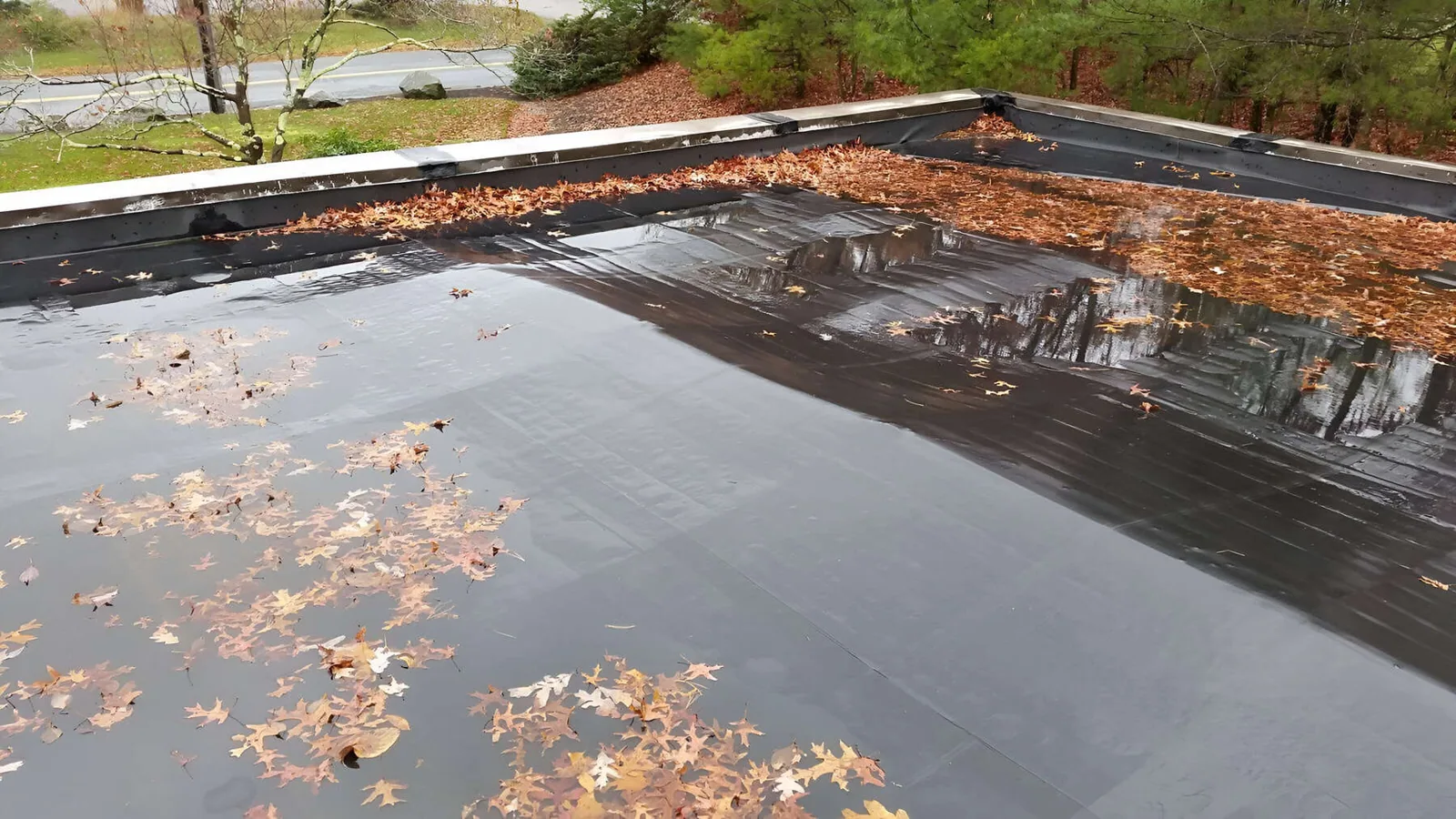
Ponding Water Roof Repair
Ponding water roof repair in Queens, NY: why standing water forms on flat roofs, how it ages the membrane and the drain, slope and insulation fixes that end it.
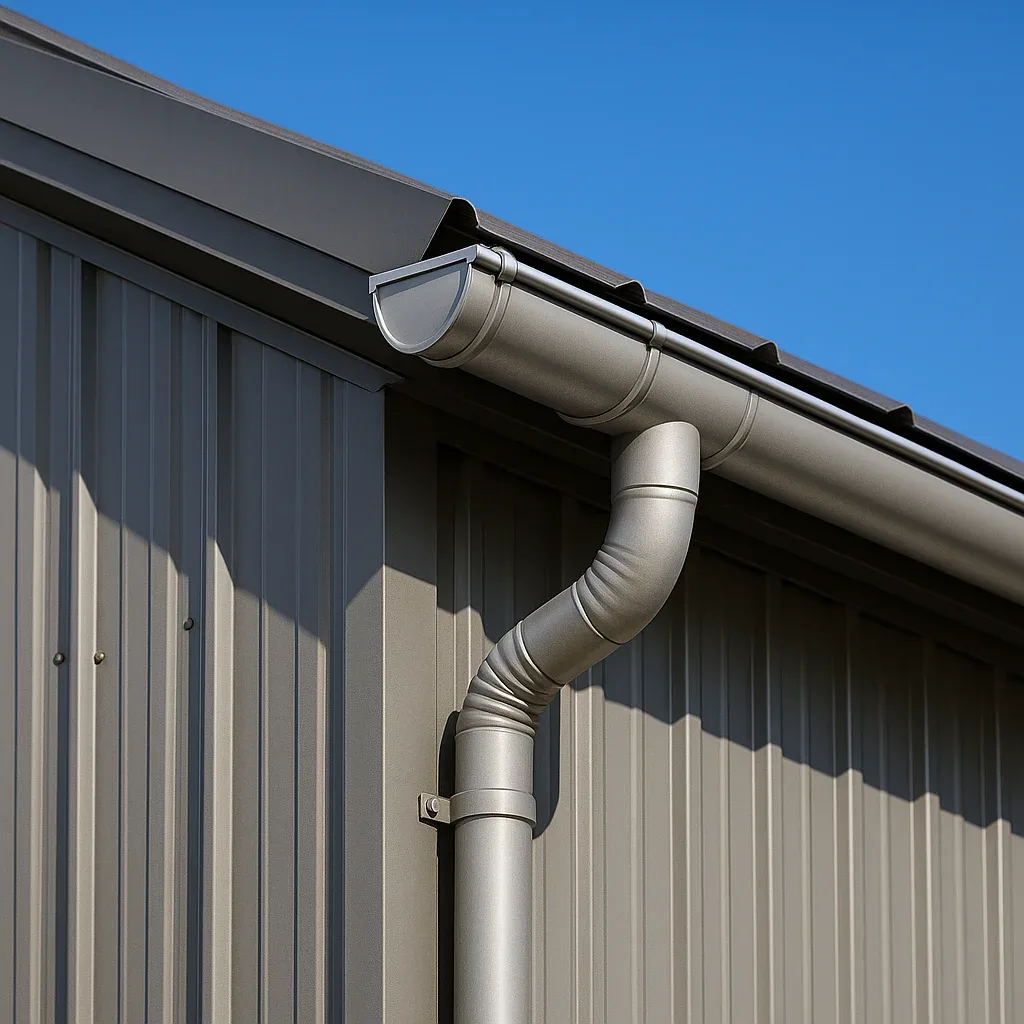
Edge Metal, Coping and Gutters
Edge metal, coping, gutter and downspout repair for commercial roofs in Queens, NY: wind uplift, open joints, brick staining and drainage at the roof edge.
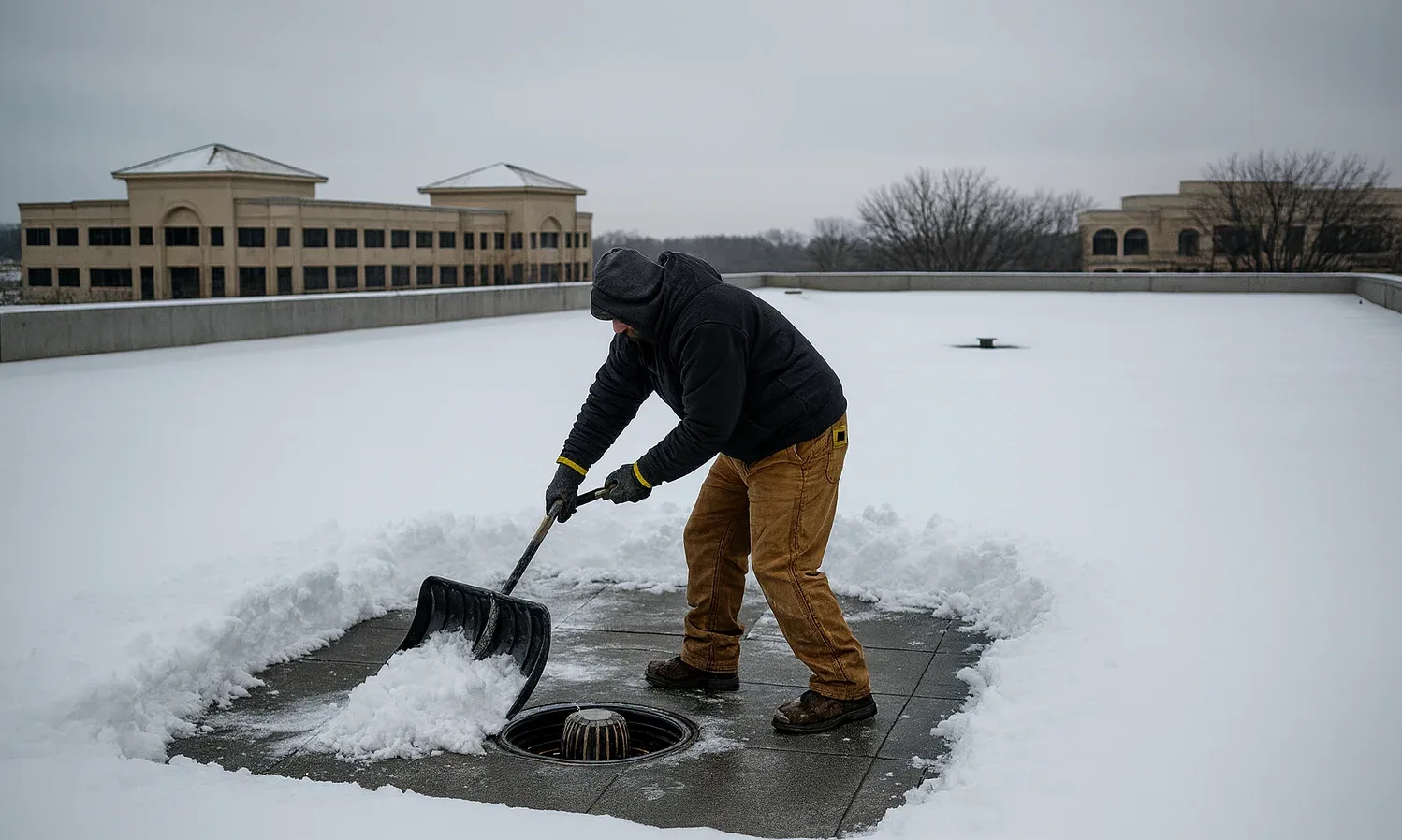
Snow and Ice Roof Damage Repair
Snow and ice roof damage repair in Queens, NY: drift loads, ice at drains and scuppers, freeze-thaw seam damage and shoveling cuts on commercial flat roofs.
Ready to Talk About Corona?
Tell us about the building and what you are seeing. We will schedule a roof walk and send photos and a written scope.