

A buyer under contract has a few weeks to learn what the seller never wrote down, and the roof is one of the items that can change the price. A seller's listing says the roof is sound. The buyer's lender wants to know what that means in numbers. A due diligence roof survey answers in the time available: what the roof is, what shape it is in, what it needs this year and what it will need before the loan is repaid.
What does a due diligence survey cover?
The survey covers four things. Identity: roof area, system, age, layers and any warranty. Condition: surface, seams, flashings, drains, edges and penetrations, each rated and photographed. Moisture: an infrared moisture scan with cores where needed, mapped on a plan. Cost: a list of immediate repairs and a schedule of future work with planning ranges.
The output is a report written for people who did not see the roof. The first page gives the conclusion: whether the roof is sound, whether it needs near-term money and how long it can be expected to serve. The pages after it carry the evidence. A reader on a deal team can scan the first page and a lender's engineer can study the rest.
Equipment gets its own list. Rooftop units, solar arrays, antennas and exhaust fans each sit on or in the roof, and their ages and curbs affect the cost of any future roofing. A tenant's equipment may belong to the tenant, but its flashing belongs to the roof, and the report separates the two so the buyer sees who is responsible.
How does it fit a deal timeline?
Walk it with me. The first step is the request: the buyer or lender names the property, the access contact and the deadline. The second step is access: we arrange a day with the seller or manager, often within a few days of the request. The third step is the survey itself, usually a day on site for a typical building, with moisture scanning planned for the evening when roofs show heat patterns best. The fourth step is the report, delivered within days of the visit.
Tight schedules need clear communication. We send an early call on anything that could change the deal, such as wet insulation across a large share of the roof or a failed section. A big finding can move a price or a closing date, and the buyer should hear it before the report is written, not after.
Access is the usual bottleneck. Roofs may be reached by a ladder, a hatch or a fixed stair, and a locked door can cost half a day. We ask early who holds the key, whether a lift is needed and whether tenants must be notified. A buyer who arranges access before the survey saves the deal team a day.
How do we express cost and remaining life?
Two figures matter to a buyer. The first is immediate repair: the work needed now to make the roof sound, such as new flashings, drain work and patches. The second is the reserve: money to set aside for the work that will come, such as a coating in a few years or a replacement later. Both are ranges, since price depends on scope, access and season.
Remaining life is an estimate. It rests on the roof's condition, its system and how well it has been maintained, and we explain the assumptions. A roof capital plan extends the reserve into a schedule for owners who plan to hold the building. A buyer who plans to sell soon cares more about the next two years than the next fifteen.
Where do these surveys come up in Queens?
Acquisitions here reflect the borough's mix. A survey in Long Island City often meets old masonry roofs beside newer mixed-use ones, a result of the 2001 change from industrial to residential zoning and the conversion of former factories and bakeries. More than 200 companies were counted by 2003 in College Point Corporate Park, which sprawls over about 550 acres. Queens Center in Elmhurst reaches about 1,000,000 square feet of gross leasable area, while Rego Center Phase II brings 950,000 square feet of retail to 62nd Drive.
Each property type asks something different of a survey. An old industrial building calls for a core-heavy look, a shopping center roof for a lease-aware view because the roof is shared, and a mixed-use building for attention to terraces and bulkheads. A deal in Long Island City and one in Rego Park would each get the approach that fits.
What are the limits of a survey?
A survey sees the roof on the day it visits. Weather, access and time all limit what can be found. We cannot see under pavers without lifting some, and we cannot test every square foot with a core. We say what was covered, what was not and how much confidence each finding deserves.
Weather is a known unknown. On September 1, 2021 Hurricane Ida's remnants reached the city, and the flash flood emergency that followed, the first New York had ever declared, came with Queens suffering the greater part of the deaths. A roof that looks fine in dry weather may pond or leak in a storm. For that reason we check drains, look at ponding marks and read the leak history, and we recommend a follow-up after the first heavy rain for roofs that raise a question. A condition report can follow after closing.
Documents help us read the roof. Past invoices, plans, warranty papers and earlier reports let us compare what the seller says with what we find. A discrepancy, such as a roof described as five years old that shows signs of twice that, is itself a finding, and we flag it in the report.
What is the next step?
Send the property address, the contract or loan timeline and the contact who can arrange roof access, with any roof papers you have. We will explain in plain steps what the survey would cover and how soon a report could follow, with price after.
Questions Owners Ask
What building owners and managers usually ask before a roof visit.
Often within days of the request, depending on access and weather. We ask for the earliest date the seller or manager can open the roof and plan around it. Large portfolios are done in phases so the first buildings reach the deal team early.
Not always. A walk and a moisture scan may be enough for a recently installed, well-documented roof. Older roofs and doubtful scan results call for cores. We recommend how many are needed. Cores are small, patched the same day and photographed for the report.
They can. Immediate repair costs and near-term replacement needs are items buyers raise in negotiation. We give the figures and the evidence so both sides can discuss them. Some buyers ask for a credit at closing, others ask the seller to complete repairs first.
Lenders have their own requirements, and many accept a qualified third-party roof report. We can format ours to match what the lender's engineer asks for if we get the requirements early. A short call with the engineer before the visit usually settles the format.
Send the address, the deal timeline, an access contact and any roof papers, such as plans, invoices and warranties. Tell us if a lender has a specific format. If the seller has a roof contractor on record, their name and the last visit date are useful. Floor plans showing tenant spaces under the roof help us match stains to areas.
Related Roofing Work
Other pages that connect to Due Diligence Roof Surveys.
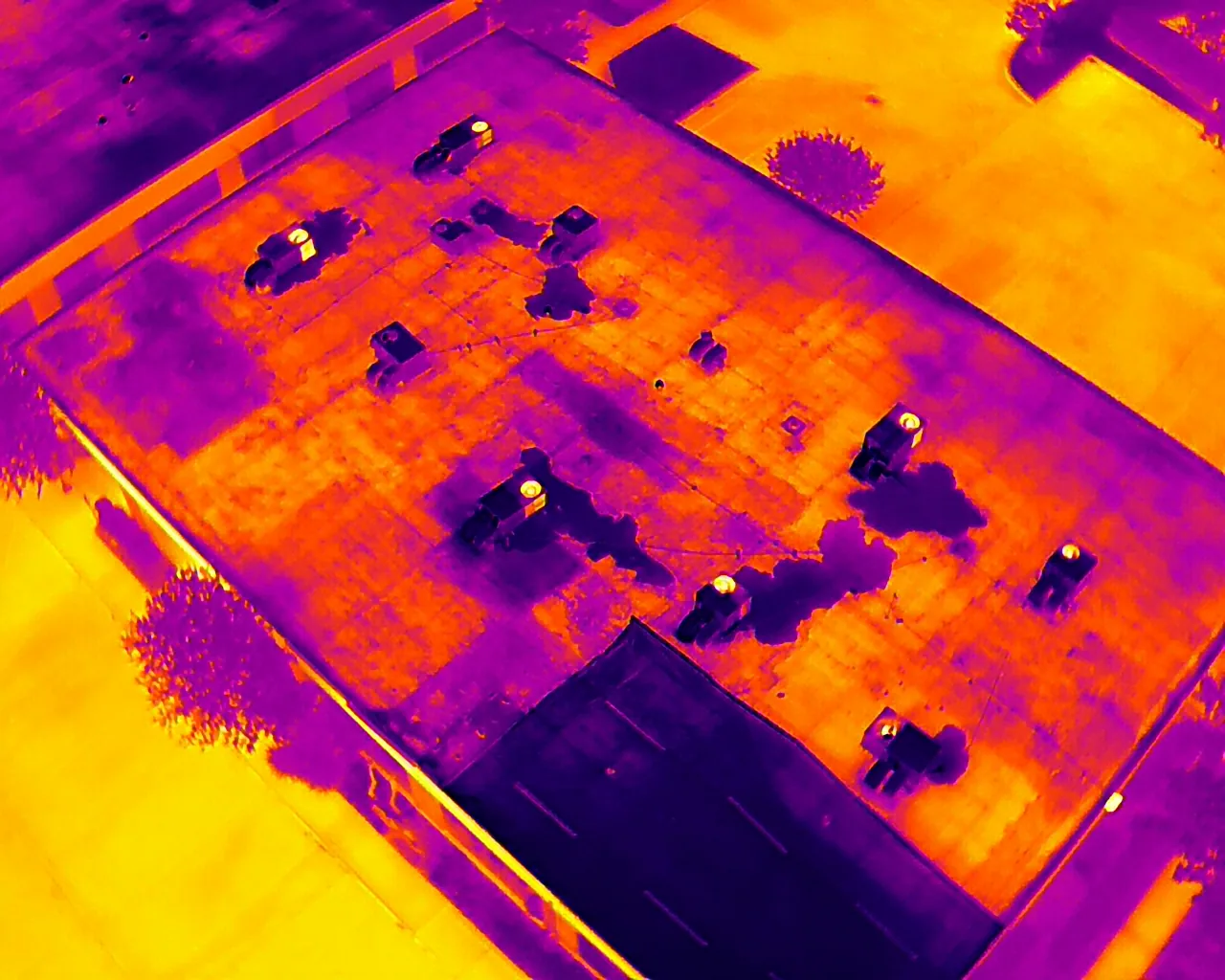
Infrared Roof Moisture Surveys
Infrared scans and core-cut moisture surveys for Queens, NY commercial roofs that locate wet insulation before the owner commits to repair or replacement.
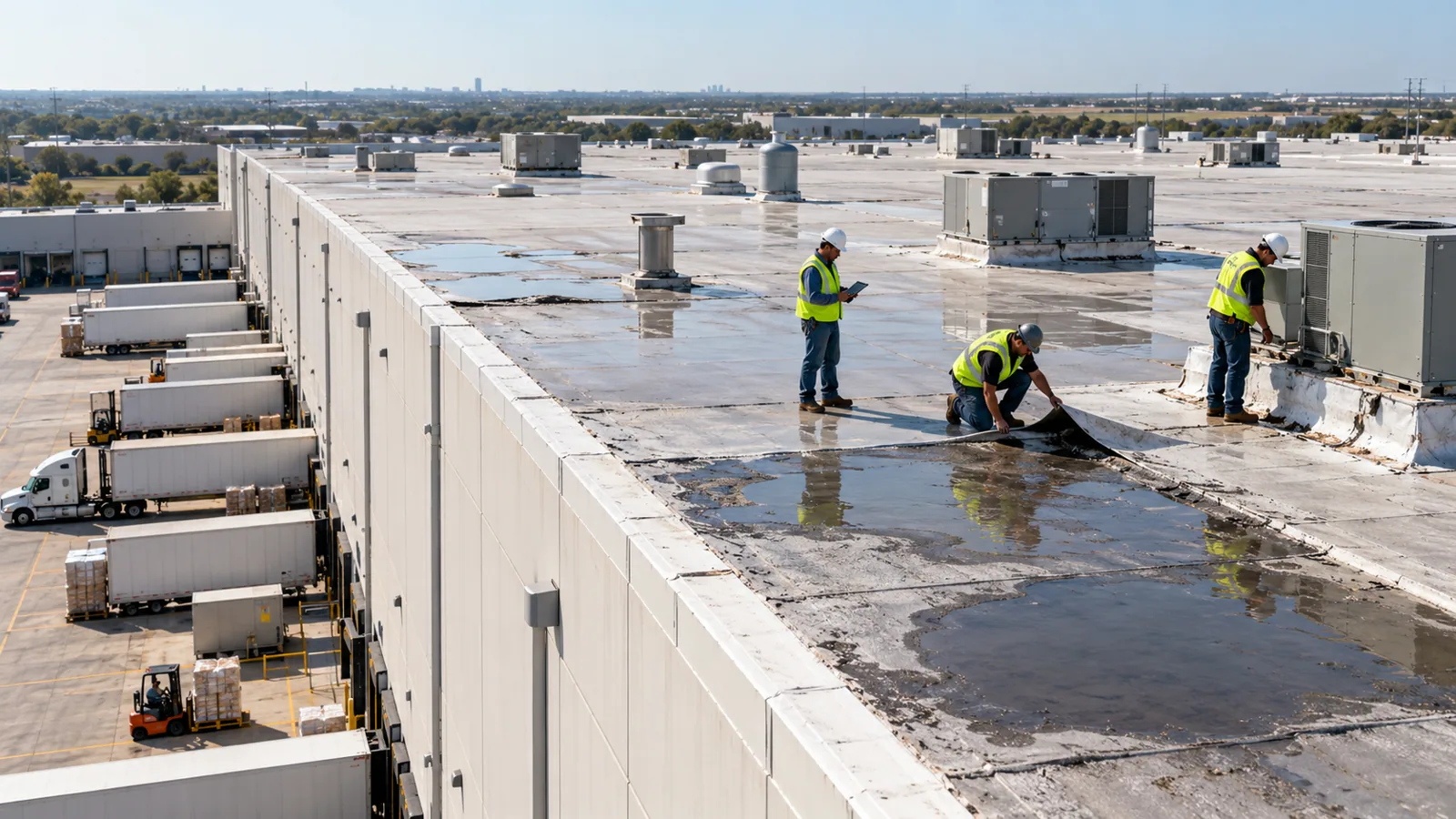
Roof Capital Planning
Roof capital planning in Queens, NY: budgets and replacement timing built from moisture data, condition ratings and building plans, so roof work is scheduled.
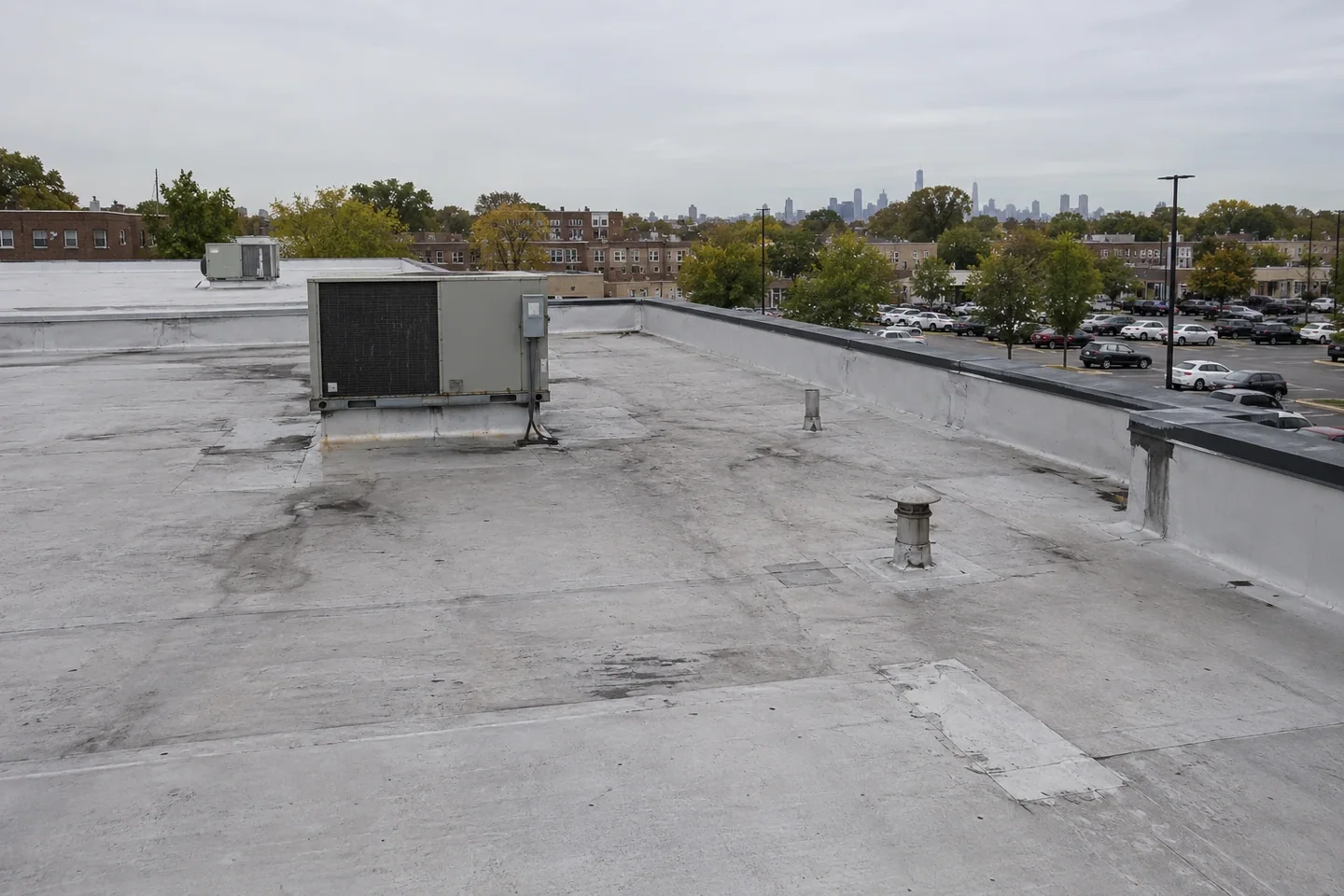
Shopping Center Roofing
Roofing for Queens, NY shopping centers and strip retail: tenant leaks, shared roofs, parking-deck tie-ins and repairs sequenced around store hours.
Ready to Talk About Due Diligence Roof Surveys?
Tell us about the building and what you are seeing. We will schedule a roof walk and send photos and a written scope.