
A top-floor door that sticks after a heavy snow, or a ceiling that seems to have dropped a fraction overnight, usually gets noticed before any leak does. Either one says the roof has been carrying more weight than it was built for, and it is a reason to stop and check before anyone climbs up. Snow damage starts with load and finishes with water.
Snow sits on a flat roof until it melts, and the meltwater runs to the lowest point. If that point is a drain or scupper frozen shut, the water backs up and works its way under the roofing. Weight comes first, water second, and on every Queens, NY roof we visit after a hard winter we settle the weight question before the water question.
How much snow is too much?
New York City averages about 29.8 inches of snow a year, though the total varies widely, and the most to fall in one day was 27.3 inches on January 23, 2016. One day of that size puts a heavy, uneven load on a roof. A cubic foot of wet snow outweighs powder by a wide margin, rain on top adds still more, and the wind builds drifts against parapets, bulkheads and rooftop units that may hold several times the weight of the open field nearby.
Designers allow for snow, yet judging structural capacity is not our work. When a building shows sagging, sticking doors, cracked finishes or a springy deck, we halt, request a structural engineer and keep crews clear until the engineer gives the all-clear.
Rain on snow is the combination to fear. Snow behaves like a sponge, and rain soaks in and adds weight without melting it, so a roof that carried a manageable load in the morning may carry a much heavier one by evening. When a storm like that is forecast, we advise owners to check the drains and the roof access before it arrives, so a crew can reach the roof safely if the engineer asks for relief.
What does ice do at drains and edges?
Meltwater heads for the drains and scuppers, and on a cold night it freezes there. A drain plugged with ice sends water back up the slope, beneath flashing, seams and edge metal. Gutter ice can split a joint, a frozen scupper pins a pond against the parapet, and expanding ice at the roof edge can pry edge metal loose.
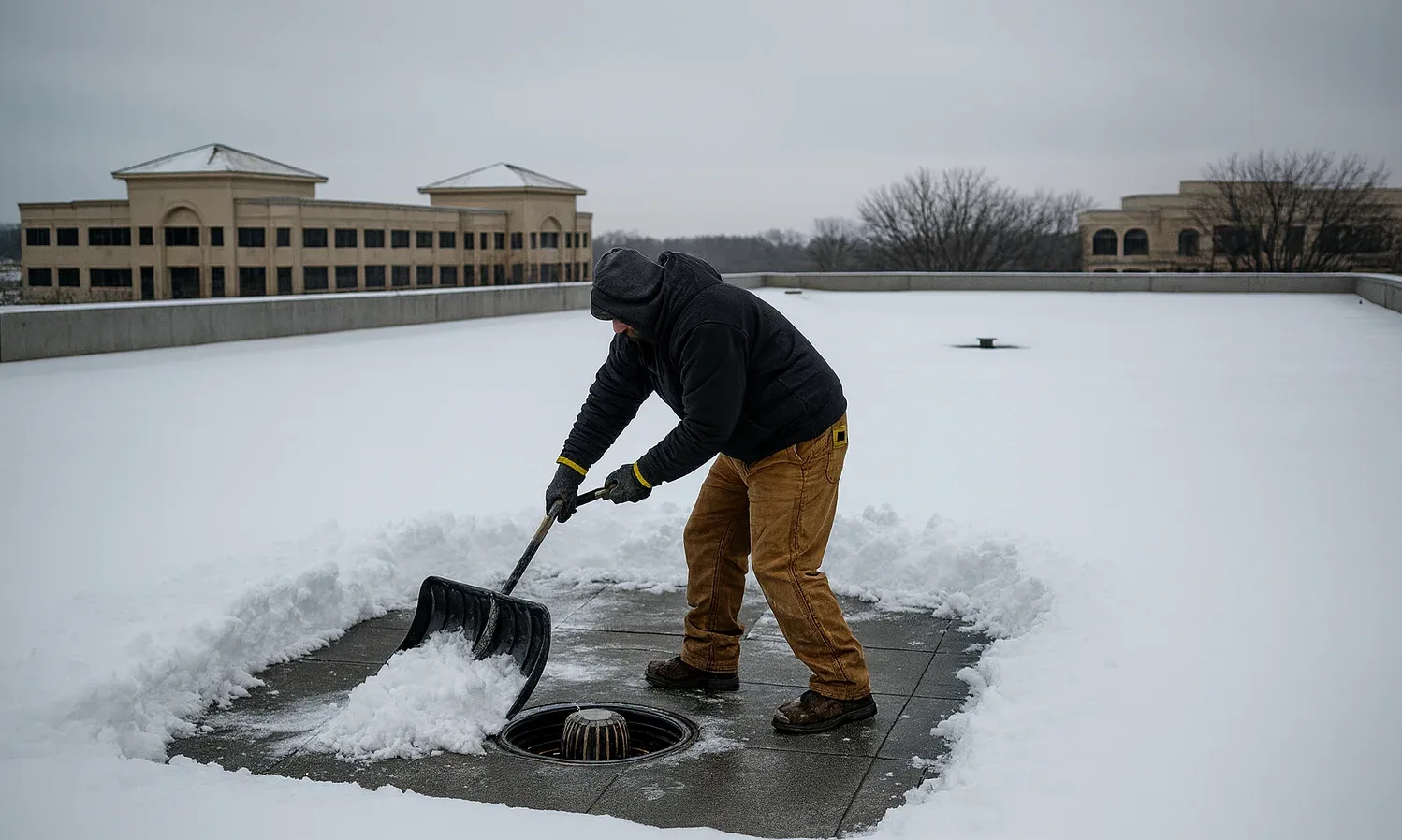
After any freeze we look at the drains and scuppers before anything else. Heat cable can hold a critical drain open through the coldest weeks, provided it works and is secured, which we confirm. If the same spot ices over each winter, suspect a high drain, a slope that falls away from the outlet, or a neighboring wall that sheds its meltwater onto the roof.
Slope matters here too. On a flat roof that already ponds, a freeze turns every low spot into an ice sheet that weighs on the deck and presses the seams. Fixing the slope, as in ponding water roof repair, removes the place ice gathers, and parapet scuppers are checked as well, since a high one lets an ice dam form against the wall.
Why does freeze-thaw damage seams and flashing?
Water enters a small gap, freezes, swells and widens it, and the next thaw admits more. By spring a hairline crack in sealant or along a seam can have become a steady leak path. Seams near ponded areas and flashings at parapets and curbs are especially exposed, as are coping joints on masonry walls.
Old masonry magnifies the effect. Ridgewood and Glendale are largely early twentieth-century yellow-brick rowhouse and mill-era stock, much of it inside historic districts, and a parapet top with open mortar takes in water that freezes and forces the brick apart. We inspect coping and mortar joints during the thaw, when the damage is easiest to see.
Can snow removal damage the roof?
Often, yes. Metal shovels, ice picks and sharp tools cut membrane, heavy equipment compacts insulation and tears flashings, and salt or chemical melters harm some coatings. When snow must come off, plastic shovels and hand work are the way to do it, a thin layer of snow is left on the surface to protect the sheet, and the work begins at the drains and roof edges where the load matters most.
We advise taking snow off only when the structure requires it, and then on the engineer's guidance. Many roofs shed meltwater unaided, and the more useful job is keeping drains open and edges clear.
Should a contractor have to clear snow, the job needs a plan. It starts at the drains, moves to the edges and keeps off the seams. Workers use fall protection, and the plan names where the snow goes, because a pile dropped at the base of a wall can block exits. We do not offer removal as a casual service, but we advise owners how to hire it safely and what to protect.
How is snow and ice damage repaired?
When the thaw comes, we walk the roof, probe seams and flashings, check the drains and, if leaks have appeared, scan for wet insulation with an infrared moisture survey. Patches go over cuts left by snow removal, opened seams are rewelded or capped, failed flashings are rebuilt from the base up and soaked insulation is swapped for new board. A drain that froze because it was high or clogged is corrected, and when damage is active and rain is coming, emergency roof repair dries the building in first.
The walk after the thaw is the most useful of the year. Stains inside the building tell us where to look, and the roof shows what the winter did. Every finding gets a photograph and a location and is sorted into repair now, repair before next winter, or watch. A roof that gets this walk every spring seldom enters the next winter in worse shape than the last. Owners in Maspeth and elsewhere in the borough can build it into a maintenance calendar.
Questions Owners Ask
What building owners and managers usually ask before a roof visit.
Only when an engineer says the structure requires it. A shovel can cut the membrane and creates fall hazards for whoever uses it. Most roofs fare better if the drains and edges are kept open and the snow melts by itself.
Sticking doors, sagging ceilings, fresh cracks in walls or finishes, and a deck that gives underfoot. If any of these appears, keep people away from the area and call a structural engineer before a roofer.
Keep the strainer clear, set the drain at the low point, and consider heat cable only on drains that cannot be allowed to freeze. A drain that sits high retains water, which then freezes, so bringing the drain down to the low point does more than any cable.
Not necessarily. Ice on a roof is a common sight and often does no harm. Trouble starts when it blocks drainage or lifts edge details, and then the leak appears during the thaw as water backs up behind it.
Photos of the roof drains, the edge and any ceiling stain, with the date of the last snow or thaw. We will explain in plain steps what the winter did to the roof before any price is discussed.
Related Roofing Work
Other pages that connect to Snow and Ice Roof Damage Repair.
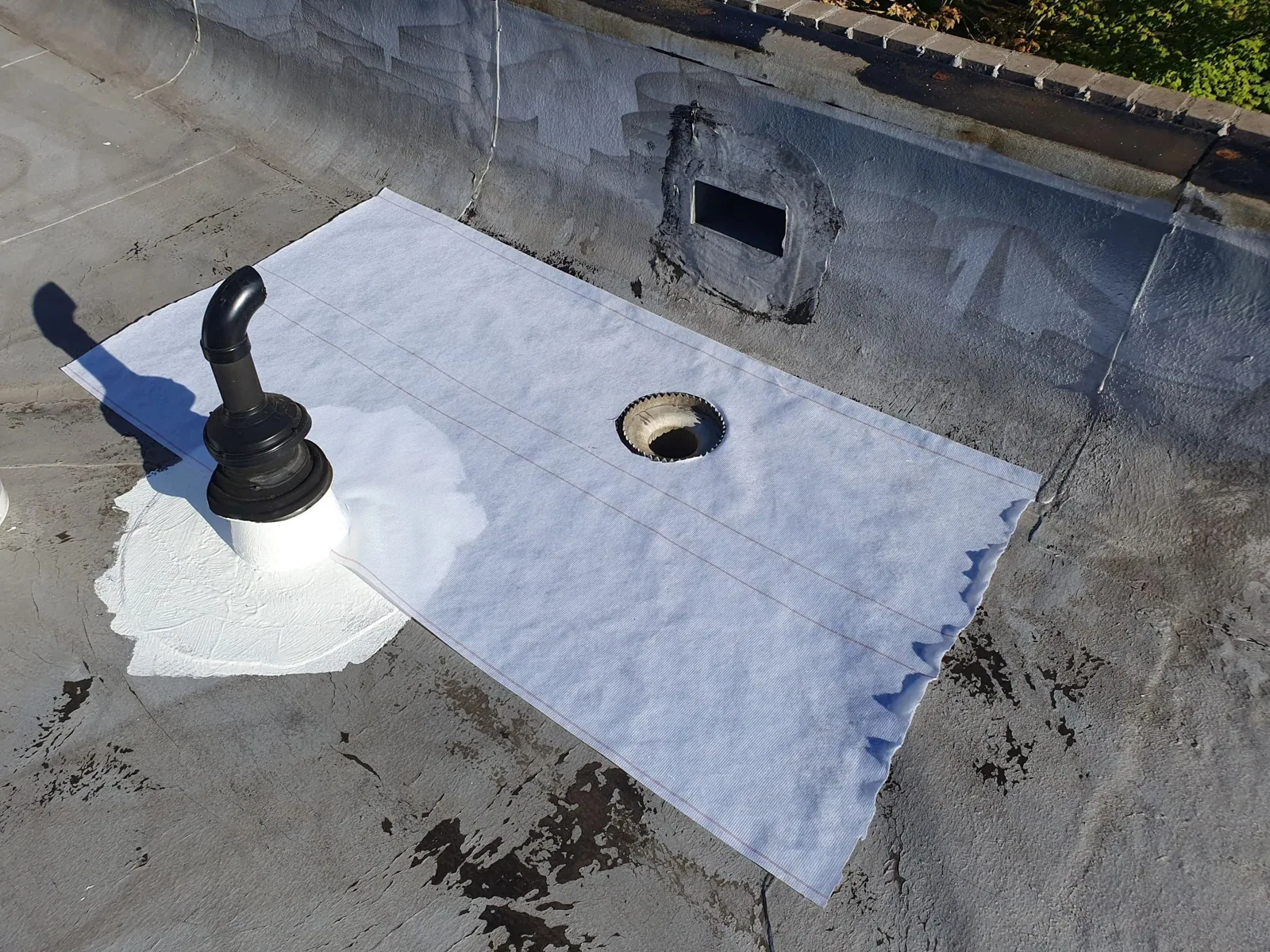
Roof Drains and Scuppers
Roof drain, scupper, cricket and ponding correction in Queens, NY: sizing, strainers, overflow paths and tapered fixes for flat roofs hit by cloudbursts.
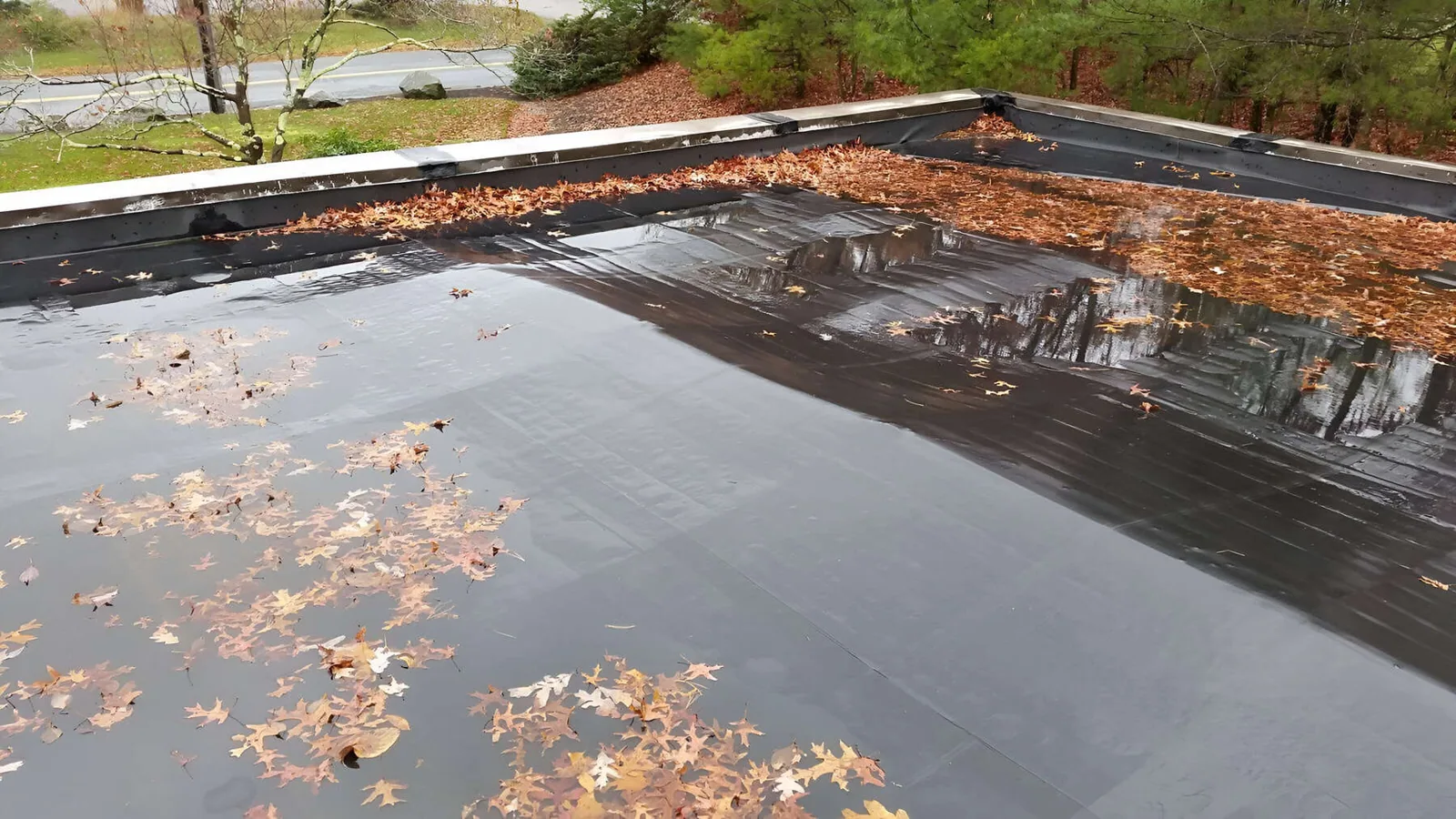
Ponding Water Roof Repair
Ponding water roof repair in Queens, NY: why standing water forms on flat roofs, how it ages the membrane and the drain, slope and insulation fixes that end it.
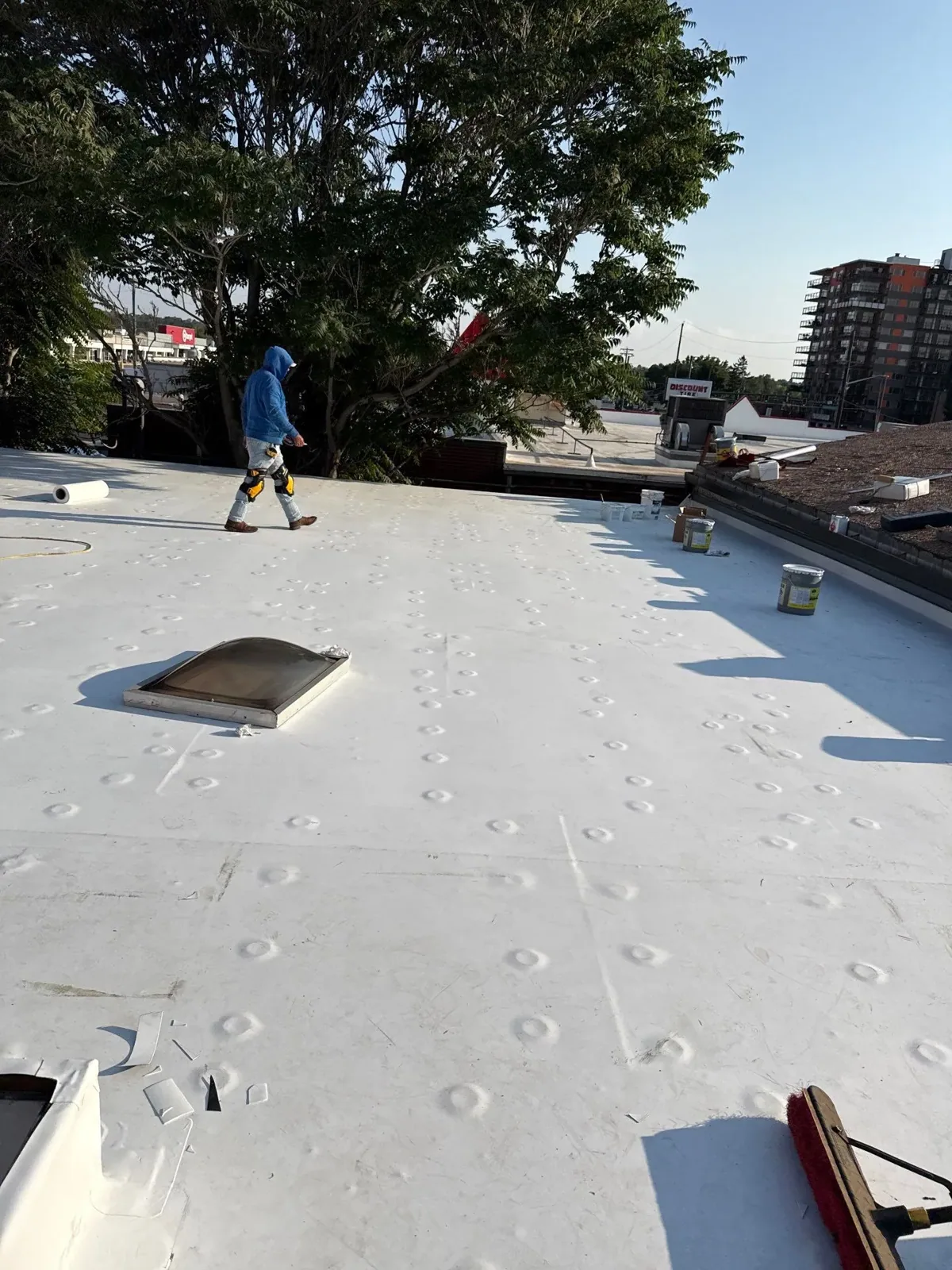
Seam Failure Repair
Seam failure repair in Queens, NY: split, open and lifted seams on TPO, PVC, EPDM and modified bitumen roofs, found by probe and repaired with strips.
Ready to Talk About Snow and Ice Roof Damage Repair?
Tell us about the building and what you are seeing. We will schedule a roof walk and send photos and a written scope.