
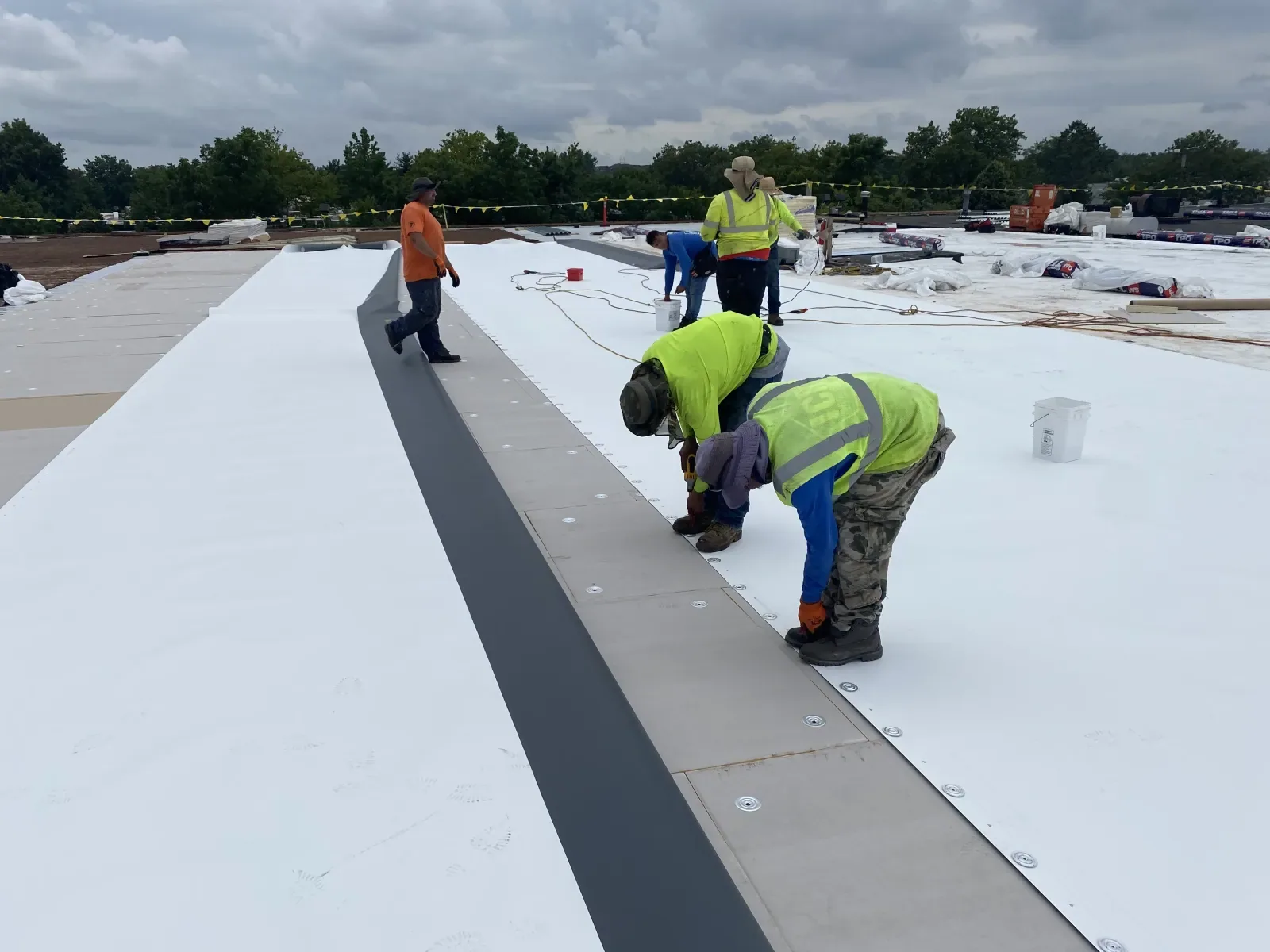
A flat roof that billows in a gust and settles with a soft slap is moving more than a roof should. The sheet is lifting between its fasteners, and each lift pulls on the plates, the seams and the edge. Over a season or two the movement shows up as a worn spot, a torn seam or a loose termination. Versico sells single-ply systems that can be installed several ways, and how this roof was attached tells us where to look.
What does Versico offer for commercial roofs?
Versico is a commercial roofing brand focused on single-ply membranes. Its range includes EPDM, TPO and PVC types, along with insulation, cover boards, adhesives, fasteners, flashings and accessories that make up a complete system. Each membrane family can be installed in more than one way, and the manufacturer publishes details for edges, walls, drains and penetrations.
As with any maker, the owner's own papers and the manufacturer's current literature are the authority on products and warranty programs. On the roof, we deal with what is there: the membrane, how it is held down and how its details were made. Our notes on EPDM and TPO describe how those sheets behave once installed.
The same families appear in Carlisle SynTec literature, and owners comparing the two will find similar sheet types, attachment methods and details. We treat each roof on its own facts: the substrate, the fasteners, the seams and the edges tell us more than the brand name on a spec sheet does.
How is the sheet held down, and why does it matter?
Walk it with me. There are three ways. A fully adhered system glues the sheet to the substrate across its full area, so it cannot lift between fasteners. A mechanically attached system fastens the sheet at the seams with plates and screws into the deck, which is quick and light but allows some flutter. A ballasted system lays the sheet loose and holds it with stone or pavers, which adds weight.
Each method stresses a different part of the roof. Fully adhered sheets depend on the bond to the board below, which fails if the board is wet. Mechanically attached sheets depend on the fasteners and plates, which can back out or corrode. Ballasted sheets depend on the stone staying put. We identify the method, then check the part that matters most for it.
Insulation and cover board sit under every method. A polyiso board is common, and a cover board protects it from fasteners and traffic. With adhered systems the board's surface must be clean, dry and compatible with the adhesive, and temperature matters: adhesives need mild weather. With mechanically attached systems the fastener pattern is set by wind zone and roof height, and the perimeter and corners get more fasteners than the field.
What do we check on a mechanically attached roof?
The first step is to look for the signs of flutter: ridges along the fastener lines, worn spots under the plates and dirt lines at the seams. The second is to probe the seams over the fasteners, where tension concentrates. The third is to check the perimeter, where wind forces are highest and where extra fastening should be. The fourth is to open a few spots and look at the fasteners themselves for rust or backing out.
Repairs include re-fastening, adding plates, welding cover strips over worn spots and upgrading the perimeter. If fasteners are corroded widely, the cheapest fix is often a new roof. A wind damage repair after a storm follows the same order, starting at the edges.
For adhered roofs the checks differ. We press the sheet for bubbles and soft spots where the bond has failed, probe the seams and look at flashings for lifted edges. A bubble that moves under the hand means the sheet has separated from the board, and a bubble that holds water is a leak path. Small bubbles can be cut, dried and re-bonded, while widespread separation means the substrate is wet or the adhesive has failed.
Flashings and drains are the same everywhere. Corners, curbs, walls and drain bowls all receive extra attention, since a good field does not help if the details are open.
Where does this show up in Queens?
Wide, long-span flat roofs are where it appears. Big-box retailers such as Home Depot and Staples line Glendale's Woodhaven Boulevard, and Middle Village's Metro Mall, a three-story mall dating from 1972 to 1974, today houses Raymour and Flanigan and BJ's Wholesale Club. Queens Place Mall in Elmhurst opened in 1965, and Queens Center has about 1,000,000 square feet of gross leasable area. The big-box store roof is the classic large single-ply, and every unit on it is one more curb to check.
Wind is a standing issue. Hurricane-force gusts crossed the metro area with Hurricane Sandy in October 2012, and East Elmhurst lies beside LaGuardia Airport. Drains matter because Hurricane Ida's remnants prompted the first flash flood emergency in New York City on September 1, 2021, and Queens saw most of the deaths. A walk of a roof in Glendale or Middle Village starts at the edges and drains.
Temperature and snow matter to attachment as well. Snow in a typical year totals about 29.8 inches, and the heat island helps push July afternoons at Central Park, which average near 85 degrees, hotter still. Heat softens adhesive bonds, cold stiffens sheets and snow loads add weight to decks. The manufacturer's published limits and the project's design documents set how these are handled, and we follow them.
How do warranty papers fit in?
Conditions on maintenance, notice and work by other trades often come with the manufacturer warranty on a single-ply roof, which makes the warranty document, the installer's closeout and every inspection and repair record worth keeping. The manufacturer or the administrator named on the document answers questions about coverage. A roof warranty management file holds the papers beside the photographs.
The next step for any owner is the same: find out what you have. Owners who compare several makers, such as Holcim Elevate, will find the same questions about attachment and details apply.
Questions Owners Ask
What building owners and managers usually ask before a roof visit.
Neither wins in every case. Adhered sheets resist flutter and suit complex roofs but need a dry, clean substrate. Mechanically attached sheets are quick and light but depend on fasteners. The deck, wind exposure and building decide. Fire rating and insurance requirements can also point toward one method.
Listen and look on a windy day. Visible billowing, popping sounds and ridges along the fastener lines are signs. From the ceiling side, dust and stains below the plates can also show movement. A wind gauge reading at the roof helps decide whether the movement is normal.
Sometimes. We can add fasteners and plates and weld cover strips over worn spots. If many fasteners are corroded, a new roof is the better value. We test a sample of fasteners with a pull gauge to see whether they still hold.
It can. Stone covers the sheet and makes leaks hard to see. We pull back the ballast at test areas, check the drains and scan for moisture.
Send photos of any ridges or worn spots, the perimeter edge, the nearest seam and any paperwork naming the system. The roof's age is helpful. A note on when the last fastener check was done also helps.
Related Roofing Work
Other pages that connect to Versico.
EPDM Roofing
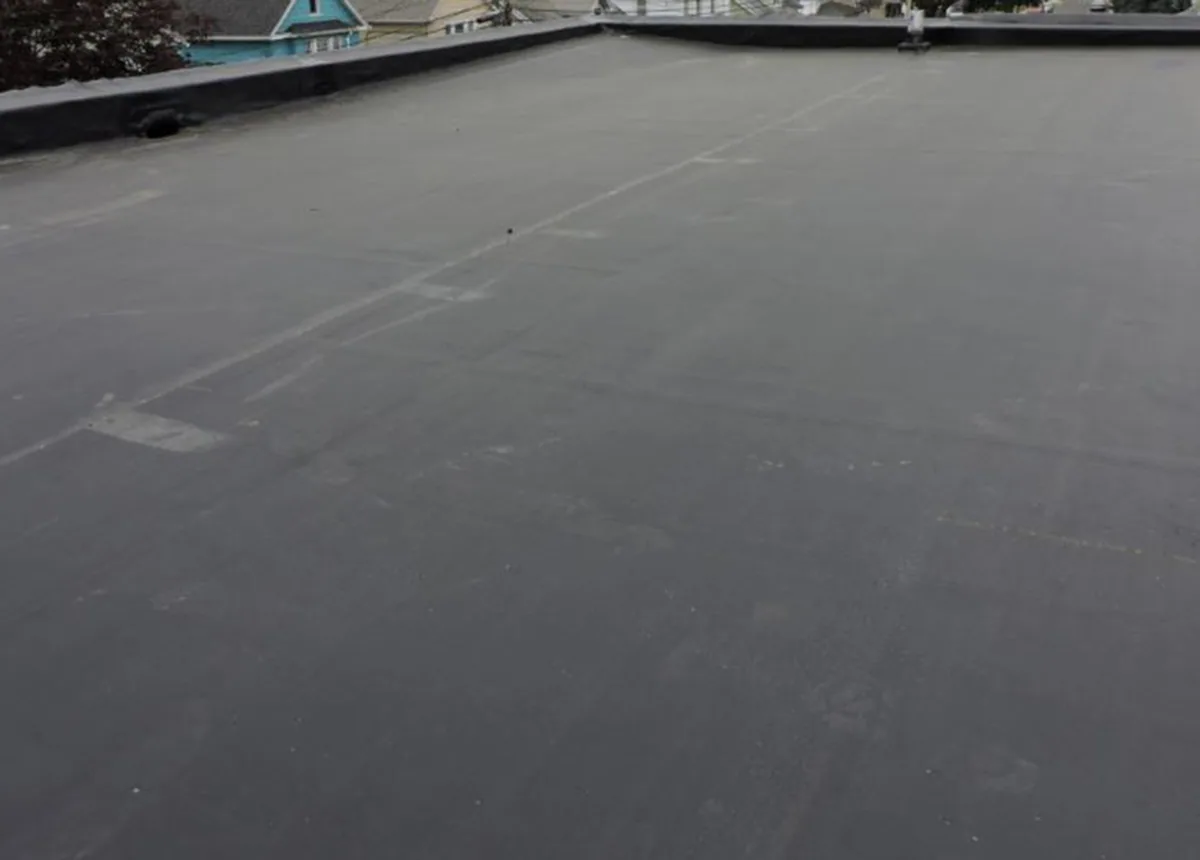
EPDM rubber roofing in Queens, NY: adhered and ballasted membranes, seam and flashing repair, and when a black rubber roof is the right choice for a flat roof.
TPO Roofing
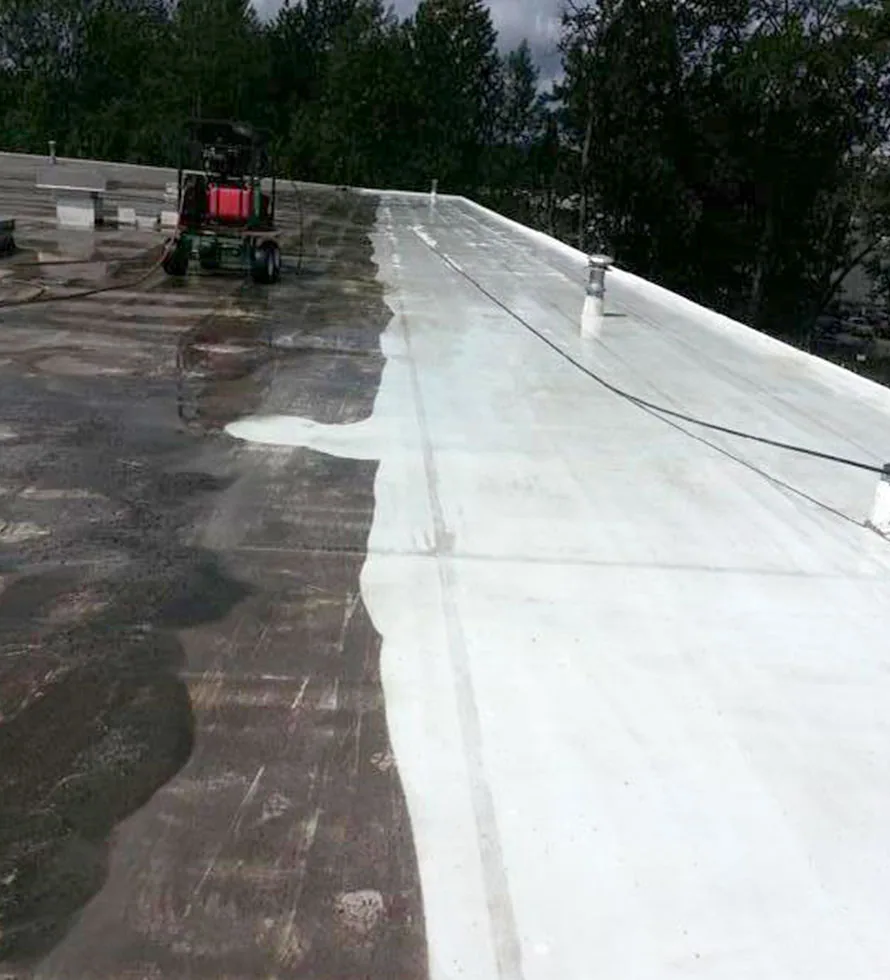
TPO roofing in Queens, NY: heat-welded white single-ply membranes for flat commercial roofs, with seam checks, repair and replacement explained step by step.
Carlisle SynTec
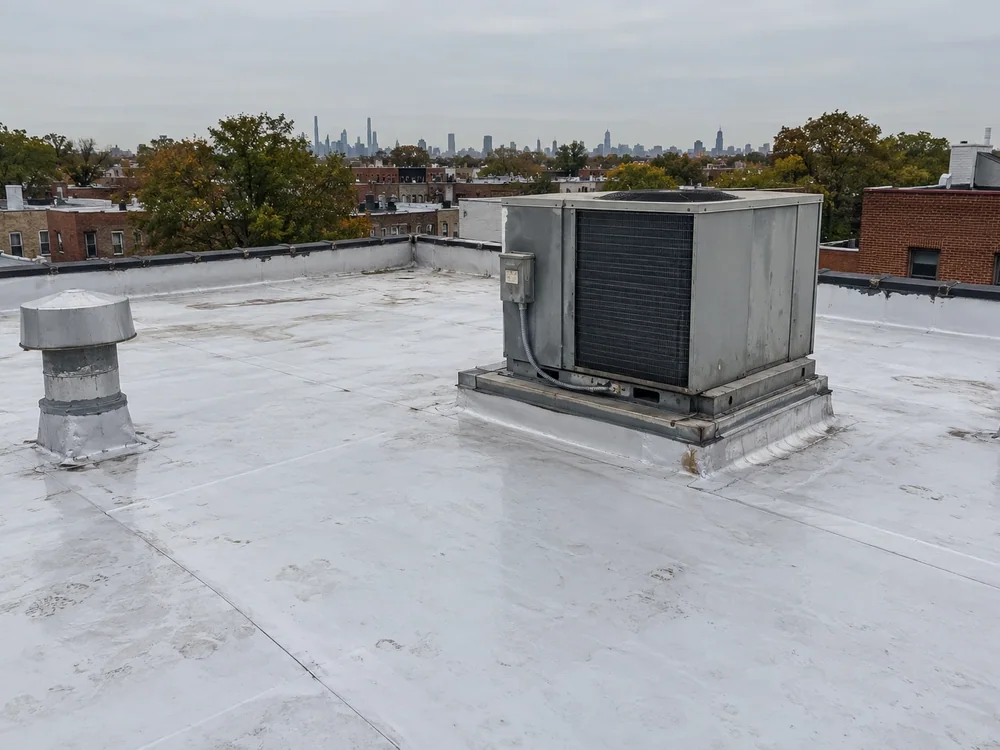
Carlisle SynTec single-ply roofing in Queens, NY: EPDM, TPO and PVC categories, how each is installed, repaired and maintained, and how to read the paperwork.
Ready to Talk About Versico?
Tell us about the building and what you are seeing. We will schedule a roof walk and send photos and a written scope.