
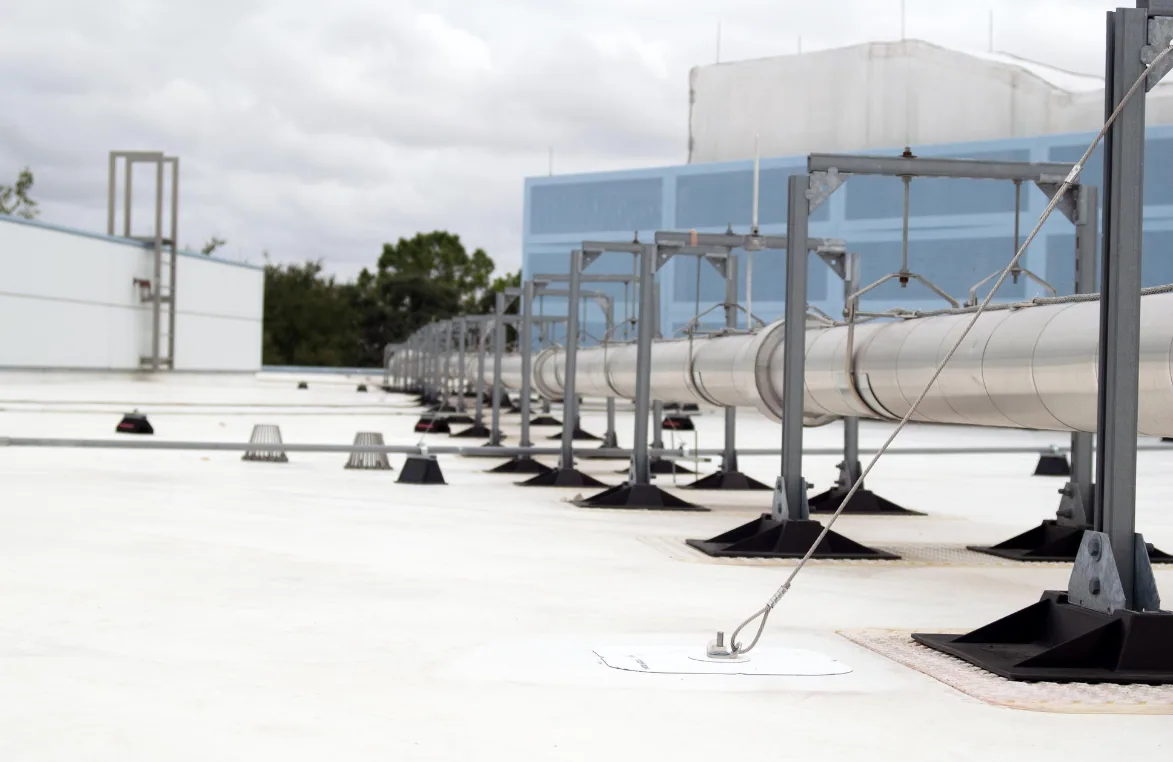
The warranty letter in the building's file carries one company name, the roof drawings carry a second and the manufacturer's website carries a third. An owner holding that folder is not sure who to call about a leak. Holcim Elevate was formerly Firestone Building Products, so a roof installed or warranted under the older name is still tied to the same maker. Sorting out the names is the first step, and it takes minutes. The harder work is on the roof.
Why do the roof papers show a different name?
Companies rename themselves, merge and move their programs, and roofing paperwork outlives all of it. A roof installed years ago may be documented under the former name, while current literature uses the present one. For the owner, the practical point is that the older warranty, the specification and the product labels all refer to the same family of systems.
Walk it with me. The first step is to gather every paper that names the manufacturer: the warranty, the installer's closeout letter, delivery tickets and any inspection reports. The second step is to match the products listed on them to what is on the roof. The third step is to ask the manufacturer or the warranty administrator named on the document what the status of the warranty is. We can do the first two with the owner, and only the manufacturer can answer the third.
Records get lost in a rename, which is why we keep copies. Once the papers are gathered, we scan them and store them with the roof's photographs and test results. If the original installer is no longer around, the file still tells the next person what was installed, when and under what program. A roof with a complete file is easier to repair, easier to sell and easier to insure.
What system categories does the company make?
The company's commercial range centers on single-ply membranes. EPDM is a rubber sheet that has a long history in the industry, TPO is a welded thermoplastic and PVC is a welded sheet with added chemical resistance. It also supplies roof insulation, cover boards and accessories, and metal roofing products for some applications.
Which sheet is on a given roof depends on the year and the project, so the first step is to identify it. A white sheet with welded laps is thermoplastic, a black sheet with taped or glued laps is probably rubber, and cores confirm both. Our pages on EPDM, TPO and PVC describe how each behaves.
Metal roofing and insulation round out the range. A metal panel roof follows its own rules, with clips, seams and trim, and our standing seam metal roofing notes explain how those fail. Polyiso insulation under a single-ply sheet carries the thermal work, and a cover board protects it. Owners comparing makers also look at Versico, whose single-ply line covers similar ground.
How do we repair and maintain these roofs?
The repair follows the sheet. A rubber roof gets cleaned and primed patches and new seam tape. A thermoplastic roof gets welded cover strips. Flashings are rebuilt in matching material, drains are cleaned and rebuilt and walkway pads are added where traffic wears the surface. We photograph each repair and record its location.
Maintenance is a calendar. A visit each spring and fall clears drains, probes seams, checks edges and photographs details. It is cheap compared with a leak, and it is also the record that many warranties ask for. A preventive maintenance routine keeps the paper trail current regardless of which company name appears on the old documents.
Older rubber roofs deserve a particular note. A sheet that has been in the sun for many years can shrink, and the shrinkage pulls on seams, flashings and edges. We look for tension at inside corners, where the sheet bridges across a gap, and at walls, where it has pulled away. A relief cut and a new flashing strip fix a local pull. Widespread shrinkage points to replacement.
Ballast is another feature of some rubber roofs. Stone or pavers on top hold the sheet down and protect it from sun. Stone can also hide a leak, clog a drain and scour the sheet. We pull the ballast back in test areas, clean the drains and put the stone back, so the roof can be read without being stripped.
Where do these roofs show up in Queens?
They are suited to the borough's wide flat roofs. On 62nd Drive, Rego Center Phase II offers retail space of 950,000 square feet; College Point Corporate Park spreads across 550 or so acres; the Maspeth Industrial Center sits on industrial lowlands. A single-ply roof on a building of that scale faces ponding, curb flashings and weld quality as its main questions, and a big-box store roof is a good example.
Weather supplies the test. Queens had most of the deaths when the city's first flash flood emergency arrived with Hurricane Ida's remnants, on September 1, 2021. Heat and snow round out the picture: Central Park sees July afternoons near 85 degrees under a strong heat island, and a typical year brings about 29.8 inches of snow. Drains are where a visit to a roof in Maspeth or Rego Park begins.
Industry, retail and healthcare all mix in Queens, whose economy is the most diversified of the five boroughs, at a 2024 GDP of about $111.1 billion, and buildings change hands. A buyer who inherits a roof under a changed company name needs the same file as anyone else, and a due diligence survey assembles it.
What is the next step?
Send photos of the roof and every paper in the file that names the manufacturer, old name or new, along with the roof's age. The system is identified first; after that the plain-steps account of repair or replacement follows, and price waits until you have seen what the roof is made of. An owner weighing makers may also look at Carlisle SynTec, which covers a similar range.
Questions Owners Ask
What building owners and managers usually ask before a roof visit.
Yes in the sense that matters for paperwork: Holcim Elevate was formerly Firestone Building Products, so older documents under the Firestone name refer to the same maker. The warranty administrator named on your document can confirm the current status. Keep a copy of the closeout letter and any renewal correspondence with the roof file.
The warranty decides. Some require the manufacturer's approved roofer, while others allow a qualified contractor who follows the published details. Read the document or ask the administrator before repairs begin, and get the answer in writing.
Look for labels on rolls left in storage, delivery tickets and closeout letters. On the roof, color and seam type tell you the family, and a core shows the layers. We can identify it on a walk. Labels on leftover rolls or on edge metal sometimes carry a date code.
Sometimes, if the sheet is sound and dry and the right primer is used. A moisture scan and test patch decide. A coating cannot fix open seams or wet insulation. Coating over rust or dirt peels quickly, so cleaning comes first.
Send photos of the roof, the seams near the stain and every paper that names the manufacturer. The roof's age and repair history are helpful. Photos of the underside of the deck help when condensation is suspected.
Related Roofing Work
Other pages that connect to Holcim Elevate.
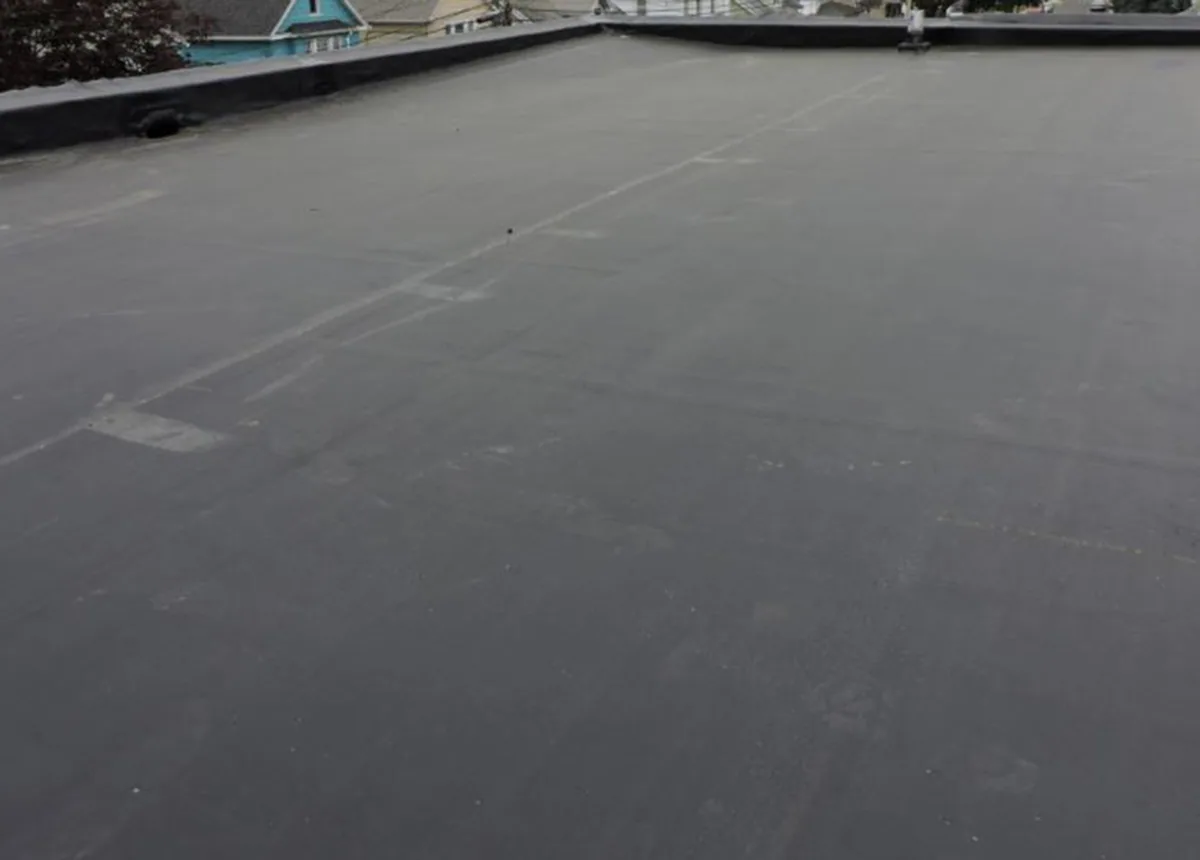
EPDM Roofing
EPDM rubber roofing in Queens, NY: adhered and ballasted membranes, seam and flashing repair, and when a black rubber roof is the right choice for a flat roof.
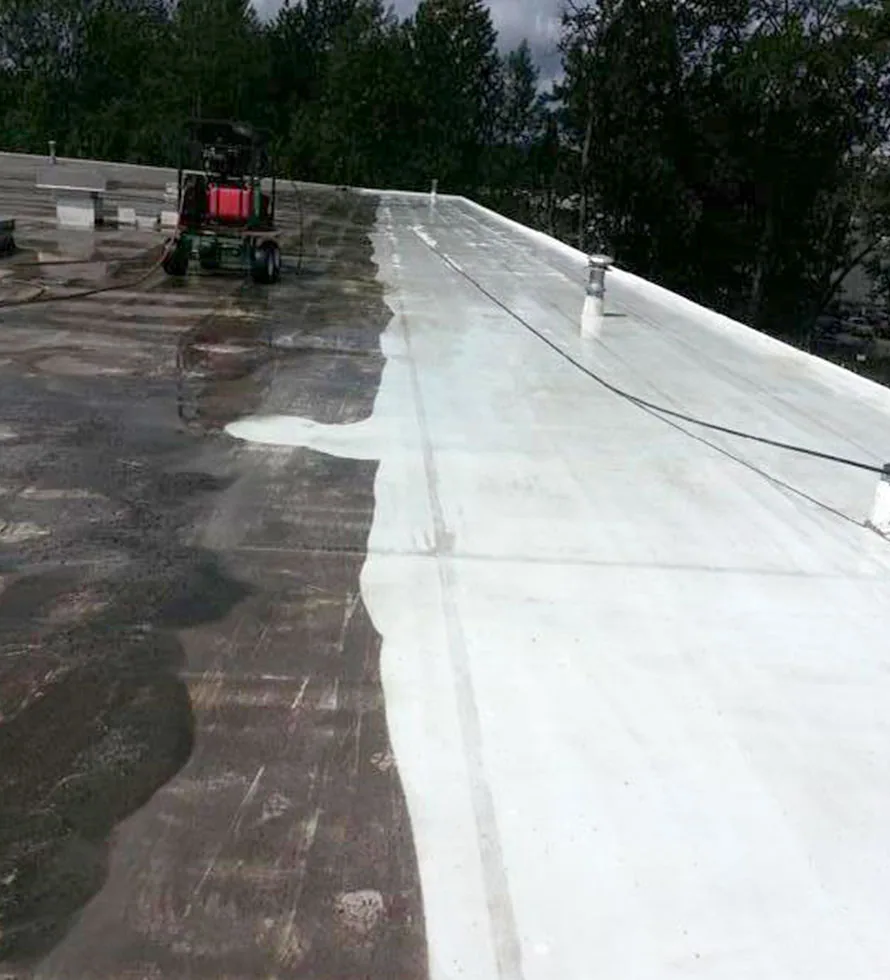
TPO Roofing
TPO roofing in Queens, NY: heat-welded white single-ply membranes for flat commercial roofs, with seam checks, repair and replacement explained step by step.
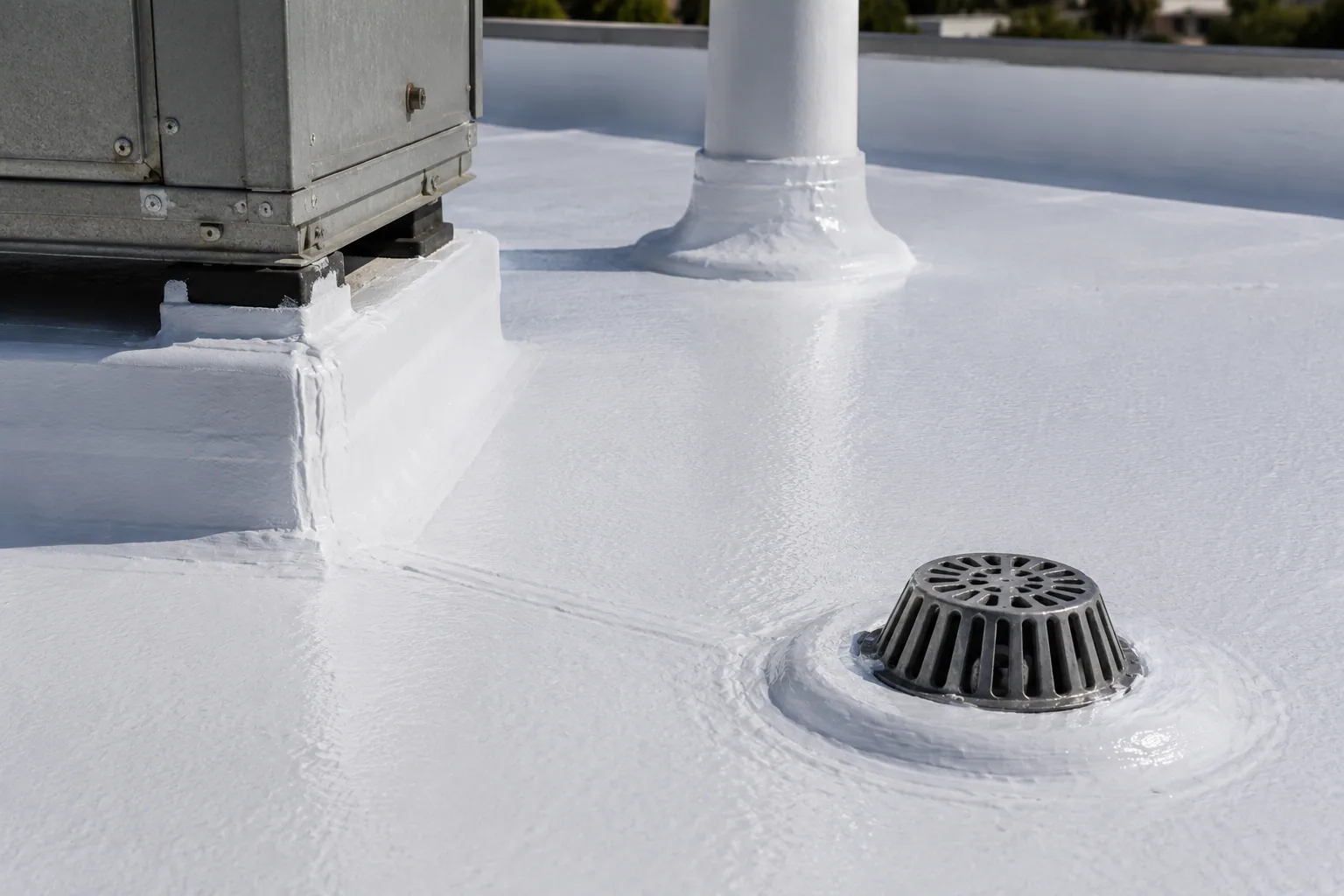
PVC Roofing
PVC roofing in Queens, NY: welded single-ply membranes for roofs that see grease, exhaust and chemicals, with repair, recover and replacement explained plainly.
Ready to Talk About Holcim Elevate?
Tell us about the building and what you are seeing. We will schedule a roof walk and send photos and a written scope.