
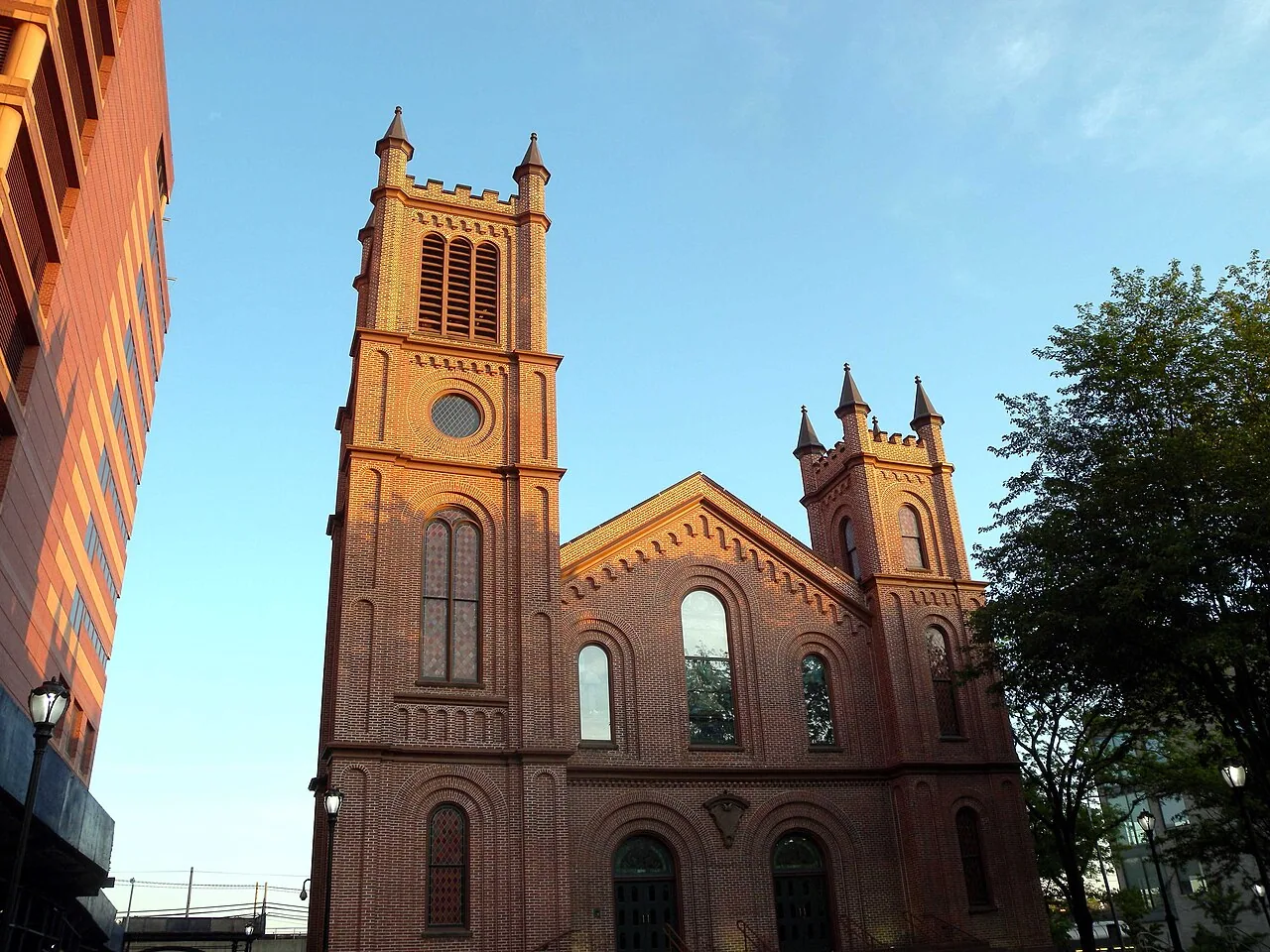
Peeling plaster above the side aisle, or a damp corner in the parish hall after Sunday coffee, is how most congregations find out. The trustees looking up at it cannot say whether a shingle failed, a gutter blocked or a flat roof gave up, and that is a fair thing not to know. A house of worship often has several roofs that meet at walls, and water from one can show up under another. Churches in Queens, NY get the same repair and replacement work as any commercial roof, starting at the stain and walking back to the cause one step at a time.
The building committee should understand what the roof is doing well before anyone asks it to approve a number.
What are the trustees looking at when they see a stain?
A stain marks where a path ended. Water enters at one place, runs along a deck, a beam or a layer of insulation, and drops where something gives way, so the mark on a ceiling can sit well away from the hole. A ring that grows after rain says the leak is live. A ring that stays the same says the water came from an earlier storm.
We ask the committee for dates, a few photographs and the weather that came before each stain. Matching those against the roof plan tells us whether one leak or several is at work. It also separates a roofing problem from condensation in a cold sanctuary, which looks similar and needs a different repair.
Interior finishes matter to the story too. Plaster, wood paneling and painted decoration react to moisture in recognizable ways: plaster blisters and falls, wood swells at the joints, paint lifts in sheets. A photograph of the damage up close tells us roughly how long water has been present, and that helps date the leak.
Why does a church have more than one roof problem?
Many churches carry a tall main roof and lower sections beside it: aisles, an entry porch, a sacristy, a hall. The main roof may be slate, tile, shingle or metal. The lower sections are often low-slope and covered with a membrane or a built-up system. Each has its own age and its own weakness, and each meets a wall where the flashing has to climb and be covered.
The first thing to check is the junction where a low roof meets the high wall, because it carries water from two surfaces. Next the drains and strainers on the low roof, since a packed strainer holds water against a seam. Then the parapet and the coping. A failed flashing at one of those junctions is the most common source of a stain in a side aisle.
Rooftop additions are the other source. A new heating unit, a vent for a kitchen in the hall or a satellite dish bolted through the membrane leaves a penetration and a sealant line, and sealant has a short life. We number every penetration on the plan and check its base flashing and cap.
What changes when the church sits in a historic district?
Historic designation can reach exterior roof work. Several churches and the post office in Forest Hills are on the National Register of Historic Places, ten Ridgewood districts were listed on the Register in 1983, and three lower-Glendale districts hold early twentieth-century buildings of distinctive yellow Kreischer brick. Part of Springfield Gardens sits in a registered historic district, which can affect exterior work on the buildings there.
Designation status shapes the plan, not the physics. A repair that leaves the exterior unchanged is usually simpler than one that changes a visible edge or material. We check status first, photograph the visible roofline and prepare drawings if review is needed. Forest Hills, Ridgewood and Glendale owners can start the same way.
How are tile, slate and masonry roofs different from flat ones?
Forest Hills has many Tudor Revival homes with red Ludowici clay tile roofs, so the material is familiar in the neighborhood. Tile and slate shed water by overlap, so the weak points are the pieces that crack or slip, the nails that rust and the flashing at valleys, chimneys and walls. Replacing a single broken unit costs little; replacing a whole slope because nobody checked it costs a great deal.
For masonry, the weak points are the mortar joints, the coping and the cornice. Water in a cracked joint freezes in winter and opens the crack. We check them by hand, record each one and recommend repointing before any new flashing goes over it. The sequence matters because flashing over a loose joint fails with it.
Gutters on a pitched roof carry the whole slope's runoff to a few downspouts. A gutter that has pulled away from the fascia, a joint that has opened or a downspout that discharges against the wall can soak masonry for years. We follow each downspout to its outlet and note any that end against a foundation.
What do Queens storms and winters do to these roofs?
Ida's remnants, on September 1, 2021, prompted the first flash flood emergency the city had declared, most of the deaths coming in Queens, and a gutter or drain that handles ordinary rain can choke in a cloudburst of that size. Winter brings roughly 30 inches of snow in an average year, and one storm on January 23, 2016 left 27.3 inches. Snow loads the low roofs and melts toward the valley beside the high wall, where ice can dam the water behind it.
We clear gutters and strainers before the first freeze, since a basket packed with leaves from the churchyard tree holds water all winter. Keeping roof drains and scuppers clear twice a year is the cheapest repair on the building.
Summer finishes the cycle. With the heat island and July afternoons near 85 degrees at Central Park, sun on a dark flat roof opens seams and softens tar, and after a hot season we mark blisters and open laps on the survey plan.
What is the next step for a committee?
The next step is a walk, then a written plan the committee can use. We survey each roof section, rate it and list the repairs in order of urgency. Water entry comes first, then the flat roofs, then the high roof. A building committee can approve one stage and raise money for the next, because the plan separates what must be done this year from what can wait.
If the congregation also runs a school or a residence, the school roof and the senior residence can be rated on the same scale, so one table covers every building.
Insurance is the last piece of the file. Should a storm lift tile or tear a flashing, photographs dated before and after back up the claim, and both sets sit beside the repair notes.
Questions Owners Ask
What building owners and managers usually ask before a roof visit.
Compare the stain with the weather. A roof leak follows rain or snowmelt. Condensation appears on cold mornings and after services with large crowds, when moist air meets a cold surface. A moisture scan of the roof and a look at the underside separate the two.
Usually yes. We work in sections, keep the entrance clear for worship and avoid heavy noise during services. The pastor or building committee approves the schedule before work begins.
Yes, when the mortar is loose. Flashing is only as secure as the joint it sits in, and new metal over a failing joint pulls out with it. Repointing first gives the repair a solid bed.
The building committee should hold the plan and the photographs, with a copy at the parish office. Congregations change leadership, and a clear file keeps the roof story intact.
Send photos of the stain and the nearest drain or gutter, plus the address. From those we can say, step by step, whether water is entering at a junction, a gutter or a flat section.
Related Roofing Work
Other pages that connect to Church Roofing.
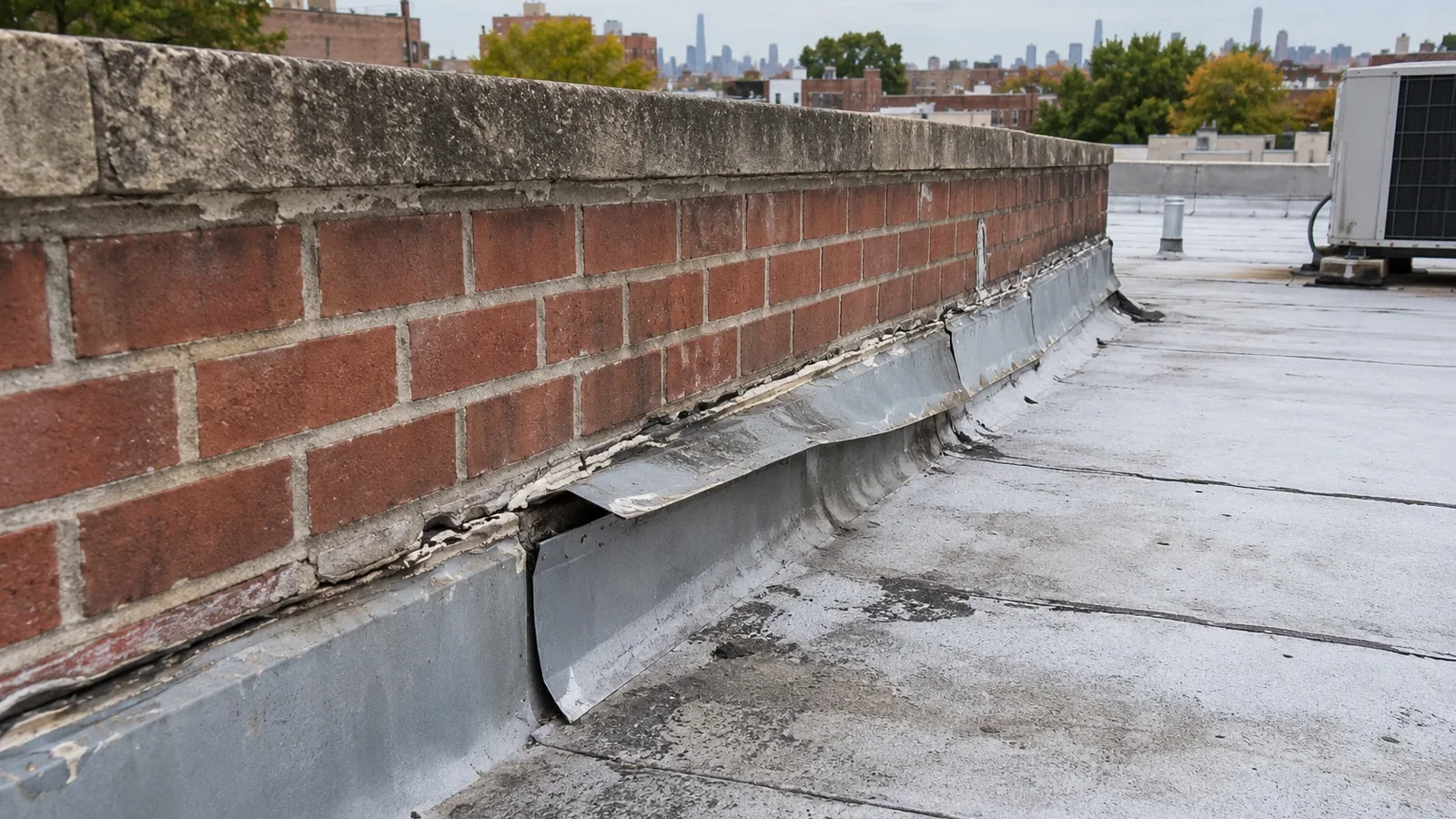
Flashing Failure Repair
Flashing failure repair in Queens, NY: cracked tar, lifted base flashing, open counterflashing and parapet leaks traced and rebuilt on commercial flat roofs.
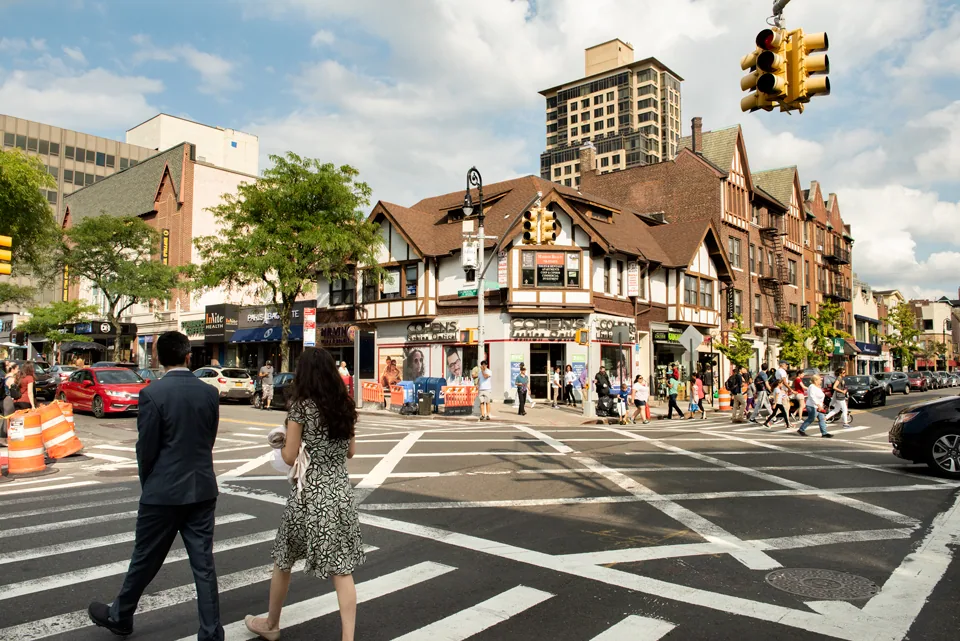
Forest Hills
Commercial roofing in Forest Hills, Queens, NY: Austin Street shop roofs, Queens Boulevard buildings, historic masonry details and tile-to-flat roof junctions.
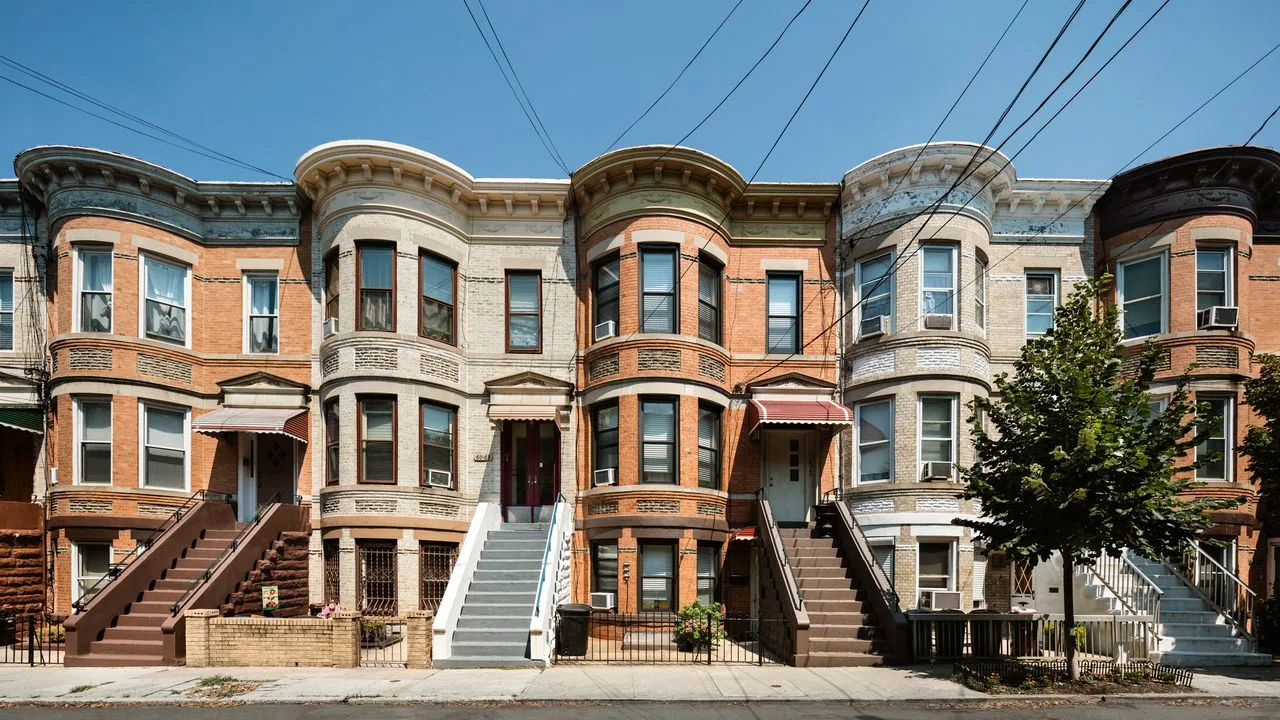
Ridgewood
Commercial roof repair and replacement in Ridgewood, Queens, NY: mill-era masonry, Myrtle Avenue storefronts and mixed-use rows in historic districts.
Ready to Talk About Church Roofing?
Tell us about the building and what you are seeing. We will schedule a roof walk and send photos and a written scope.