
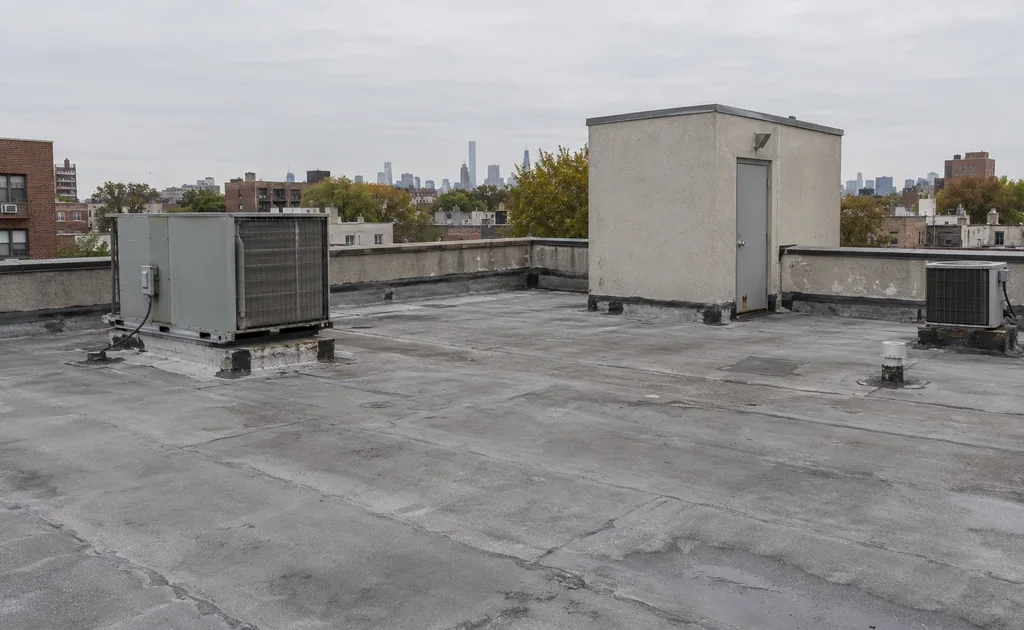
A senior residence seldom learns of a roof problem from the roof. A discolored ceiling tile above a resident's bed, or a smell in the top-floor hallway after heavy rain, is how it arrives, and the staff member who notices has no way to know whether a torn membrane, a clogged drain or a pipe through the roof is to blame. That matters. A care community cannot treat a ceiling stain as a cosmetic item, because the room below is somebody's home and the moisture inside the ceiling can turn into mold in a matter of days. On senior buildings in Queens, NY, the commercial roof repair and replacement we do starts from the stain and works backward, a step at a time.
Go up with me from the ceiling to the roof, and the cause usually shows itself.
What does the staff see first, and what does it mean?
Staff encounter a brown ring, a damp patch, peeling paint or a musty smell, and each indicates water that has sat in the ceiling for some time. A ring that grows after rain says the leak is active. A ring that does not change says the water came from a past event and has stopped. A smell without a visible stain says the water is trapped in the insulation above.
We ask the administrator to keep a short log: the room number, the date, the weather that preceded it and a photograph. That log lets us match each stain to a weather event and to a spot on the roof. It also shows whether the problem is one leak or several, which changes the repair completely.
What is happening on the roof above?
On a flat or low-slope roof, water enters at a seam, a flashing or a penetration, then travels along the deck or the insulation until it finds a way down, so the stain on the ceiling often sits a long way from the opening. The common causes on a senior building are a clogged roof drain with a strainer packed with debris, a split flashing at the parapet, a cracked seal around a rooftop vent and a membrane seam that has opened in summer heat.
The first thing to check is the drain nearest the stain, because standing water finds every weak spot. Next the seams around it, then the flashing at the nearest wall. Only after that do we look at the open field of the roof. Kew Gardens, where most buildings are apartment houses of four to ten stories, and Howard Beach, where Lindenwood has six-story brick buildings from the 1960s, are the kind of places where residences of this height stand, and a multifamily roof is the nearest comparison. We read each roof for what it has rather than assuming the pattern.
How do we confirm the cause before cutting anything?
We confirm it in three steps, and the order matters. First, a moisture scan with an infrared camera shows where the insulation holds water, which maps the leak without opening the roof. Second, a probe along the seams and flashings finds the soft or open spots. Third, wherever scan and probe agree, a single small core shows the layer count and whether the lowest layer is dry.
What comes out is a map with each wet area marked and a short note on the cause. With that, the owner can see whether this is a local repair, a larger section or a whole-roof question. Set against a replacement ordered in the dark, an infrared moisture survey costs little.
Equipment earns its own line in the findings. The kitchen exhaust, the laundry vents and the air handlers over the common rooms all rest on curbs, and one with a cracked cap or a base flashing set too low can seep for years, so every curb is numbered on the roof plan and named on the repair list.
How does the work stay safe for residents?
A senior community is a home, so the plan puts residents first. Residents nap in the afternoon, take medication on a schedule, use walkers and have staff coming through all day. We agree the noisy hours with the administrator, ask which rooms are most sensitive to vibration and keep hot work away from air intakes. The crew uses a separate route to the roof so no one carries equipment through a corridor.
The roof is worked in zones, and each zone is dried in before the crew leaves for the day. Staging stays clear of the entrance and any ambulance bay, the same discipline used on a hospital roof. For a building that must stay fully occupied, occupied building reroofing is a schedule problem first and a roofing problem second, and the schedule goes in writing to the administrator before the first day.
What do storms and heat do to a senior building's roof?
Hurricane Ida's remnants, on September 1, 2021, led the city to issue its first flash flood emergency, and Queens saw most of the deaths. A drain that copes with ordinary rain can choke in a cloudburst while water climbs the parapet flashing, so strainers are cleared and flow tested before the wet season.
Heat matters most to the people below. Near 85 degrees is the July afternoon average at Central Park, the heat island pushes it higher, and LaGuardia, in Queens, has recorded 107 F. A dark roof over top-floor rooms raises the cooling load, and a reflective surface can help where the roof is dry and sound. In winter, snow brings weight and ice, with roughly 30 inches in a typical year and 27.3 inches on one day in January 2016.
What changes for a building near the water?
Far Rockaway's southern boundary is the Atlantic, and before Hurricane Sandy the whole Rockaway peninsula was under a mandatory evacuation order. Howard Beach took a ten-foot surge from Jamaica Bay. A roof is above a flood, but a coastal care building depends on a roof that stays tight through wind and rain, and on a plan for the days after a storm when staff may be short.
The next step is the perimeter. Edge metal, coping and corner flashing take the wind first, so we check fastening on every walk. Far Rockaway and Howard Beach owners can rate their roofs on the same scale as an inland building and fund the worst first.
The last step is paperwork: dated photographs before the season and after any major event, so a claim rests on a record.
Questions Owners Ask
What building owners and managers usually ask before a roof visit.
Mold can begin within days in damp insulation and gypsum. If a stain is active, dry in the roof first, then open the ceiling to check the cavity. Our report records the date of the leak so the building's own team can decide on the interior work.
In most cases yes. We work in zones, dry in each shift, agree noise hours and keep air intakes clear. For a room directly below an active zone, the administrator may choose to move the resident for a day; we flag those rooms in advance.
It can lower the heat reaching top-floor rooms, which eases the cooling load in summer. It works best on a sound, dry roof, so we scan first. The scan decides, not the brochure.
A log with room number, date, weather and a photo for each stain is the useful record. It ties every stain to a spot on the roof and shows whether one leak or several are at work.
Photos of the stain and the drain area nearest it, plus the building address and the roof age if known, are what we ask for. They let us say, in order, whether a drain, a seam or a penetration is at fault.
Related Roofing Work
Other pages that connect to Senior Living Roofing.
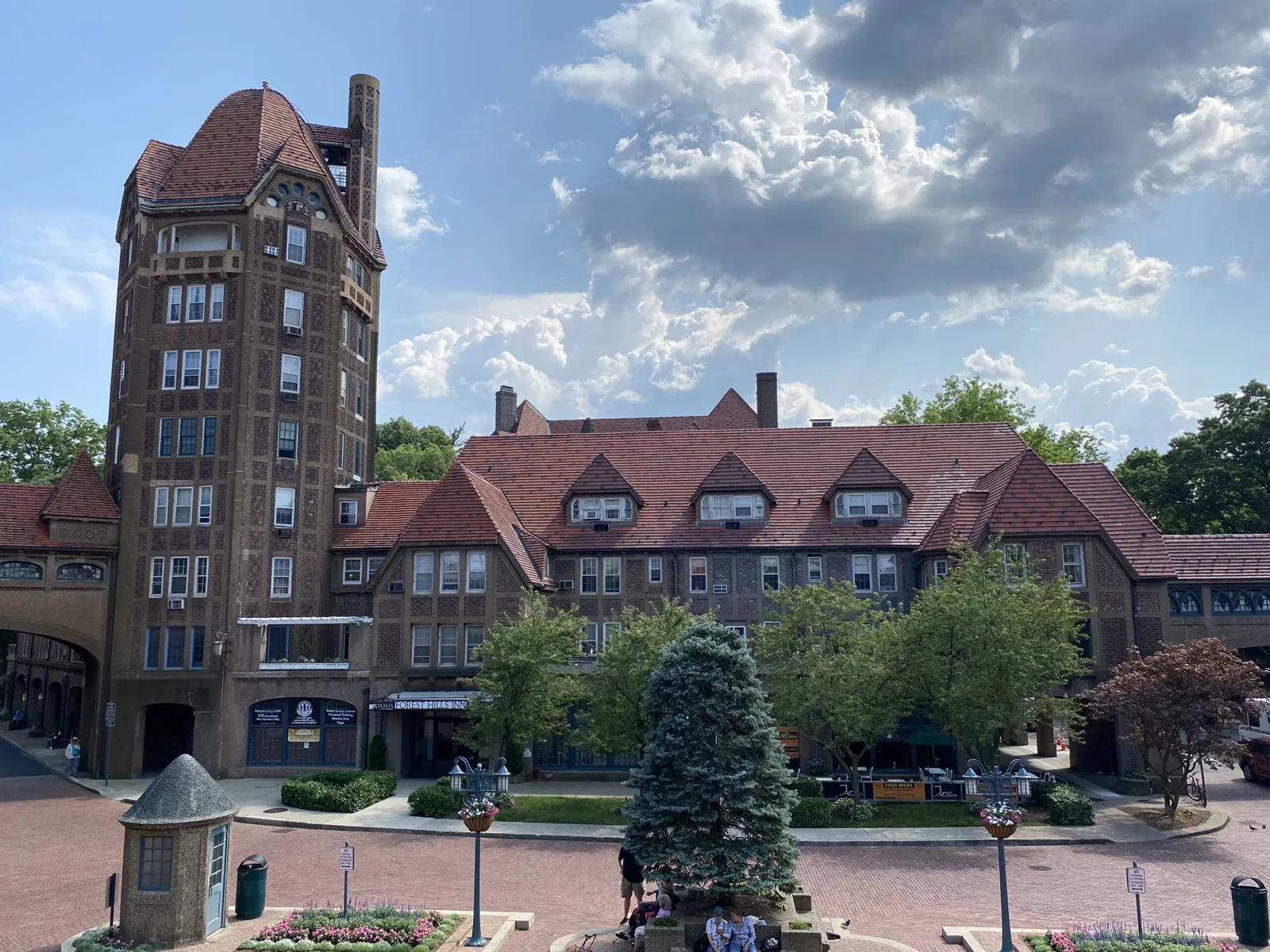
Apartment and Multifamily Roofing
Roof repair and replacement for Queens, NY apartment buildings, from six-family brick rows to tall towers, with tenant notice and phased work explained.
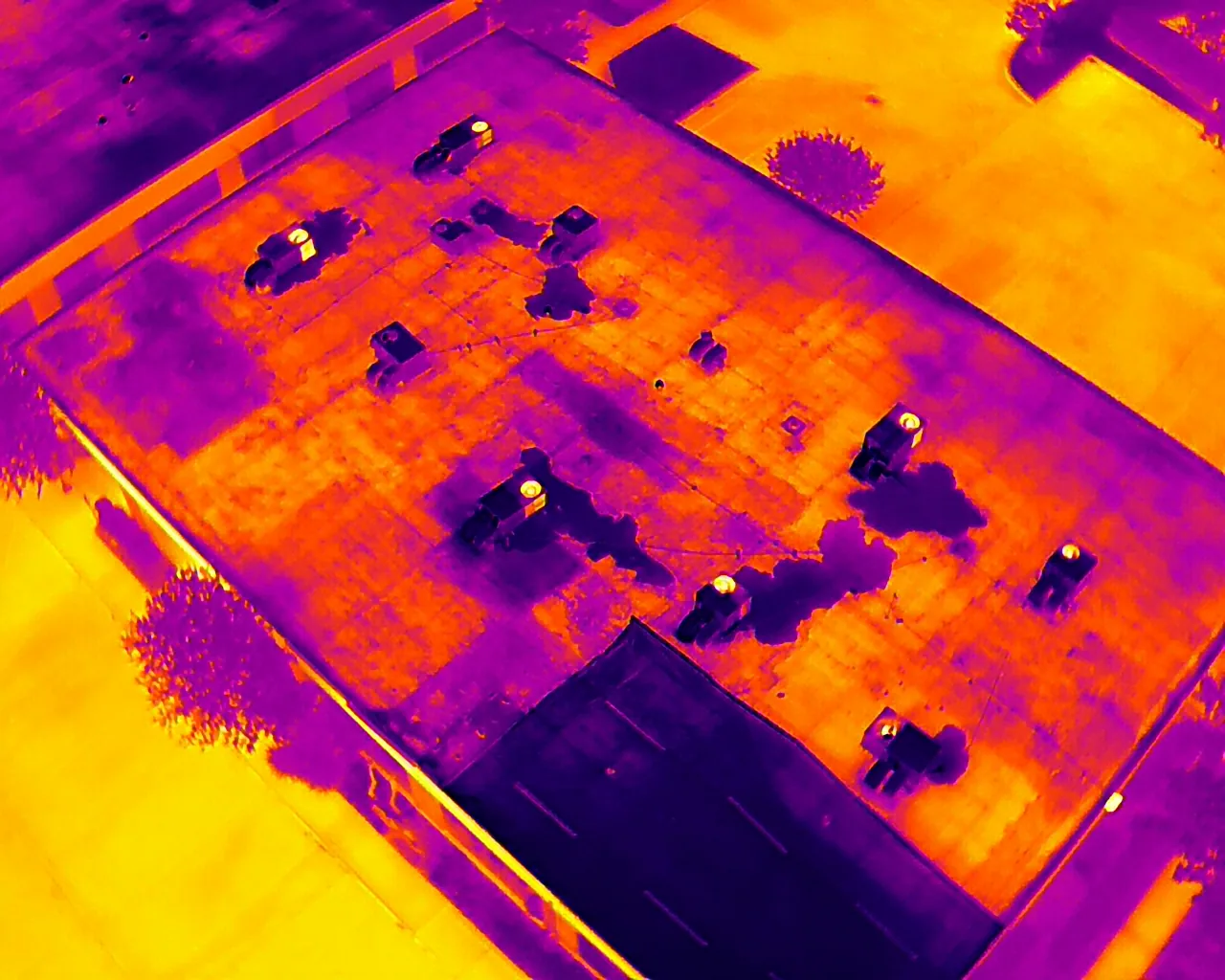
Infrared Roof Moisture Surveys
Infrared scans and core-cut moisture surveys for Queens, NY commercial roofs that locate wet insulation before the owner commits to repair or replacement.
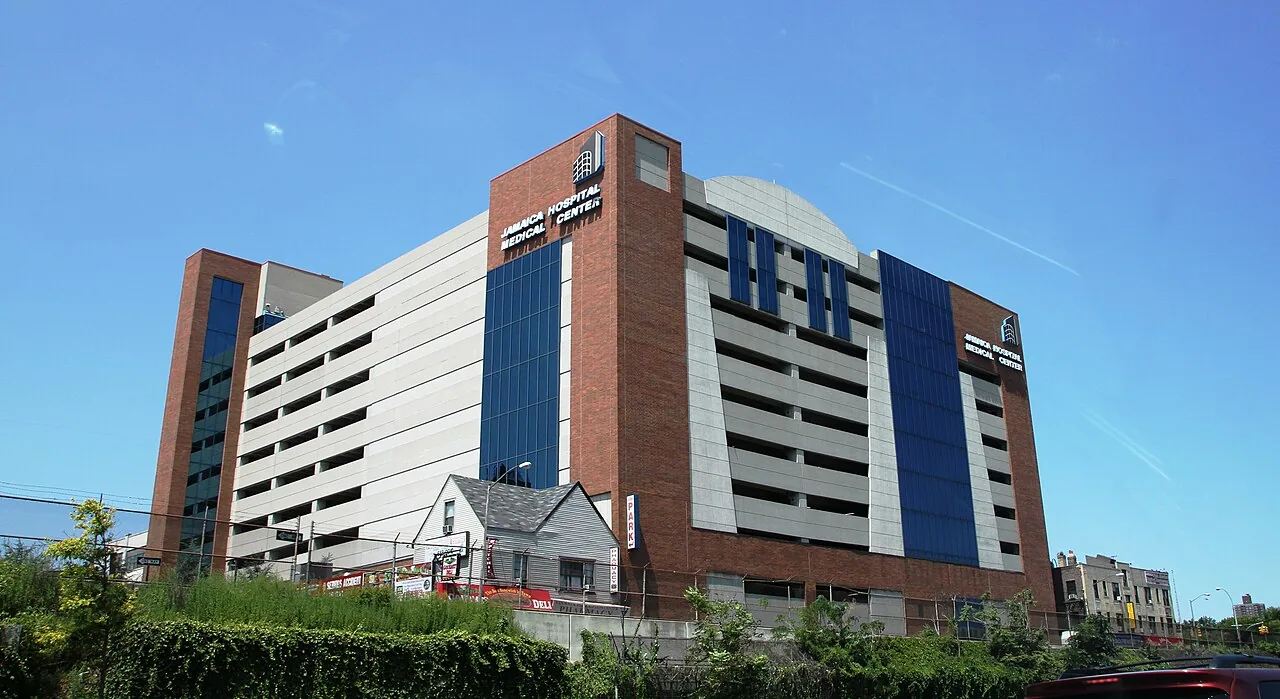
Hospital Roofing
Roofing for hospitals and healthcare campuses in Queens, NY, with infection control, air intakes and phased work planned so patient care never stops.
Ready to Talk About Senior Living Roofing?
Tell us about the building and what you are seeing. We will schedule a roof walk and send photos and a written scope.