
A stain that sits right where an old sloped roof meets a newer flat addition is a leak with a known address. Water running down a pitched surface arrives at the low joint with real speed, and whatever sheds it there, a gutter, a flashing, a step of metal, is working harder than any other part of the roof. In Forest Hills, Queens, NY, where older buildings often grow additions over decades, that junction is the first place we look.
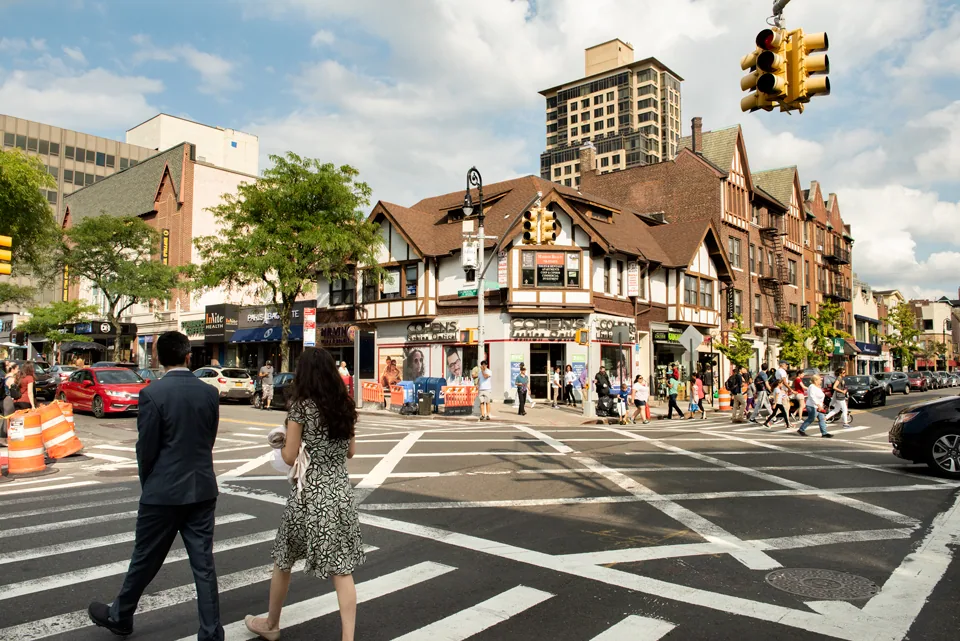
Austin Street, a mile-long stretch between Yellowstone Boulevard and Ascan Avenue, is the commercial heart of the neighborhood. Queens Boulevard is the main thoroughfare and was widened in the 1920s. Shops, offices, churches and apartment buildings line both, and their roofs run from small flat tops to sloped sections with drains, gutters and valleys. We walk each by the same sequence: the drain, the edge, the junctions, then the field.
What do the Austin Street shop roofs need?
A row of shops along a pedestrian-heavy street tends to have small roofs that share walls, rooftop equipment serving restaurants and stores, and a back side that is rarely seen. A flat roof of that kind may rely on one drain, a parapet and a few penetrations, and its weak points are the parapet flashing, the rooftop fans and the shared wall between neighbors. We probe each, clear the drain, and follow any water trail back to the opening, photographing every step so the owner can see what we saw and why a repair is aimed where it is.
Access is the other matter. A shop with a busy sidewalk needs sidewalk protection, a hoist plan and hours that keep the street clear for customers. We plan the staging before the first day, protect entrances and keep noisy steps out of peak shopping hours.
Rear access matters on a street of attached shops. The back of the building is where deliveries arrive, where ladders are set and where rooftop equipment is serviced, and the roof near the rear takes the most wear. We mark a walking route on the roof, add pads where it crosses the membrane, and record any damage so later service visits do not add to it. A cracked or punctured membrane near the rear door is a common first find.
What about clay tile and sloped roofs?
Red Ludowici clay tile roofs top many of Forest Hills' Tudor Revival homes. Those are residential, but the same neighborhood has commercial and institutional buildings that may have sloped sections and the details that go with them: valleys, ridges, hips and the flashing where a slope meets a wall. The material of any commercial roof here is confirmed on the roof. When a sloped roof of tile or slate adjoins a flat roof, each part has its own repair path, and the junction needs a flashing that bridges both.
Clay tile is durable but brittle. Foot traffic cracks it, and a slipped tile exposes the underlayment. A tile roof is repaired by hand, replacing broken pieces and resetting loose ones, and we avoid walking on the tile itself, using roof ladders and padding instead. The underlayment and the flashings at valleys usually fail before the tile does.
Where a tile or slate slope meets a flat roof, the transition is usually a metal flashing lapped under the slope and into the flat roof membrane, with a sealed termination. We check that the laps run the right way, that fasteners are sealed and that the metal has not corroded. A gutter at the base of a slope should be sized for the water it receives, with downspouts that clear the wall.
How do historic buildings change the plan?
Several churches and the Forest Hills Post Office are on the National Register of Historic Places. The point for any owner of an older building is that historic character affects what can change on the outside. Cornices, visible slopes, chimneys and parapets are the items most likely to draw review. Work on a flat membrane behind a parapet is usually less visible.
We separate the visible and hidden work on the scope, so an owner can begin the hidden work while any approvals for the visible parts proceed. Where masonry is involved, a mason handles repointing before new flashing goes on, because new flashing cannot hold on a wall that is crumbling. A flashing failure on an old wall is repaired by rebuilding the termination, not by adding sealant.
What changes near a hospital or medical building?
Long Island Jewish Forest Hills hospital stands on Queens Boulevard, and a medical office roof anywhere nearby is planned around patients and staff. Noise and fumes stay away from treatment rooms, hoisting happens in approved hours, and the roof is closed watertight each night. Infection-control and facility teams are consulted before a roof is opened.
Medical and institutional roofs usually have rooftop equipment that must keep running, so we plan shutoffs with the facility team and avoid disturbing it. Wet areas are marked off, work is staged in small sections and the closeout walk includes the facility manager. Each step is written down, which gives the building's safety and infection-control staff a clear record.
How do storms and winter test these roofs?
Hurricane Ida's remnants made September 1, 2021 the date of the first flash flood emergency in New York City's history, and Queens had most of the deaths. A sloped roof sends that rain to gutters and downspouts, where clogs start the trouble, while a flat roof depends on a drain that must be clear. Snow averages about 29.8 inches a year, and freeze-thaw cycles open any weak joint. We clear gutters and edge metal, check for ice damage in the thaw and look at drains and valleys before the wet season.
What is the next step?
Give us the street and roof age, then photos of the stain, the junction and the drain. A walk of the roof gives you a plain-steps account of what it is doing, with price to follow. Owners in neighboring Rego Park and Kew Gardens take the same route.
Questions Owners Ask
What building owners and managers usually ask before a roof visit.
Water from the slope arrives with speed and volume at the junction, and the flashing there carries more than any other. A small gap or a clogged gutter at that point sends water into the wall or the flat roof edge.
Yes, if matching tiles are available. Broken tiles are lifted out and new ones set, and the underlayment beneath is checked. Matching an old tile can be the slow part, so we raise it early.
A listing recognizes the building and its character, and it can affect what is visible from outside. Repairs that are not visible are usually simpler. The owner should confirm any review requirements before ordering materials.
We protect the sidewalk and entrances, stage materials away from doors and schedule noisy or odorous steps for off-peak hours. The roof is closed up each day, so a shower cannot catch an open deck.
Photos of the stain, the junction between roofs and the drain area help most, together with the street and, if you know it, the roof age. Before any price, you get a description in plain steps of what the roof is doing.
Related Roofing Work
Other pages that connect to Forest Hills.
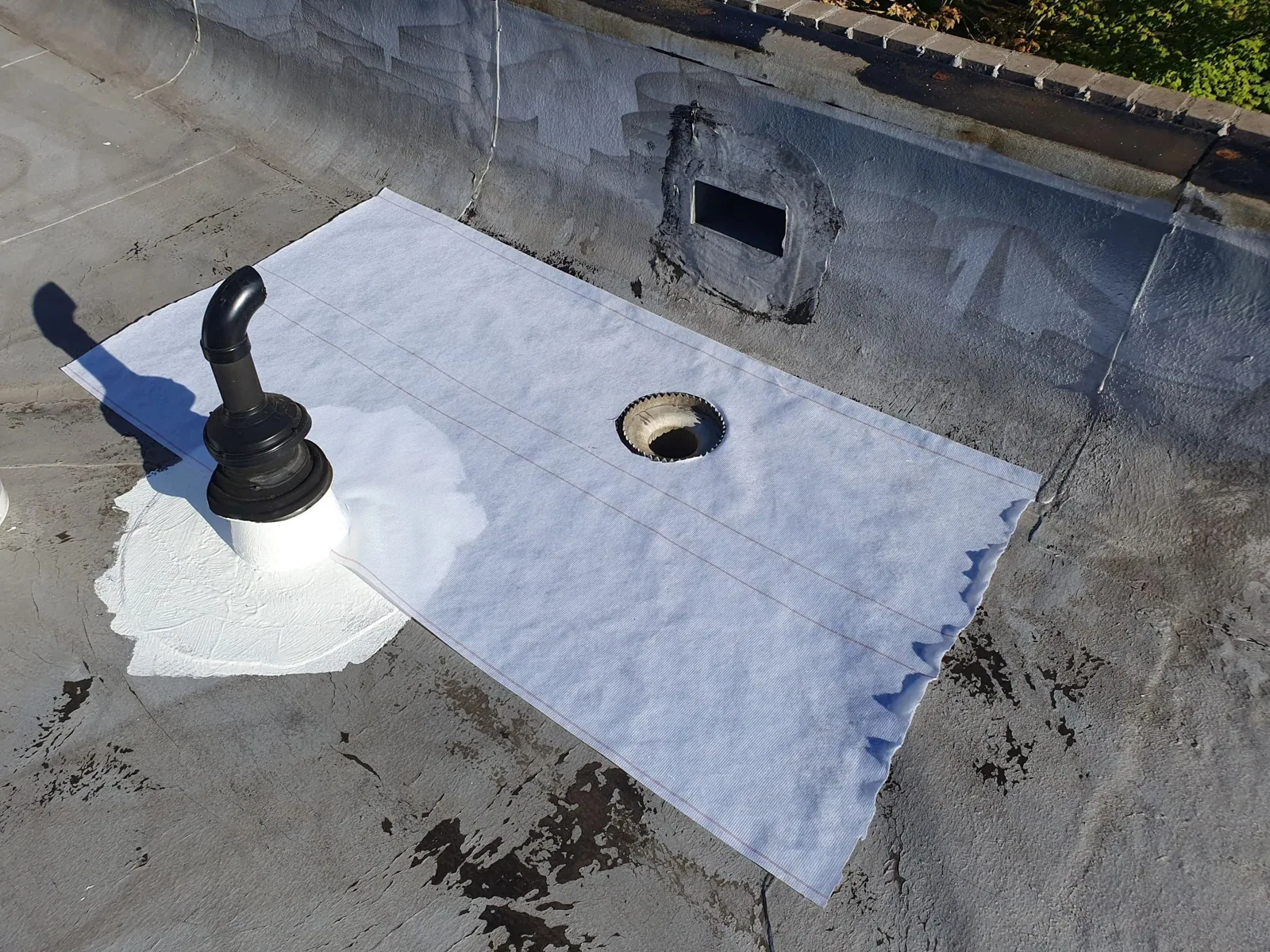
Roof Drains and Scuppers
Roof drain, scupper, cricket and ponding correction in Queens, NY: sizing, strainers, overflow paths and tapered fixes for flat roofs hit by cloudbursts.
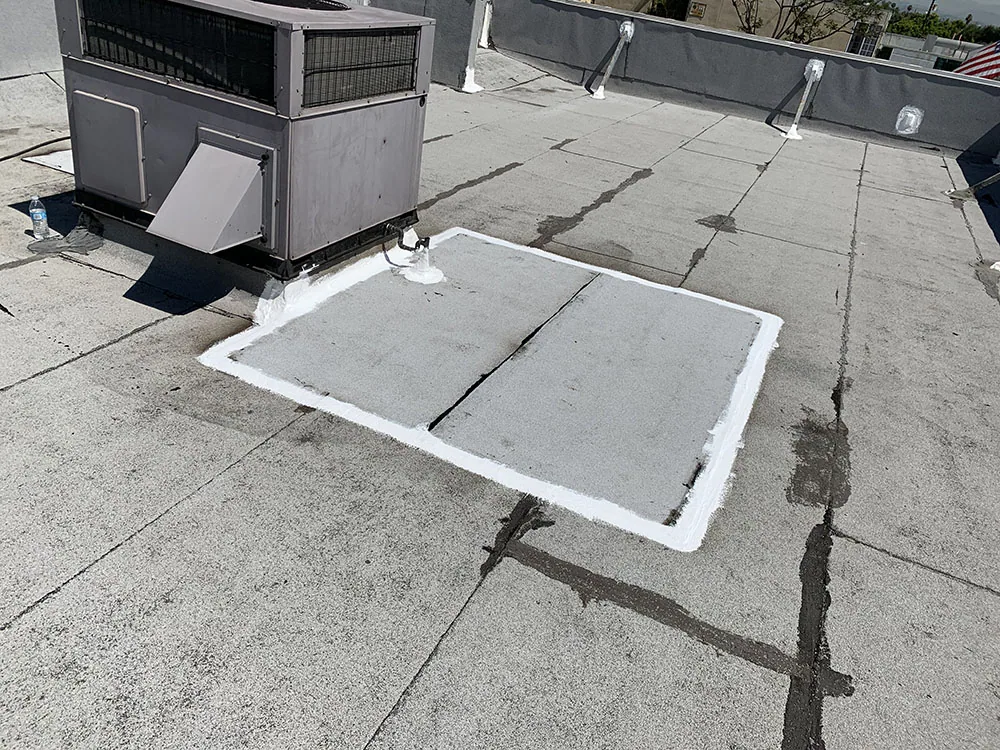
Membrane Puncture Repair
Membrane puncture repair in Queens, NY: cuts, tears and foot-traffic damage on flat roofs found, patched and protected with walk pads and service-route rules.
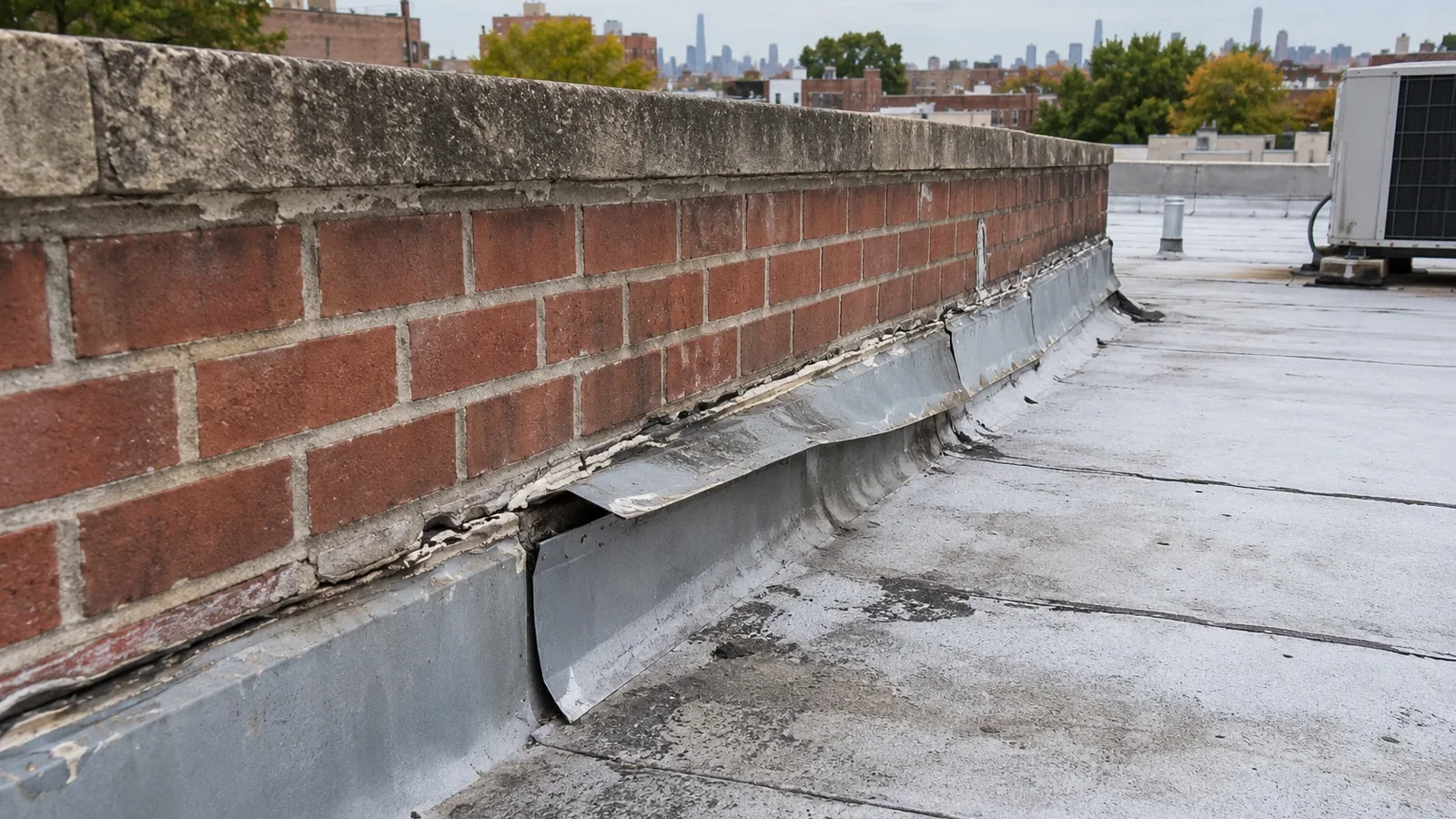
Flashing Failure Repair
Flashing failure repair in Queens, NY: cracked tar, lifted base flashing, open counterflashing and parapet leaks traced and rebuilt on commercial flat roofs.
Ready to Talk About Forest Hills?
Tell us about the building and what you are seeing. We will schedule a roof walk and send photos and a written scope.