
A manager in Elmhurst, Queens, NY gets the call as a brown stain spreading along the top-floor corridor ceiling after a hard rain, and the problem is rarely the corridor. Water that enters at a roof drain, a bulkhead wall or a vent stack runs along the deck, drops at the first joint it finds, and stains the ceiling several feet from the opening. Tracing it back to the roof is slow work, so we take it a step at a time.
Large developments such as LeFrak City, apartment buildings of up to six or seven stories and rowhouse districts stand behind the commercial zoning overlays that run along Queens Boulevard, Broadway, and Grand and Corona Avenues. With that mix, a roof here is likely to sit over many tenants, so a leak is seldom one person's problem. We begin where the water begins, at the drain.
What do the apartment roofs need?
A roof over a six- or seven-story apartment building carries a bulkhead over the stairs, vent stacks from the bathrooms below, a drain or two and a parapet on every side. Each of those is a place where the roof stops and something else begins, and each is checked on the first walk. We probe the flashing at the base of the bulkhead, look at the pipe boots on the stacks, press along the parapet cap and clear the drains.
A development such as LeFrak City puts many roofs under one manager, and what fails on one is worth checking on its neighbors. The age and makeup of each roof come from the walk, but a manager responsible for several gains a great deal from a single ranked report. The first roof walked teaches us what to look for on the next, and the report shows where to spend first, where a leak would hurt most.
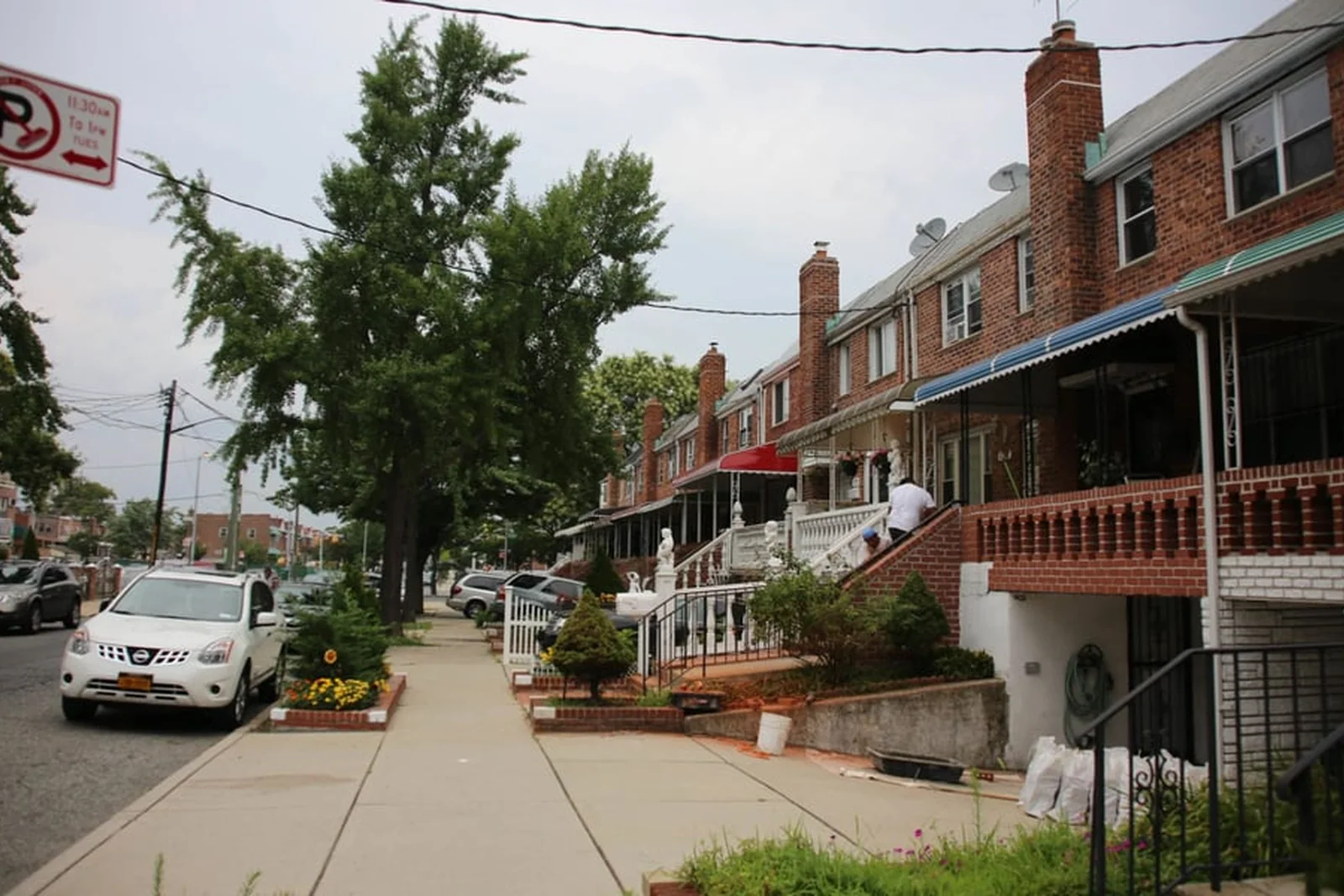
Rowhouse districts are the smaller cousins of these roofs. A row of attached buildings shares parapet walls, and the roof of one ends at a wall that belongs to two. When a neighbor re-roofs and raises a membrane against the shared wall, water that once drained freely can stand against your flashing. We measure the neighboring roof height on the walk and check the wall above the membrane line, since that is where a shared edge fails first. Rowhouse blocks with a shop at street level get the same attention to the rear parapet and the single drain.
What about the shop roofs on Queens Boulevard, Broadway and the avenues?
Along Queens Boulevard, Broadway, and Grand and Corona Avenues, commercial buildings carry small flat roofs with rooftop fans, exhaust ducts and signs. The weak points are the penetrations and the rear parapet, where equipment gets added and nobody flashes it properly. A shop owner who sees a drip should look at what stands on the roof above, not at the field. We follow the water up, test each penetration with a hose and repair the one that fails, rather than coating the whole surface.
Shared walls matter on these blocks. Two shops may share a parapet, and the flashing on one side can be sound while the other has failed. We photograph both sides and write the report so each owner can see the condition of their own half.
How are the large retail roofs different?
A 150-store mall with roughly 1,000,000 square feet of gross leasable area, Queens Center is the neighborhood's big retail roof, and the smaller Queens Place Mall opened in 1965. They are part of Elmhurst's commercial picture, and what either roof carries is known only after a walk, but large retail roofs in general behave in familiar ways. They have many rooftop units, long drain runs and edges that see wind, ponding shows first on the long runs between drains, and the penetrations around the units are where leaks start.
A roof like that does better on a calendar than on reaction. A walk each spring and fall, with drains cleared and every curb checked, catches most problems early, tenants never notice it, and the record helps the owner when it is time to budget for a coating restoration or a recover.
A parking deck or canopy belonging to a retail property has its own drainage and flashing, and a leak into a garage level is a different complaint from a leak into a store, so each is listed separately on the roof plan and the owner can see every surface that sheds water.
What changes near a hospital?
Elmhurst Hospital Center is in the neighborhood. For any healthcare-related building the rules change: noise, dust and odors must stay away from patient areas, access is controlled, and the schedule has to be coordinated with the facility team. We plan hoisting and noisy steps for approved hours, close the roof watertight each day and keep fumes away from air intakes. A medical office roof is planned the same way, with the interior clinic hours in mind.
What does the weather ask of an Elmhurst roof?
The city gets about 49.5 inches of precipitation and about 29.8 inches of snow in an average year. A roof with one drain and no overflow path is at risk in a storm like Hurricane Ida's remnants, which on September 1, 2021 caused the city's first flash flood emergency and left Queens with most of the deaths. We look for a second path and recommend an overflow scupper where the parapet allows.
Freeze-thaw works on every joint, and the strong urban heat island bakes the surface in summer. Open flashing and ponding water are the two problems we see most, and both are cheaper to fix early.
What is the next step?
Send the street, the roof age if you know it and photos of the stain and the drain. On the roof we clear the drains, probe the seams and flashings, and set out in plain steps what it is doing before turning to price. Owners in neighboring Corona and Rego Park get the same walk, which begins with the drain and scupper check.
Questions Owners Ask
What building owners and managers usually ask before a roof visit.
Water travels along the deck and the ceiling framing until it finds a gap. The stain appears where it drops, not where it entered. We count floors, measure from the nearest riser or bulkhead and test the suspect flashing with a hose, one section at a time, while someone watches the ceiling.
That depends on the deeds and any party-wall agreement, which an attorney should read. We document the condition of each side with photographs and measurements, so both owners work from the same facts.
In general, yes. Staging comes from safe access points, entrances and stairwells are protected, loud steps keep to agreed hours and the roof is closed watertight at the end of each day, with notice to tenants before the work begins.
Two walks a year make a good start, in spring and fall, with another after any major storm. A roof with many rooftop units needs its curbs and drains checked each time, because service crews add wear.
Send photos of the stain and the area around the drain, noting the street and, if known, how old the roof is. What the roof is doing gets explained in plain steps, and price follows.
Related Roofing Work
Other pages that connect to Elmhurst.
Roof Coating Restoration
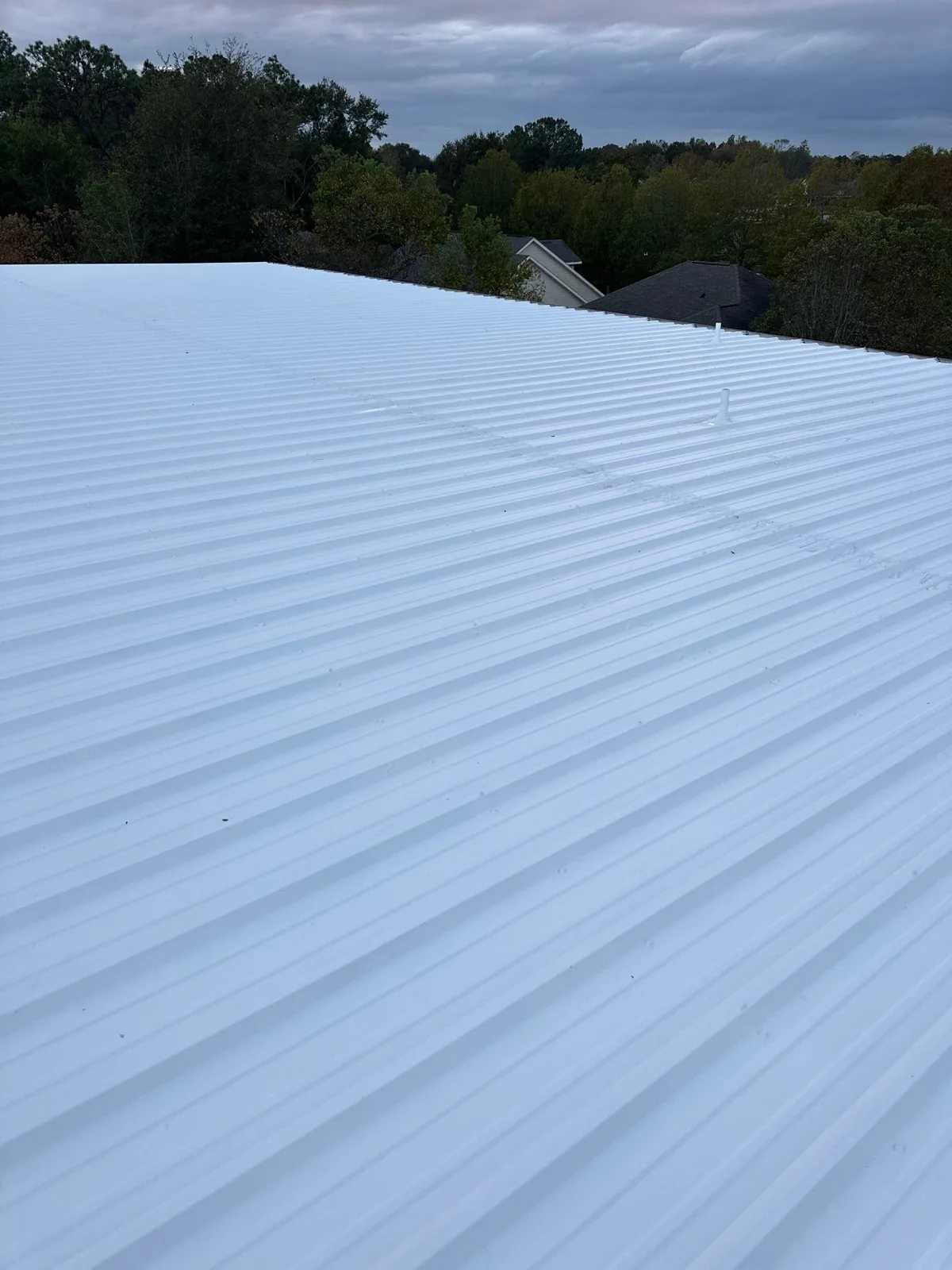
Roof coating restoration in Queens, NY: when a silicone or acrylic system can extend a sound, dry roof, how we prepare the surface and what drives cost.
Medical Office Roofing
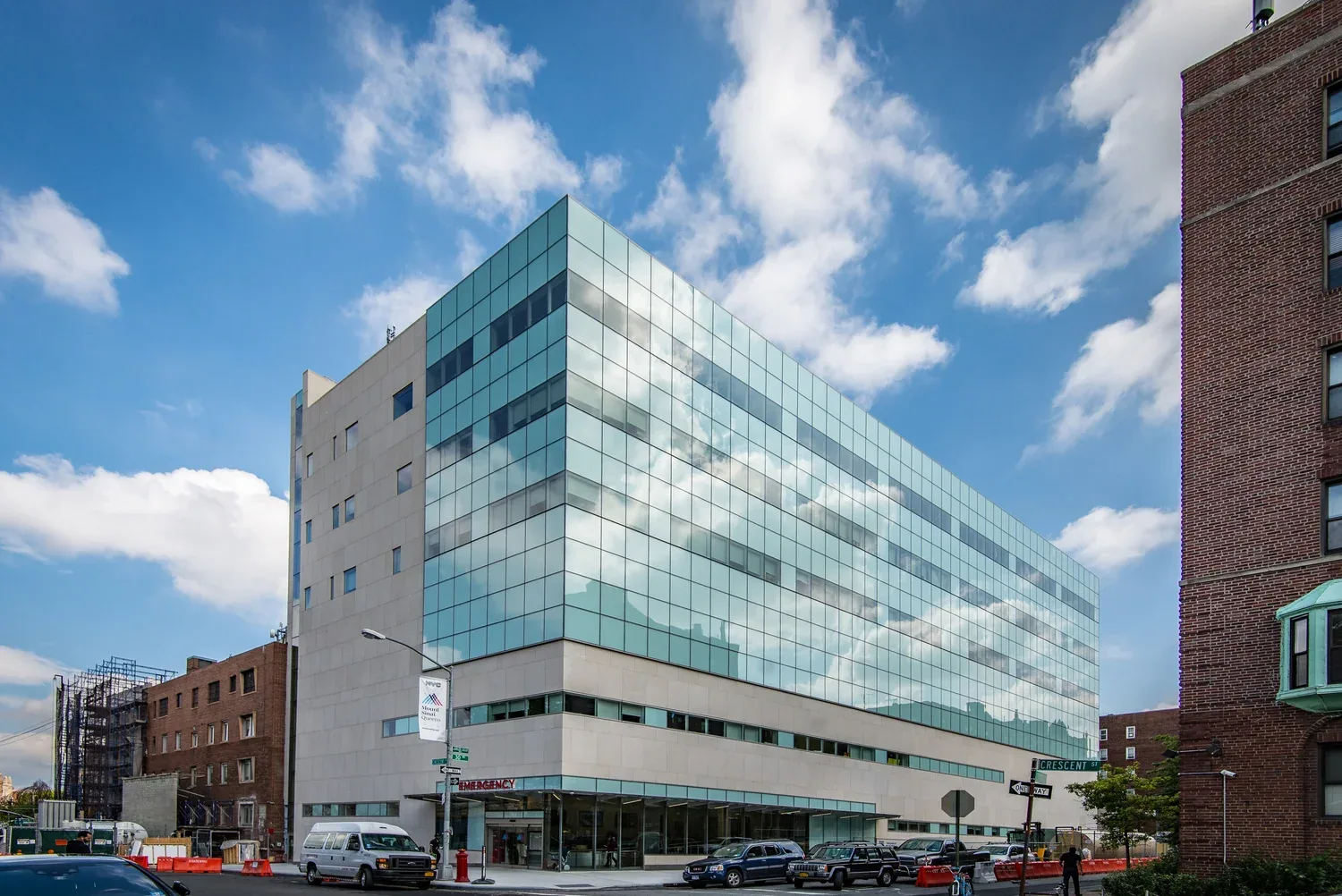
Roofing for medical offices and clinics in Queens, NY, with moisture, odor and noise controlled so exam rooms stay open and ceilings stay dry above patients.
Flashing Failure Repair
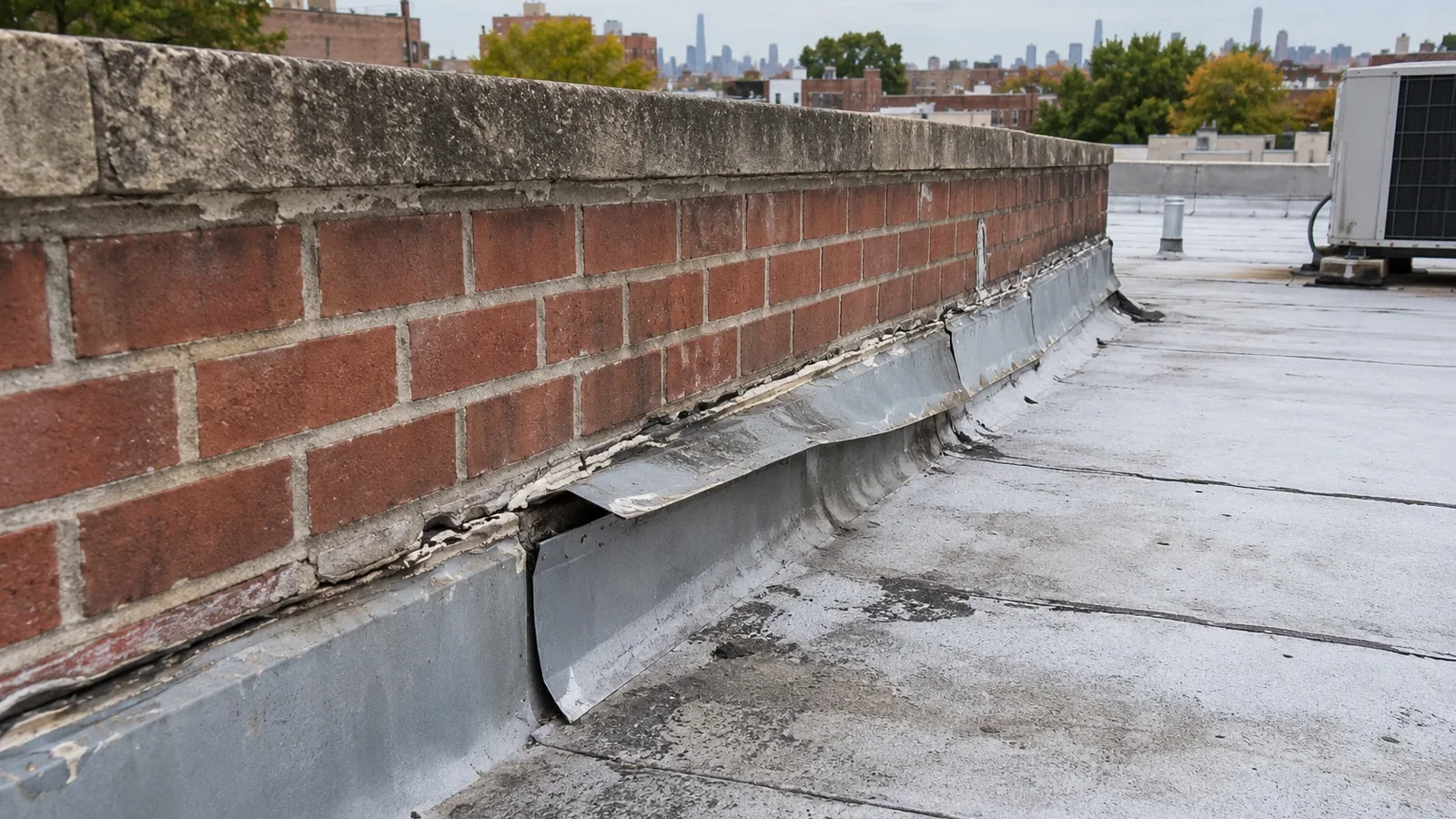
Flashing failure repair in Queens, NY: cracked tar, lifted base flashing, open counterflashing and parapet leaks traced and rebuilt on commercial flat roofs.
Ready to Talk About Elmhurst?
Tell us about the building and what you are seeing. We will schedule a roof walk and send photos and a written scope.