
The first photograph a co-op board president sends is usually peeling paint and a damp patch near the top of a top-floor wall, just under the cornice. The paint is not the problem; it only shows what the wall behind it has been taking in, and the water has typically come from above, through a parapet cap, a failed coping joint or flashing at the roof edge. Following the damp up the wall leads to the roof edge, and that is where the repair begins.
In Kew Gardens, Queens, NY, most buildings are apartment buildings of roughly four to ten stories, mixing rentals and co-ops. The main commercial center is Lefferts Boulevard between Austin Street and Metropolitan Avenue, and Queens Borough Hall and a county criminal court sit at the northern end of the neighborhood on Queens Boulevard. For us that means many flat roofs on mid-rise buildings, each with a board, a managing agent or an owner who has to explain a roof decision to others.
What does a mid-rise apartment roof carry?
A roof on a building of four to ten stories carries a bulkhead over the stairs, often a machine room, vent stacks from every bathroom riser, a drain or several, and a parapet on the street side and the other three. Those details sit over homes, so a leak is never one person's problem. The first walk goes to the bulkhead base, the stack boots, the drains and the parapet cap, in that order, because those are the places that fail in apartment buildings.
Height adds another factor: wind. A taller building catches stronger gusts at its roof edge, and edge metal and coping carry that load. Hurricane Sandy brought hurricane-force gusts to the New York metro area in October 2012, and a roof edge that had been marginal is the first place that shows it. We check edge metal and coping by hand for loose fasteners and open joints.
Water travels inside a mid-rise building in ways that fool people. A stain on the fourth floor may start at a roof drain, travel down a plumbing chase and appear several floors below its source. We trace by floor count and riser line, and we ask the managing agent for the dates and places of past complaints. A pattern of stains that follow one riser points to a stack boot or a drain; a pattern along an outer wall points to the parapet. Either way, the managing agent's complaint log saves a good part of the first walk, because it tells us which line to follow before we leave the stair.
How does a co-op or condominium board decide?
A board needs three things: a plain description of the problem, a ranked list of what to do and a cost for each choice. A written roof condition report supplies them, with dated photographs, a roof plan marked with each finding and a scope in sections. Findings are sorted into repair now, watch and plan, each with its reason, so the board can approve a repair this year and set money aside for a larger step later.
Boards also care about assessment timing and resident disruption. We describe the sequence, the likely duration, the noise and any access needs inside the building. Work is staged in sections, and each section is closed watertight each evening. Residents receive notice before the crew arrives, a contact person is named for questions on the day, and the board hears about any change to the plan the same morning rather than at the next meeting.
Reserve planning is part of the conversation. A roof that will need replacement in a few years can be kept watertight with targeted repairs while the board collects funds, and we write the repair list so it does not waste money on parts that will be removed. A roof with years of life left deserves a maintenance calendar instead, with drains cleared each spring and fall and the parapet walked after every winter.
What about the shops on Lefferts Boulevard?
Lefferts Boulevard between Austin Street and Metropolitan Avenue is the main commercial center. Where a low shop roof sits beside a taller wall, the common failures are at the junction with that wall, at the drain, and at rooftop fans and ducts, and a flashing failure at the wall is the usual cause of a stained shop ceiling.
What changes near civic buildings?
Queens Borough Hall and a county criminal court sit at the northern end of the neighborhood on Queens Boulevard. Public and institutional buildings run on procurement rules and security procedures, so a roofing job that involves one brings questions about insurance documents, background checks and site access, and a longer lead time. For nearby private buildings the effect is traffic and parking restrictions that shape the hoist and delivery plan.
For private owners near these buildings, the practical effect is street activity. Parking limits, truck access and security checkpoints shape where a hoist can stand and when deliveries can arrive. We walk the block with the manager, note the restrictions and build them into the schedule, so the first day does not turn into a negotiation with the street.
How do storms and winter test these roofs?
Hurricane Ida's remnants led New York City to declare its first flash flood emergency on September 1, 2021; the deaths were concentrated in Queens. A mid-rise roof sheds a great deal of water to a few drains, and a clog turns into a pond fast. Snow comes to about 29.8 inches a year, and a drain or scupper blocked by ice sends water backward. We clear drains and scuppers, confirm an overflow route and look at the parapet cap for open joints after each winter.
What is the next step?
Start with photos of the damp wall and the drain, then add the street, the number of floors and the roof age if you know it. We look the roof over and put in plain steps what it is doing, leaving price for later. Owners in neighboring Forest Hills and Richmond Hill follow the same walk.
Questions Owners Ask
What building owners and managers usually ask before a roof visit.
We look at the parapet cap, the coping joints and the flashing above the damp spot, then test each with a hose from the top down while someone watches the wall. Water often enters well above where the paint shows it.
Mostly. Crews work from the roof, entrances stay protected, loud steps keep to agreed hours and each day ends with the roof watertight. Residents get notice, and anyone in a top-floor unit hears specifics about the day of the work.
A written scope with photographs, a cost for each section and a ranking of urgency. We prepare it in a form that can be attached to the board's minutes or sent to a lender.
They need attention to the details of their age: masonry parapets, old flashing terminations and several layers of old roofing. A core sample shows what is on the deck, and the choice between recover and replacement follows from it.
What we need are photos of the damp wall, the parapet and the nearest drain, plus the number of floors and, if known, the roof age. What the roof is doing will be explained in plain steps before price.
Related Roofing Work
Other pages that connect to Kew Gardens.
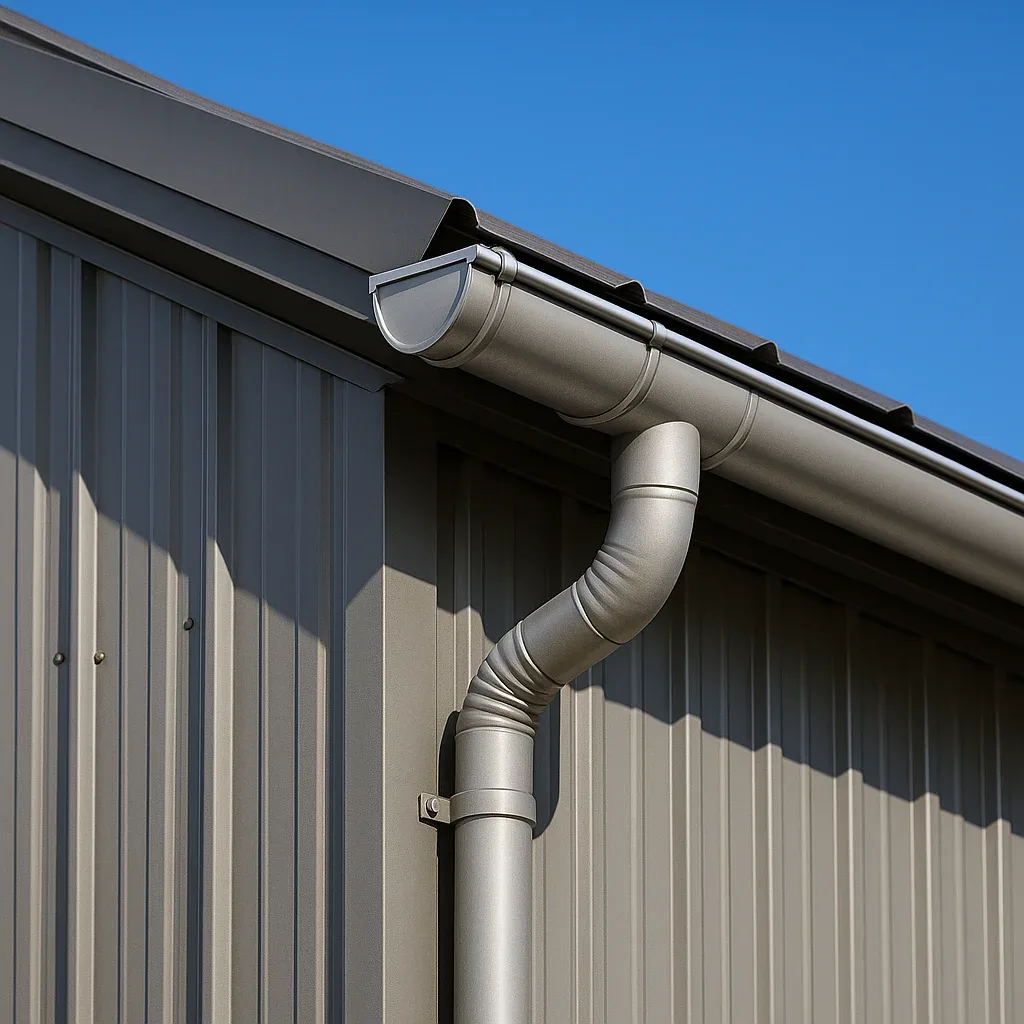
Edge Metal, Coping and Gutters
Edge metal, coping, gutter and downspout repair for commercial roofs in Queens, NY: wind uplift, open joints, brick staining and drainage at the roof edge.

Roof Condition Reports
Written roof condition reports in Queens, NY: photographs, moisture findings, ratings and ranked recommendations an owner, lender or insurer can read.
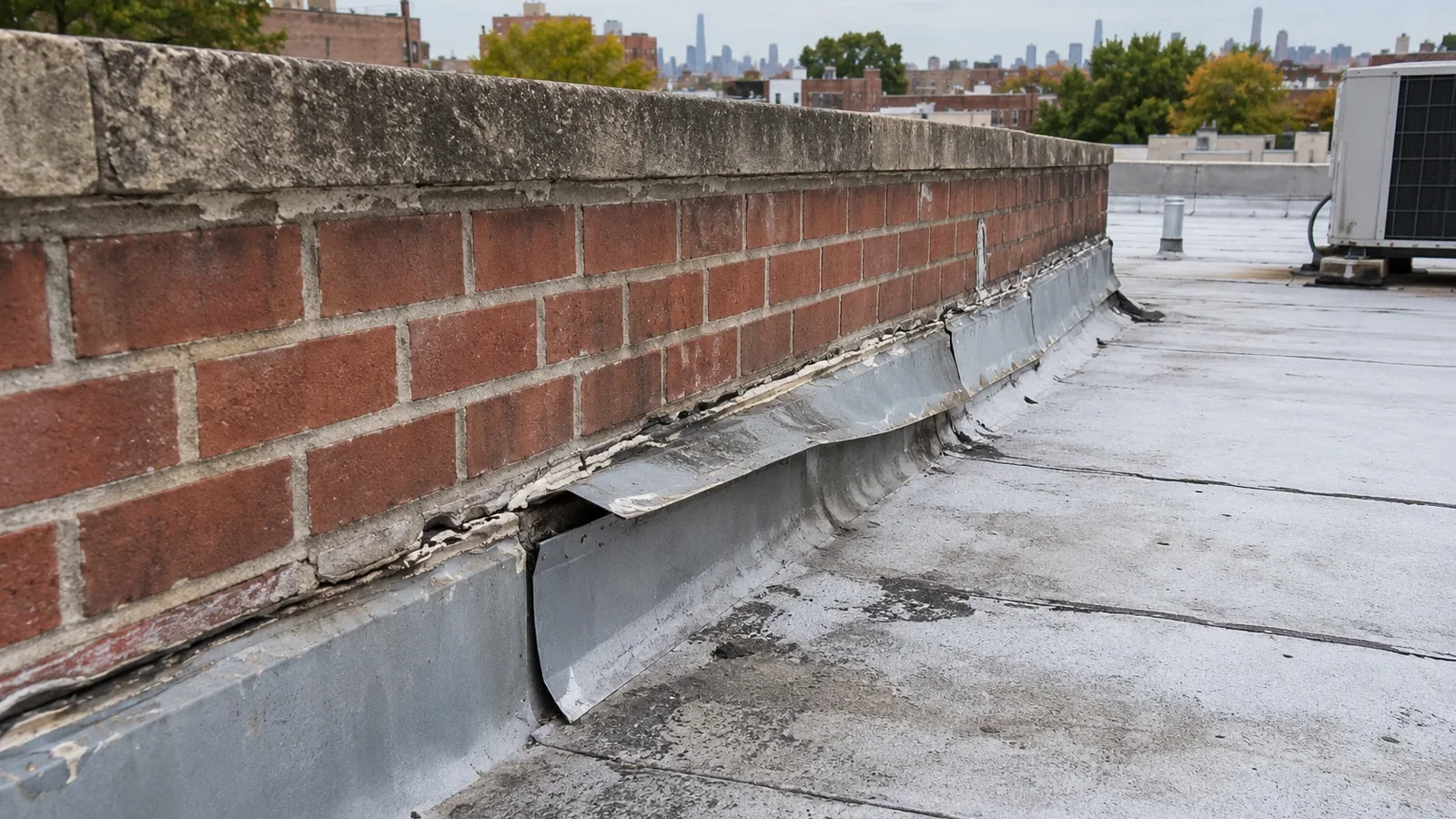
Flashing Failure Repair
Flashing failure repair in Queens, NY: cracked tar, lifted base flashing, open counterflashing and parapet leaks traced and rebuilt on commercial flat roofs.
Ready to Talk About Kew Gardens?
Tell us about the building and what you are seeing. We will schedule a roof walk and send photos and a written scope.