
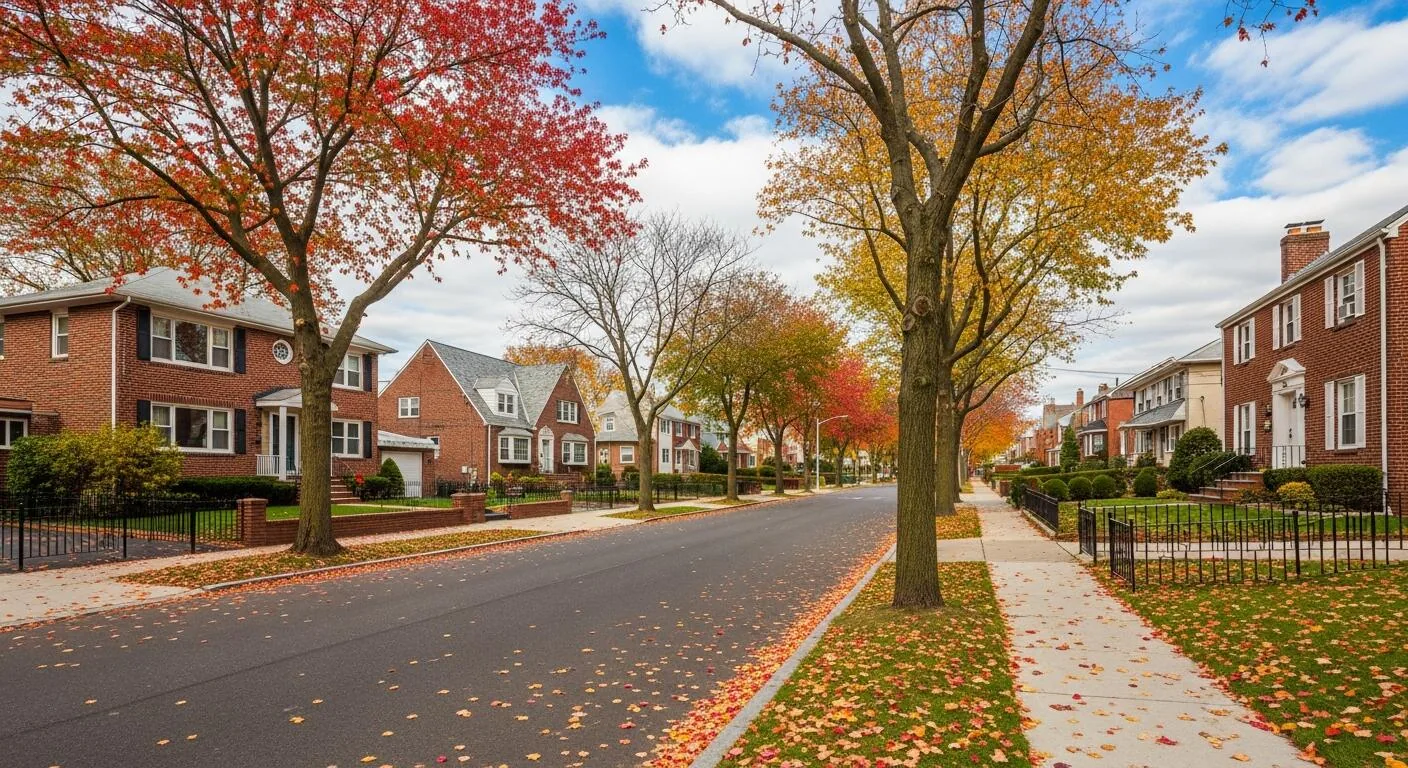
Roof problems in Fresh Meadows, Queens, NY often announce themselves as a soft, spongy patch underfoot near a rooftop unit, usually weeks after the first stain appeared in a stockroom ceiling. The membrane on top may look intact. Underneath, insulation that has been taking on water through a worn flashing or a clogged drain turns heavy and loses its grip on the deck. Retail centers along 188th Street, the shops lining Union Turnpike and the apartment towers of the housing complex all carry roofs where that slow wetting can go unseen. We work on commercial roofs here, and we find where the water is going before saying a word about replacement.
What commercial buildings are on the roofs here?
Three kinds of property set the pattern. A roughly 12-acre retail center runs along 188th Street near the Horace Harding Expressway, which means a long chain of storefront and big-tenant roofs, each with its own mechanical equipment. Union Turnpike is the main commercial street in neighboring Hillcrest, with about forty stores along roughly one mile of it, and shops of that kind tend to share parapet walls and carry rooftop condensers. Then there is the Fresh Meadows housing complex, which includes a 20-story apartment tower finished in May 1962 and the 288-unit Meadowlark Gardens.
St. John's University's main campus and Queens Hospital Center sit next door in Hillcrest, so crane or hoist work for a nearby roof has to be scheduled with that busy institutional neighborhood in mind.
What happens on a shopping center roof?
A retail center roof is a long run of connected low-slope surfaces, broken up by roof hatches, exhaust fans for restaurants, air handlers and sign supports. Water finds the details first. A cooking exhaust curb with a cracked sealant line, a drain strainer packed with debris, a seam that has lifted where two sheets meet near a step in the deck: any of these will let rain in at one tenant's ceiling while the neighboring tenant stays dry. That uneven pattern is why leases and roof responsibility get tangled quickly in multi-tenant plazas.
The first thing we check is the drain path, because a roof that cannot shed a cloudburst will hold water against every seam and flashing it touches. After that we probe the seams with a flat tool, look at the base of each curb and read the edge metal where it meets the wall. A shopping center roof with several patches on it also gets a check at each patch edge, since a ridge left by one repair can hold water.
How do apartment towers and garden complexes differ?
A tall residential tower and a low garden-style building share one issue: the roof is far from the people who depend on it. A leak in a twentieth-floor corridor ceiling may begin at a parapet three floors away, and water will travel along a conduit or a beam before it shows up. On a tower roof, wind exposure is higher, so the edge metal, the coping and the flashing at the parapet carry more of the load than on a plaza roof. A coping joint that has opened by a quarter inch gives water a direct route behind the wall.
A complex with a 288-unit building like Meadowlark Gardens adds a scheduling question. Residents are home, so noise and hoisting hours matter, and apartment roof work goes in phases so each section is closed up before the next opens.
How do we confirm where the water enters?
The stain is the starting point and the search moves upward. The ceiling tile gives the room, the room gives the roof zone, and on the roof we look for the nearest drain, curb or seam, testing a suspect drain with running water and checking with a seam probe whether the weld or adhesive holds. A ceiling that stains under a roof that looks fine is a case for an infrared moisture survey, which shows warm, wet insulation after sunset and lets us mark the wet area without cutting into the roof.
A short condition report with photographs comes back, and the plan inside is marked patch, fix or replace. A roof inspection is the usual first step, and a drone pass speeds up a tall tower where walking the edge is slow.
What does the weather in New York City ask of a roof?
The city receives about 49.5 inches of precipitation in a normal year, and the cloudbursts matter more than the average. Slow-draining flat roofs get caught out when Hurricane Ida's remnants arrive; on September 1, 2021 they brought the first flash flood emergency in the city's history. Snow adds a second stress, about 29.8 inches in a typical year with 27.3 inches falling on January 23, 2016, and meltwater can refreeze at drains and scuppers. Dark membranes bake and seams widen under a strong heat island, with July afternoons averaging near 85 degrees at Central Park.
What are the repair options, and what drives the cost?
If the damage is a few failed flashings or one bad seam, a leak repair may be the whole job. If the membrane is worn but the insulation below is dry, a coating restoration can add service years at lower cost and with less disruption. When insulation has gone wet across a wide area, a recover or full replacement is the sound route, and the work moves to a bigger scope.
Roof size and access, the number of penetrations, the wet insulation that must come out, the system chosen and the schedule an occupied building allows all drive cost. The assembly requirements come from Chapter 15, the part of the NYC Building Code that deals with roof assemblies and rooftop structures, and hoisting on a tower is priced differently from ladder access on a plaza.
What is the next step?
Take a photograph of the stain and one of the nearest drain, and add the roof age if it is known. We will walk the roof, say in plain steps what is happening up there and only then discuss price. Owners in nearby Flushing, Bayside or Jamaica start the same way.
Questions Owners Ask
What building owners and managers usually ask before a roof visit.
Water that enters at a curb or seam does not drop straight down. It runs along the deck, soaks into the insulation and spreads sideways until it finds a gap. That delay is why the stain appears long after the storm and far from the actual opening. We trace the stain upward and probe the nearest seams, then confirm with a moisture scan if the surface looks sound.
Yes, and many plazas are done that way. We divide the roof into zones that follow drain lines and tenant boundaries, so the water from an open zone never flows into a closed one. Each zone is dried in before we move on. Tenants with sensitive stock or food service are scheduled for the quietest hours we can arrange.
Wind, access and resident schedules all change. We use hoists and edge protection that suit the height, pay extra attention to coping and parapet flashing, and plan around residents who are home during the day. The membrane choice is often driven by wind uplift at the edges rather than by anything about the interior.
A coating makes sense when the membrane is sound enough to bond to and the insulation under it is dry. We confirm both with a moisture scan and a pull test before recommending it. If a scan shows wet insulation, coating over it only traps the water, so the plan shifts to partial removal or a recover.
Yes. Roof assemblies and rooftop structures fall under Chapter 15 of the Building Code, which fire rating, wind resistance and attachment must satisfy, and a system meeting those requirements is chosen before warranty options and budget come into it.
Related Roofing Work
Other pages that connect to Fresh Meadows.
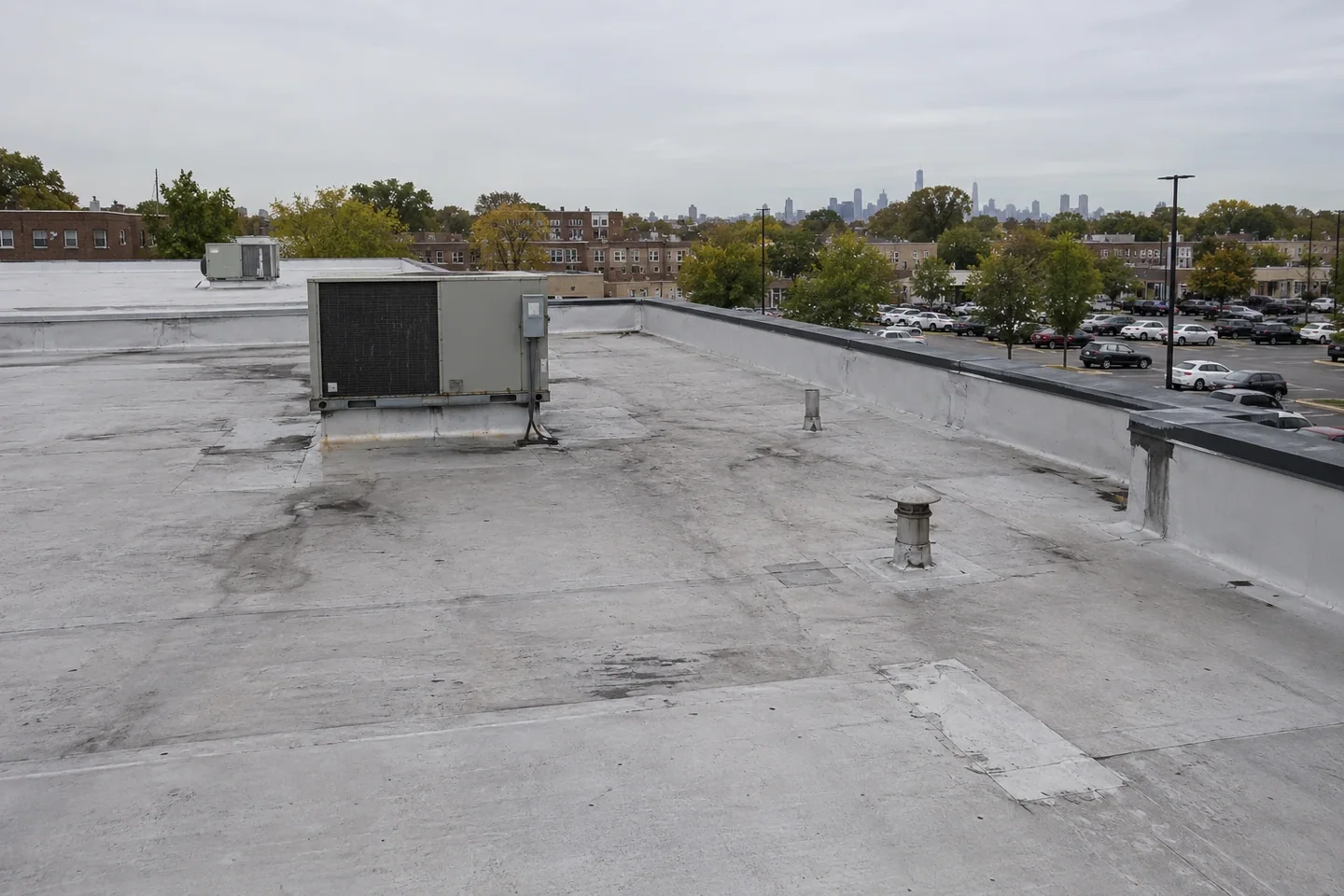
Shopping Center Roofing
Roofing for Queens, NY shopping centers and strip retail: tenant leaks, shared roofs, parking-deck tie-ins and repairs sequenced around store hours.
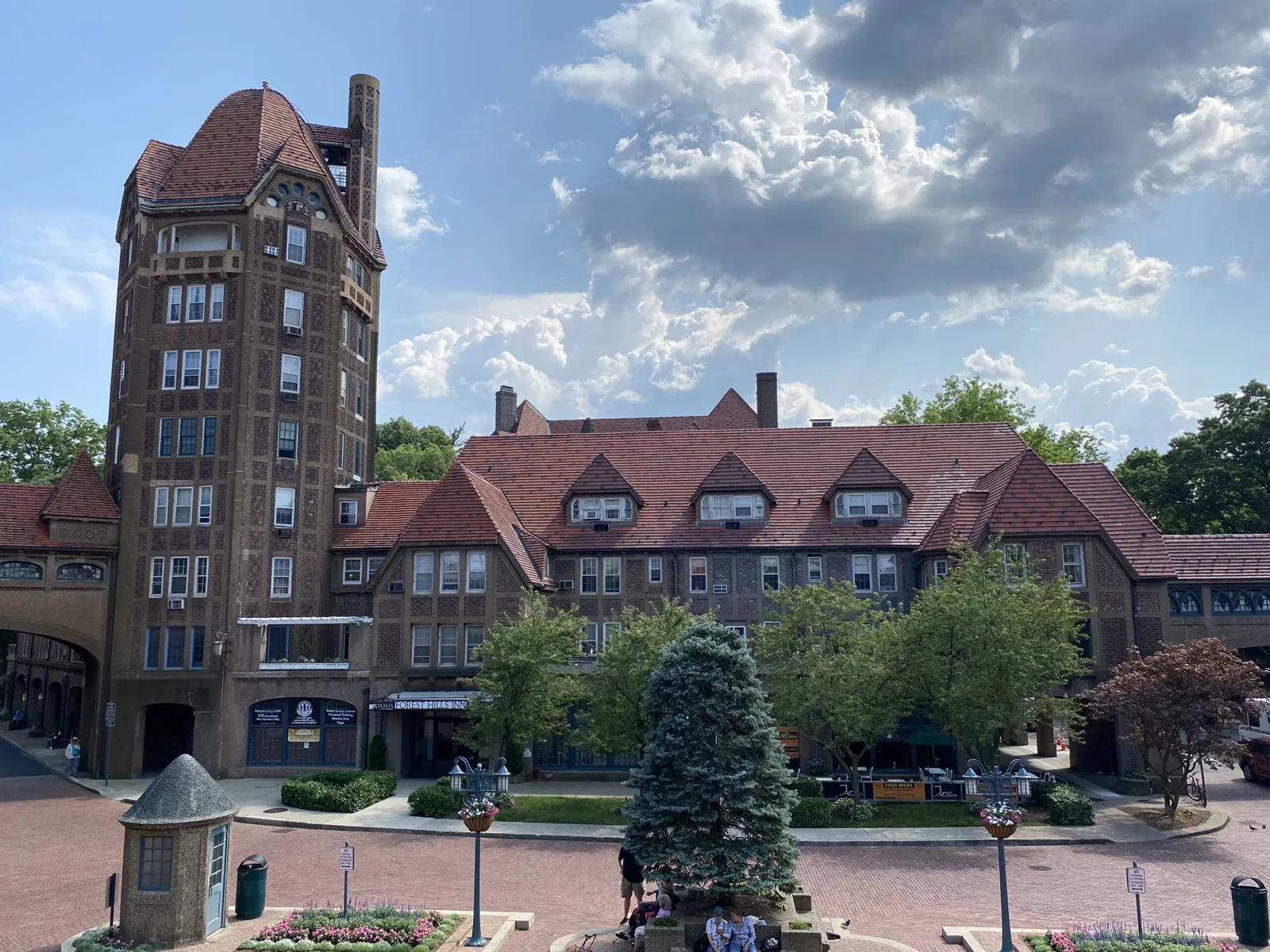
Apartment and Multifamily Roofing
Roof repair and replacement for Queens, NY apartment buildings, from six-family brick rows to tall towers, with tenant notice and phased work explained.
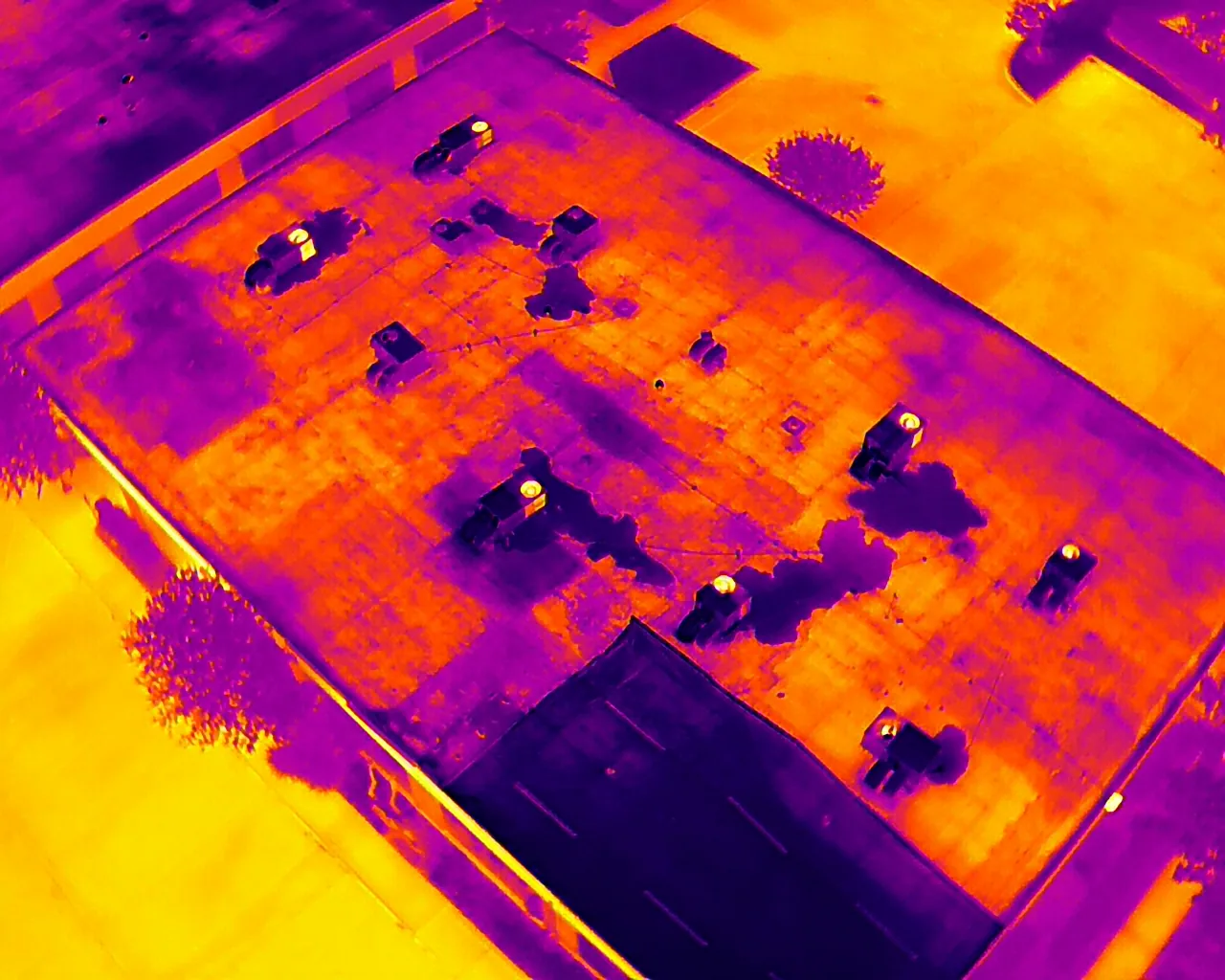
Infrared Roof Moisture Surveys
Infrared scans and core-cut moisture surveys for Queens, NY commercial roofs that locate wet insulation before the owner commits to repair or replacement.
Ready to Talk About Fresh Meadows?
Tell us about the building and what you are seeing. We will schedule a roof walk and send photos and a written scope.