The same damp ceiling tile means one thing in a shop and another in a medical suite that once belonged to a factory, and the roof above the suite deserves different attention. The people below are patients, the records are paper and electronic, and a roof built to keep rain off machinery is now keeping it off rooms that cannot tolerate water. Change of use is part of the picture in Ozone Park, Queens, NY.
The Lalance and Grosjean factory shut in the 1960s; it became a city landmark in 1981 and today works as a medical clinic. The lesson is general: an older commercial building with a new use needs its roof read against that use. Liberty Avenue and Rockaway Boulevard run through the neighborhood, and Woodhaven Boulevard was widened to 150 feet in the 1920s. Along those streets the roofs of shops, offices and clinics each get the same plain sequence of checks.
What happens to a roof when a building changes use?
Three things change. The consequence of a leak rises, because the contents below are more sensitive. The equipment on the roof changes, because a clinic needs ventilation, exhaust and sometimes backup power, and each new unit pierces the membrane. And the rules change: medical and similar uses bring requirements for access, noise and schedule that did not apply to a factory.
We start with a count of every penetration and a core sample to see how many layers sit on the deck. If the lower layers are dry and the deck is sound, a recover or a repair may be enough. If insulation is wet, it comes out. For a medical office roof, we also plan work for approved hours, protect air intakes from fumes and close the roof each evening.
A change of use also changes the documentation a building needs. A tenant, a lender or a regulator may ask for proof that the roof is sound, and a written report with dated photographs answers that question. We include a roof plan marked with penetrations, drains and any areas of concern, so a later owner can see what was found and what was done. That record is cheap to produce on the first walk and hard to rebuild afterward.
What do the shop roofs on Liberty Avenue and Rockaway Boulevard need?
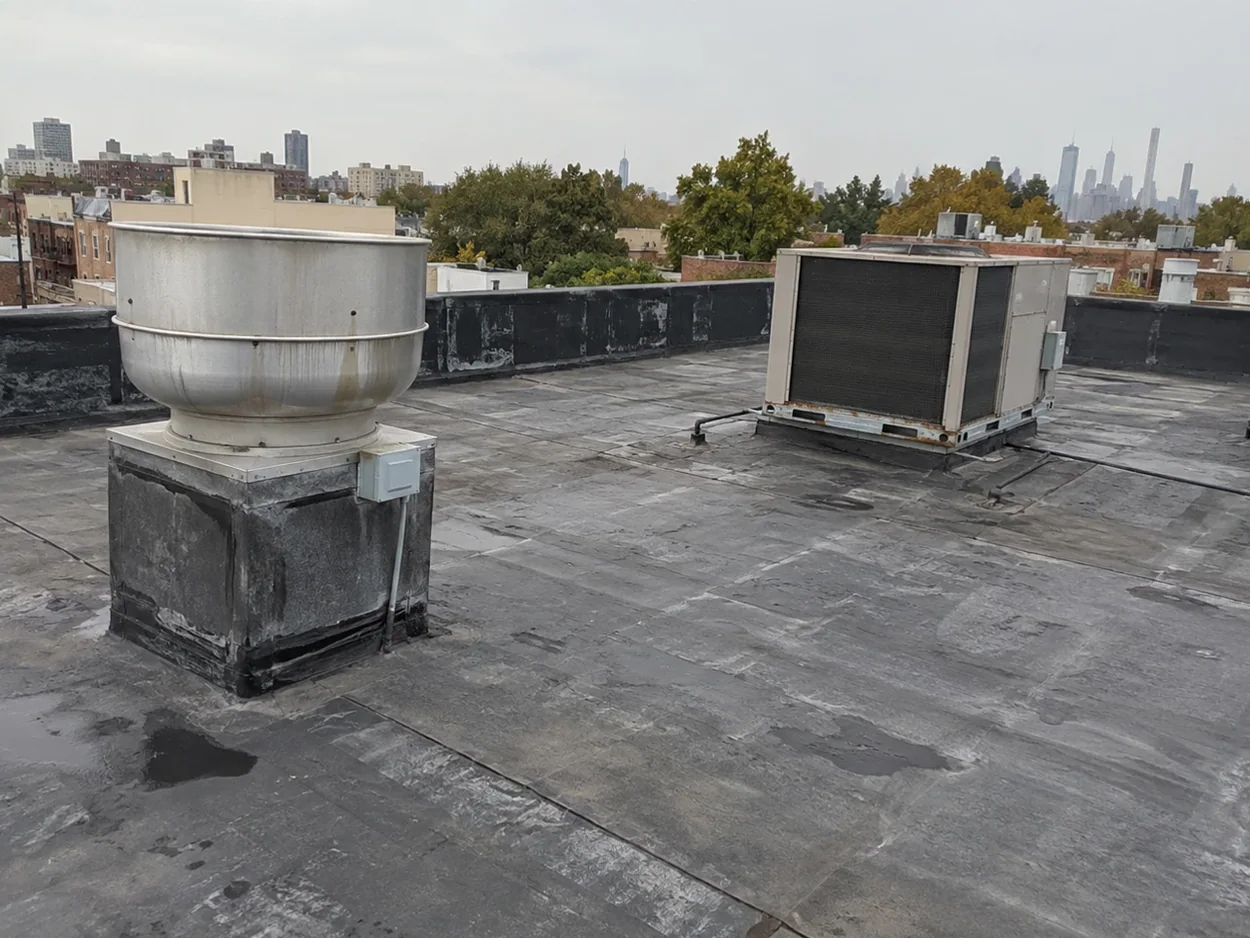
Commercial buildings along these two roads may carry flat roofs with parapets, rooftop fans, ducts, signs and mounts, and the weak points are the penetrations, the rear flashing and the drain. We walk the rear first, since that is where equipment collects and where nobody looks. A leak that appears only in wind-driven rain points to counterflashing or a joint at the parapet, which is a flashing failure until proven otherwise; one that appears after any rain points to a drain or a penetration.
Woodhaven Boulevard's width matters for work planning: wide roads carry fast traffic, and a hoist or lift near the curb needs a protected zone. We confirm staging, curb use and delivery windows on the first walk, and we protect the sidewalk below.
Awnings, signs and rooftop mounts get the same care. A bracket bolted through the roof is a hole, and a sealant bead lasts a few seasons. We replace failed seals with flashed brackets and close the holes where signs have been removed. Roofs with many tenants accumulate items that nobody owns anymore, and removing abandoned equipment and its penetrations is one of the cheapest ways to shrink the list of places a roof can leak.
What about the 1920s housing stock?
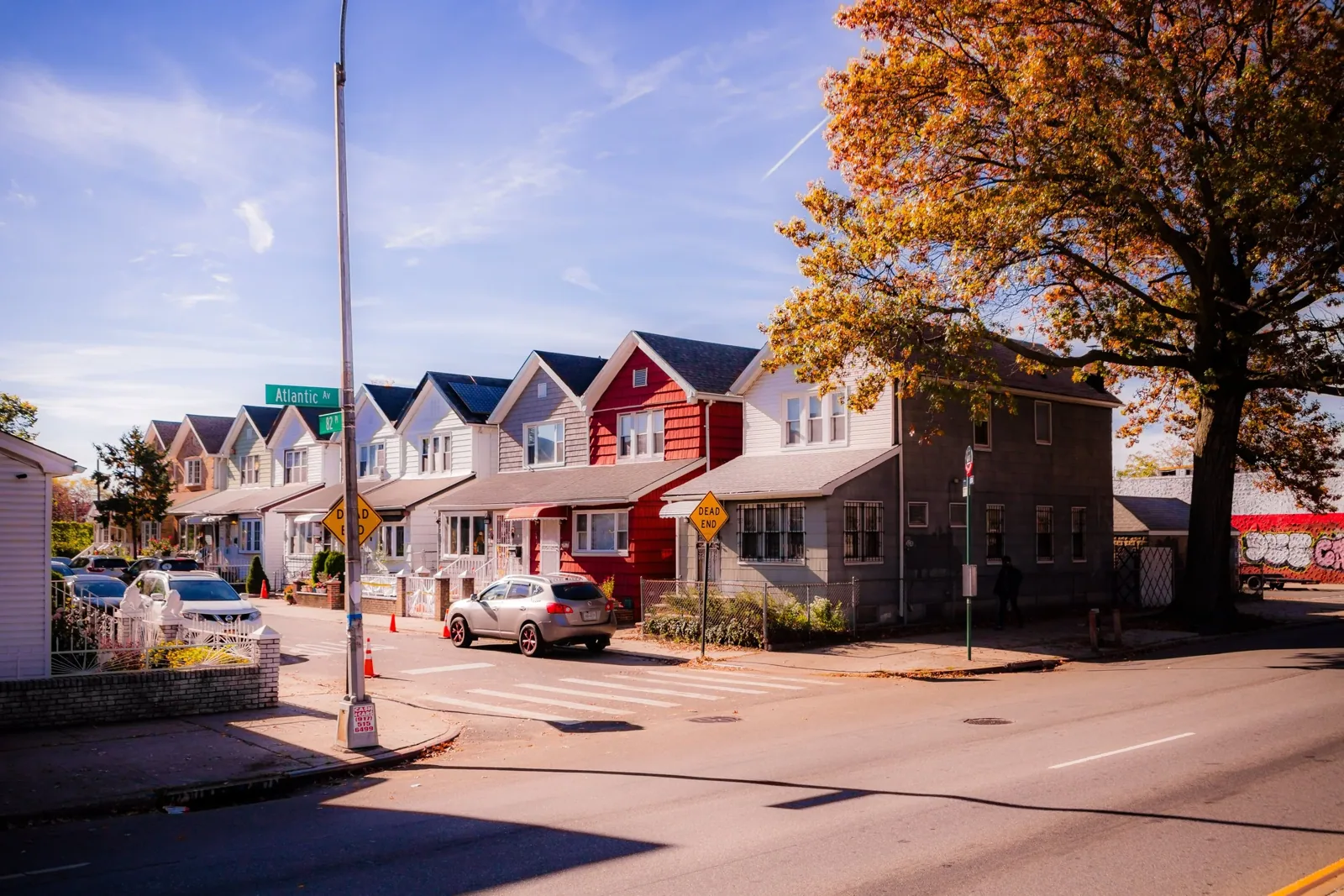
Extensive housing was built in the 1920s, mostly single-family detached or semi-detached homes. Those are residential, but a building with a shop below and a pitched or flat roof above has the same checklist as any other: drain or gutter, edge, penetrations and the junctions between roof sections. Where a pitched roof meets a flat roof, the junction is the first place water goes wrong.
Where a house-scale roof sits over a shop, ordinary asphalt shingle or membrane repairs are done by the same rules as elsewhere: sound deck, dry underlayment, flashed penetrations, a clear gutter. The sequence of checks is the same whatever the size. What changes is the cost, which follows the area, the number of penetrations and the access.
What changes near Aqueduct and the casino?
Aqueduct Racetrack sits next to Ozone Park, and the nearby Resorts World Casino and Hotel draws visitors, which may mean traffic and activity on busy days for neighboring owners, so hoisting and deliveries are planned with that in mind. A roof job near a venue needs a delivery and hoist plan that works around those peaks. For hospitality and food businesses in the area, the roof carries kitchen exhaust and cooling equipment, and a restaurant roof is checked for grease on the membrane and flashing at every fan curb.
How do storms and winter test these roofs?
Hurricane Ida's remnants prompted New York City's first flash flood emergency on September 1, 2021, and Queens had most of the deaths. A flat roof with one drain fills fast in rain like that, so drains, strainers and overflow paths are checked and, where the parapet allows, an overflow scupper is added. About 29.8 inches of snow fall in the city in a year, and ice at a drain can push water under flashing. A drain and scupper visit before winter and after the thaw covers the most common causes.
Summer adds heat. July afternoons near 85 degrees at Central Park, under a strong heat island, bake dark roofs, and sealants and rubber boots are the first to crack. A reflective coating over a sound, dry membrane lowers the surface temperature and slows that wear, and we recommend a cleaning and sealant check each spring.
What is the next step?
Begin with photos of the stain and the drain, and add the street and the roof age. After the roof walk, a plain-steps account of what the roof is doing comes first and price follows. Owners in neighboring South Ozone Park and Howard Beach take the same walk.
Questions Owners Ask
What building owners and managers usually ask before a roof visit.
Often yes, provided the visible parts of the building are respected. The membrane behind a parapet is usually not visible, while cornices and coping may be. The owner should confirm any review requirement before ordering materials, and we separate visible and hidden work on the scope.
We schedule noisy steps for approved hours, keep fumes away from air intakes, protect ceilings and equipment below the work area and close the roof watertight each evening. The facility team signs off the plan beforehand, so there are no surprises for patients or staff on the day.
Heat, grease and vibration wear the curb flashing and the sealant. A loose curb or a cracked boot lets water in. We replace the flashing, add a pan where discharge lands on the membrane and reset the fan on a sound curb.
Not directly, but access is. Event traffic and parking limits affect hoist and delivery plans, so we schedule heavy deliveries for quiet days and keep the street clear.
Photos of the stain, the drain and any rooftop fan are enough, along with the street and the roof age if you know them. Before price, the roof's condition is explained in plain steps.
Related Roofing Work
Other pages that connect to Ozone Park.
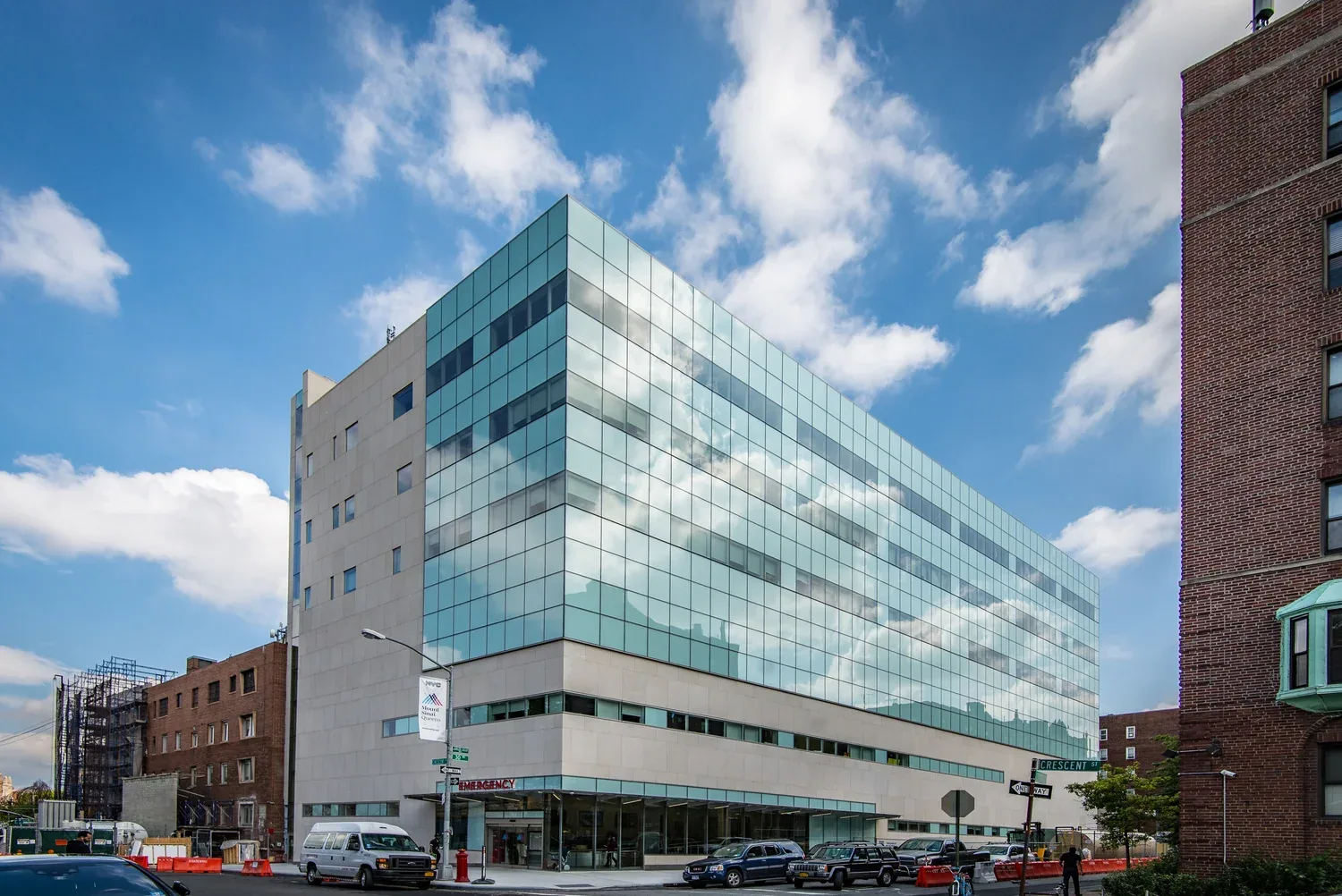
Medical Office Roofing
Roofing for medical offices and clinics in Queens, NY, with moisture, odor and noise controlled so exam rooms stay open and ceilings stay dry above patients.
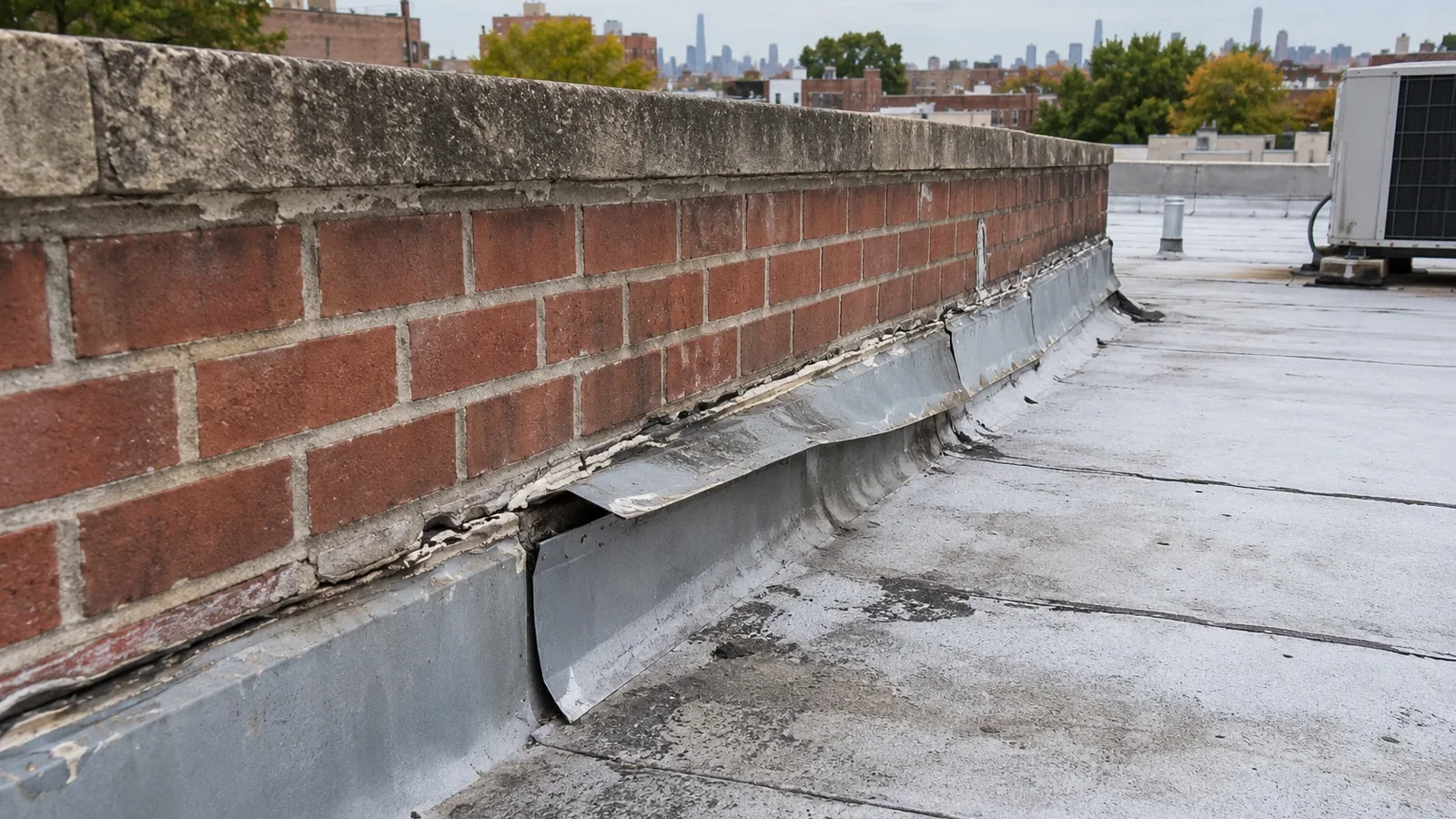
Flashing Failure Repair
Flashing failure repair in Queens, NY: cracked tar, lifted base flashing, open counterflashing and parapet leaks traced and rebuilt on commercial flat roofs.
Restaurant Roofing
Roof repair for Queens, NY restaurants: grease on the membrane, exhaust curbs, small flat roofs and work scheduled around service so the kitchen keeps cooking.
Ready to Talk About Ozone Park?
Tell us about the building and what you are seeing. We will schedule a roof walk and send photos and a written scope.