
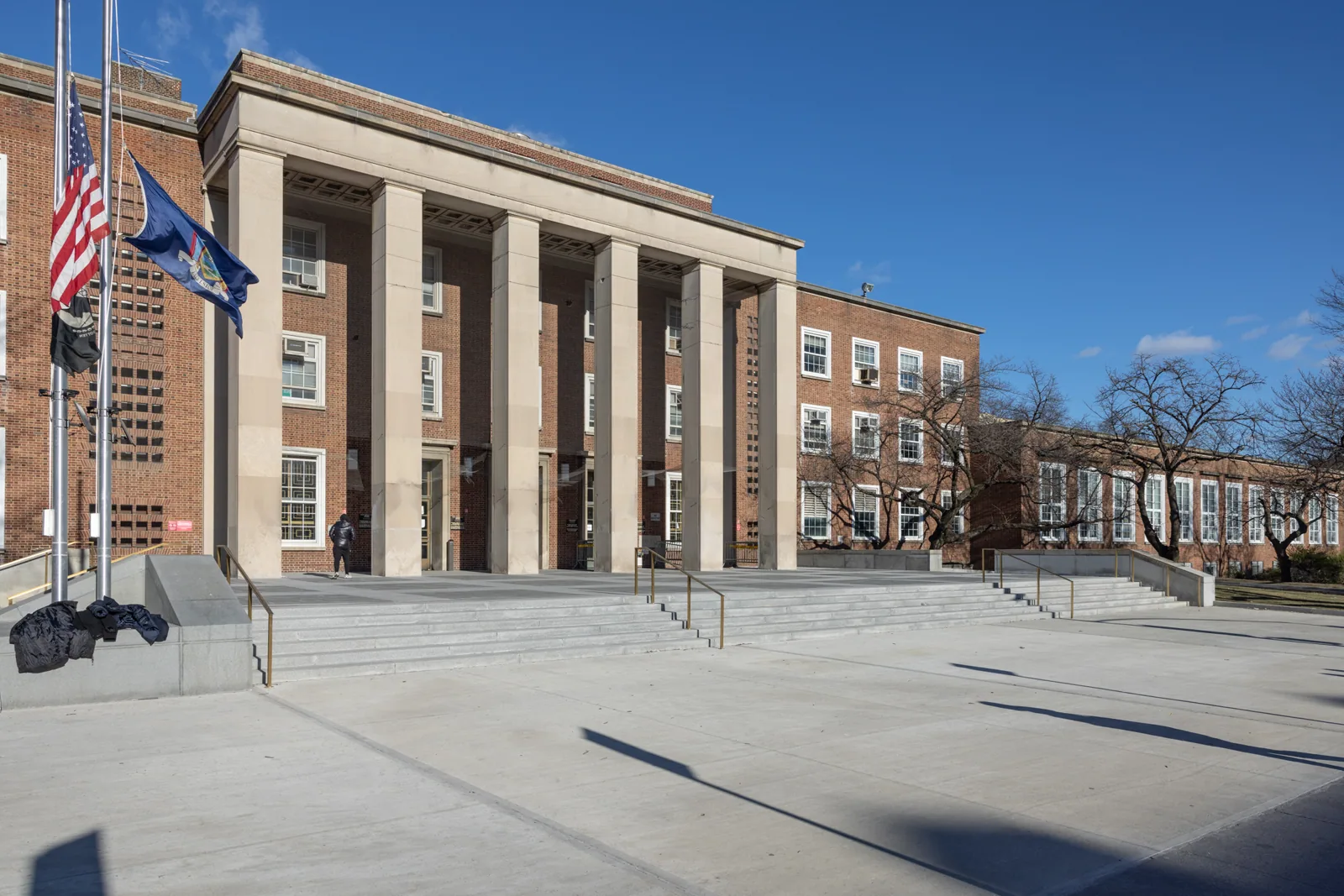
A public works engineer meets the roof as a stack of work orders for one building, each closed with a patch, on a roof that has now been repaired more often than inspected. The paperwork says the problem is handled, but the ceiling disagrees. Agencies in Queens manage buildings of every age, from training facilities to courthouses to field offices, and the roof is often the item that waits longest for a capital line because no one has put a number on it. For public agencies in Queens, NY, roof repair and replacement begins with the work order history and traces back to the roof a step at a time.
Come with me from the stack of paper to the deck.
What does the agency see, and what does the history say?
The agency sees repeated work orders, a stained ceiling that was painted and returned, a bucket that has become furniture and a complaint from a tenant agency. The history says the cause was never treated. A patch at a stain is a patch at the end of a path, and the path runs along the deck from somewhere above.
We ask for the work orders by building, with dates and the weather around them. Laid against the roof plan, they show which spots keep failing and which repairs held. That history is also the strongest argument for a capital item: three patches at one drain in two years cost more than the repair that fixes it.
The stack of paper also shows who touched the roof. Rooftop units, antennas and conduit added by other trades leave penetrations that no roofer signed off. We photograph each one, number it on the plan and note which are still in service, so a later repair does not guess.
What public buildings are on the list in Queens?
Queens Borough Hall and a county criminal court share the northern end of Kew Gardens, on Queens Boulevard. Jamaica has FAA regional offices, a Social Security Administration program center and the Joseph P. Addabbo Federal Building, a 12-story masonry and steel office structure built in 1989. Fort Totten in Bayside, largely a city-owned park, is a training center for the NYPD and FDNY and houses the FDNY EMS Training Academy, and the New York City Department of Correction is headquartered in the Bulova Corporate Center in East Elmhurst.
Those facts show the range: towers, offices, training space, converted buildings. They do not say what any one roof carries. A scan, a walk and a few cores tell us. A tower may have mechanical roofs at several levels. A training site may have a mix of occupied and unused buildings. A converted office center keeps a roof built for its first use.
Equipment is the common thread across them. Equipment on public roofs, from air handlers to generators to antennas, was installed by different contractors at different times, and each piece leaves a curb or penetration. Removing abandoned units and capping their curbs lightens the roof and removes leak points.
How does a survey support procurement?
Public work gets bid, reviewed and audited, and the document that goes out must say what the roof is made of, what is wrong, what the work will include and how success is checked. The survey supplies that content with a rated condition for each roof area, photographs keyed to a numbered plan, a drain and penetration inventory and priced options with assumptions spelled out.
From that an engineer or program manager can write a specification and skip the second visit. Alternates ease review, since a recover priced beside a tear-off, and a coating beside both, shows why the agency chose one, and each assumption, such as dry insulation or a sound deck, is tied to the test that confirms it. A roof condition report in that form moves through review with fewer questions.
The fiscal calendar sets timing. Months go to bid periods, notices and approvals, so a survey is best finished long before the year the money is meant to be spent. None of that can hold up an emergency dry-in, which is written up so that it never takes the place of the permanent repair.
How does an agency run a program across many buildings?
The efficient approach is a program, not a string of single repairs. We survey every building to the same standard, rate each roof on the same scale and put the results in one inventory with age, system, rating, last survey and next action. Sorting the inventory by rating shows which roofs are failing first and which share a problem that one contract can fix.
Grouping lowers mobilization cost and speeds the schedule. A multi-site roof program lets the agency spread work over several budget years, with the wettest roofs at the top of the list. Each scope names the assembly it expects and the roof chapter of the city's building code it must meet.
Occupied buildings change the method. We stage by zone, keep public entrances clear, dry in each shift and agree noise hours with the building manager. Nights and weekends can carry the loudest work when the agency prefers it.
What do Queens storms add to the agency's risk?
Hurricane Ida's remnants on September 1, 2021 brought the first flash flood emergency the city ever declared, and Queens recorded most of its deaths. Drains that move water and a roof that stays closed are what a building needs if it must stay open through a storm. Snow averages roughly 30 inches a year, and a single day, January 23, 2016, put down 27.3 inches of it, a load that a flat roof with wet insulation carries poorly.
LaGuardia recorded 107 F in 1966, and July afternoons at Central Park average near 85 degrees under a strong heat island. Rooftop cooling works hardest then, and a dark roof adds to its load, so drains and curbs are checked before each season and photographed for the file.
What is the next step for an agency?
Next comes a walk with the facilities lead on the building with the longest work order history, then a written report. Agencies around Jamaica, Kew Gardens and Bayside can start there and extend the program. The same record serves school districts and health systems that also manage many buildings, and it helps an Army installation facilities office with the same inventory habit.
Questions Owners Ask
What building owners and managers usually ask before a roof visit.
By finding the cause once. A moisture scan, a probe and a few core cuts show where water enters and how much insulation is wet. The repair then treats the cause instead of the stain, and the work order history stops growing.
The building address, the roof age if known, the work order history and photos of the worst stain and drain are what we need. The walk is scheduled next, and the scope follows.
Photograph and date the temporary dry-in, note what it covers and what it does not, and list the permanent scope in the same report. The permanent scope then stays separate from the temporary dry-in.
In most cases yes. Occupied buildings are staged by zone, with public entrances clear, a dry-in each shift and noise hours agreed with the manager.
Keep the survey, rating, core log, drain inventory, approvals and warranty terms together in one place, so the next engineer can find the answer without starting over.
Related Roofing Work
Other pages that connect to Cities, Counties and Public Agencies.

Roof Condition Reports
Written roof condition reports in Queens, NY: photographs, moisture findings, ratings and ranked recommendations an owner, lender or insurer can read.

Multi-Site Roof Programs
Multi-site roof programs in Queens, NY: one inspection, repair and replacement program across many buildings, ranked by condition and scheduled by budget.
Jamaica
Commercial roofing in Jamaica, Queens, NY: Jamaica Avenue and Hillside Avenue buildings, bank, office and institutional roofs, drain and flashing repair.
Ready to Talk About Cities, Counties and Public Agencies?
Tell us about the building and what you are seeing. We will schedule a roof walk and send photos and a written scope.