
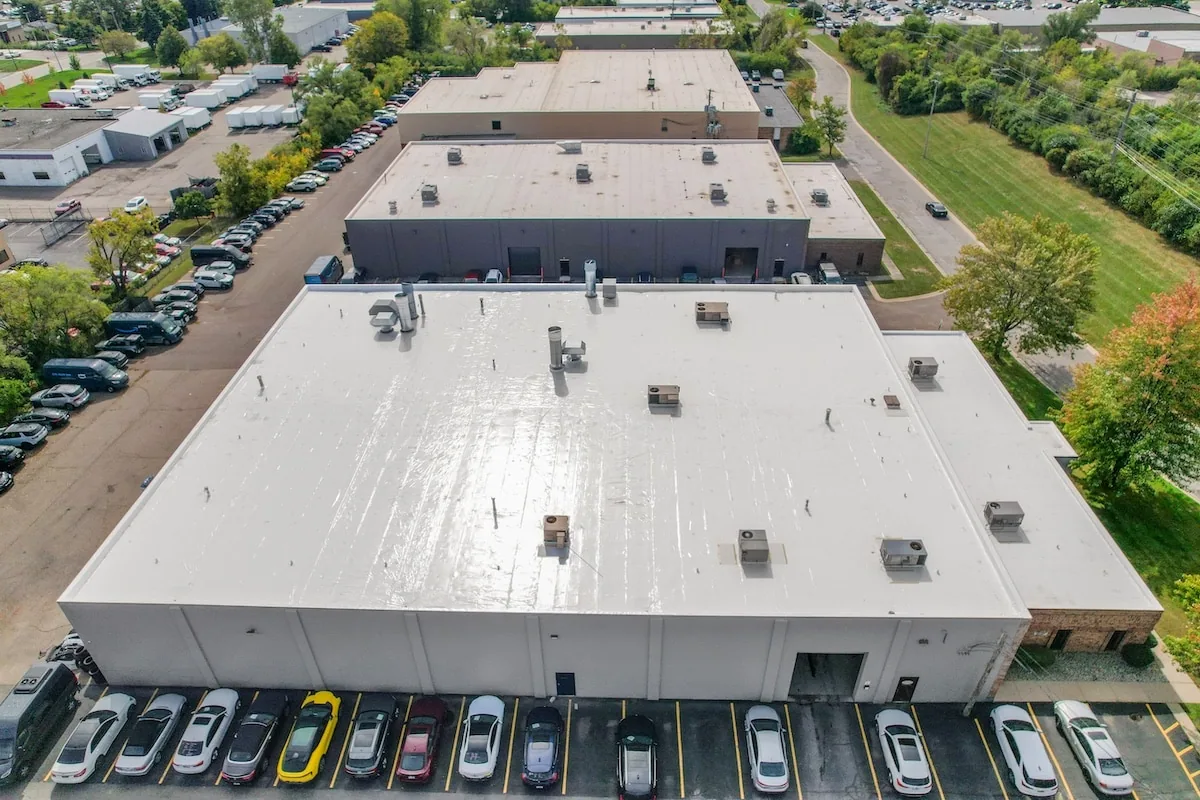
A small shop on a commercial strip with a roof that leaks only at one corner usually has one of two problems: a flashing that has pulled loose or a field seam that has opened. On a prefabricated PVC roof, both are easy to find because the roof is built from large panels cut to fit it, and the places where panels meet are limited and known. Duro-Last is the name most owners associate with that approach, so the first job on its roofs is to read the panel layout.
What is a prefabricated PVC roof?
A prefabricated system starts with measurements. The roof is surveyed, and the membrane panels, flashings and boots are fabricated in a factory to match, with many of the seams welded there. The pieces arrive ready to roll out, fasten and join with field welds. Duro-Last is known for this PVC-based approach, in which pipe boots, corners and other details are made as molded or custom pieces instead of cut on the roof.
That has benefits. Factory welds are made under controlled conditions, installation can be quick, and the details fit. It also has limits. The survey must be accurate, since a panel made to the wrong size is waste. The field seams between panels and the attachments to the deck are made on the roof, and they are the places to check later.
Compared with a roll-and-cut single-ply from Carlisle SynTec or a similar maker, the difference is where the work happens. A field-built sheet is cut and welded on the roof, so quality depends on the crew's hands in the weather of the day. A prefabricated roof moves much of that work indoors. The flashing details still have to be installed correctly, and the roof is only as tight as its weakest joint.
How do we inspect and repair one?
Walk it with me. The first step is to find the panel layout: the field seams run in lines across the roof, and each is a weld made on site. The second step is to probe those welds for gaps. The third is to check the prefabricated boots and corners, where a molded piece meets the sheet. The fourth is the edges and terminations, where the membrane meets walls and metal.
Repairs use matching PVC. A hot-air welder joins a patch over a puncture or a split seam, and a new prefabricated boot replaces a failed one. We test each weld after it is made. If the sheet has hardened or chalked over wide areas, patching is poor value and a recover or replacement is the next question. A PVC roof that has been well cared for can accept many repairs.
Attachment is the other check. Panels are fastened to the deck along the seams or adhered across the field, depending on the project, and the fasteners are hidden under the next panel. We look for signs of movement at the seam lines, such as worn spots, ridges or dirt, and we check the perimeter, where wind forces are highest. A loose perimeter is repaired with additional fasteners and heavier edge metal before the next storm.
Where does this suit Queens buildings?
It suits small and mid-size flat roofs crowded with details. On 63rd Drive in Rego Park, the main business thoroughfare, most businesses occupy original single-story buildings from the 1930s. Austin Street, a mile-long stretch, is the commercial heart of Forest Hills, Lefferts Boulevard is the main commercial center of Kew Gardens, and Jamaica, Atlantic and Liberty Avenues are the primary commercial streets of Richmond Hill.
A modest roof carrying many vents, hoods and rooftop units, as can be the case on blocks like these, suits a prefabricated approach. A restaurant roof with a grease hood gains from the chemical resistance of PVC, and in Rego Park or Richmond Hill the work would start with the survey.
Old strip buildings often have shared walls and drains. A roof on a single-story building between two neighbors may drain toward the neighbor's wall, or share a scupper. We trace where the water goes and fix drainage in the scope, because a perfect membrane over a pond is still a pond.
Why does the survey decide so much?
Accuracy matters because panels cannot be stretched. The surveyor measures every wall, curb, pipe, drain and corner, and notes heights for the flashings. A mistake of a few inches can mean a panel that is short or a flashing that does not reach. We take measurements twice, photograph each detail and verify them against the roof before the order goes in.
The survey is also the moment to fix the roof's problems. Wet insulation, damaged decks, rotted nailers and failed curbs have to be repaired before the new membrane goes down. A moisture survey finds the wet areas, and cores confirm them. Ordering a prefabricated roof over a wet deck is an expensive way to cover a problem.
Details around rooftop equipment need advance thought. Curbs and supports must be in good shape before the membrane arrives, because the flashing is made to the curb's size and shape. If the curb is later moved or replaced, the flashing has to be remade. We coordinate with the mechanical contractor so equipment changes happen before the survey, not after the roof is finished.
What do storms and seasons ask of a PVC roof?
Weather shapes the work and the life of the roof. A July afternoon at Central Park averages near 85 degrees under a strong heat island, and a normal winter leaves about 29.8 inches of snow, with 27.3 inches on January 23, 2016. A white PVC sheet reflects heat, and welded seams stay flexible through the cold.
Drainage decides how the roof handles water. Clearing drains, testing leaders and looking for ponding come first for a reason: the city's first flash flood emergency, on September 1, 2021, was set off by Hurricane Ida's remnants, and Queens had most of the deaths. Owners comparing makers can also see our notes on Sika Sarnafil, which makes related thermoplastic systems.
What is the next step?
Include photos of the roof, the corner or seam that leaks, any paperwork naming the system and the roof's age. We will walk the roof, locate the panel seams and explain in plain steps what repair or replacement would involve, with price afterward.
Questions Owners Ask
What building owners and managers usually ask before a roof visit.
The pieces are made to fit, so installation can be quick and the details are consistent. Small roofs with many penetrations gain the most. The trade-off is that the survey must be right.
Yes. A section can be cut out and a new piece welded in, or a patch can be welded over a puncture. Matching PVC and a hot-air weld are used, and the repair is probed.
It depends on the sheet, the details and the care it gets. Sound welds, clean drains and regular inspection help it last for many years.
Occasionally, when the old roof is dry and something separates the two layers. Cores and a moisture scan settle whether a recover is possible.
Send photos of the roof, the leaking corner or seam, the vents and curbs and any papers naming the system. A rough sketch of the roof helps.
Related Roofing Work
Other pages that connect to Duro-Last.
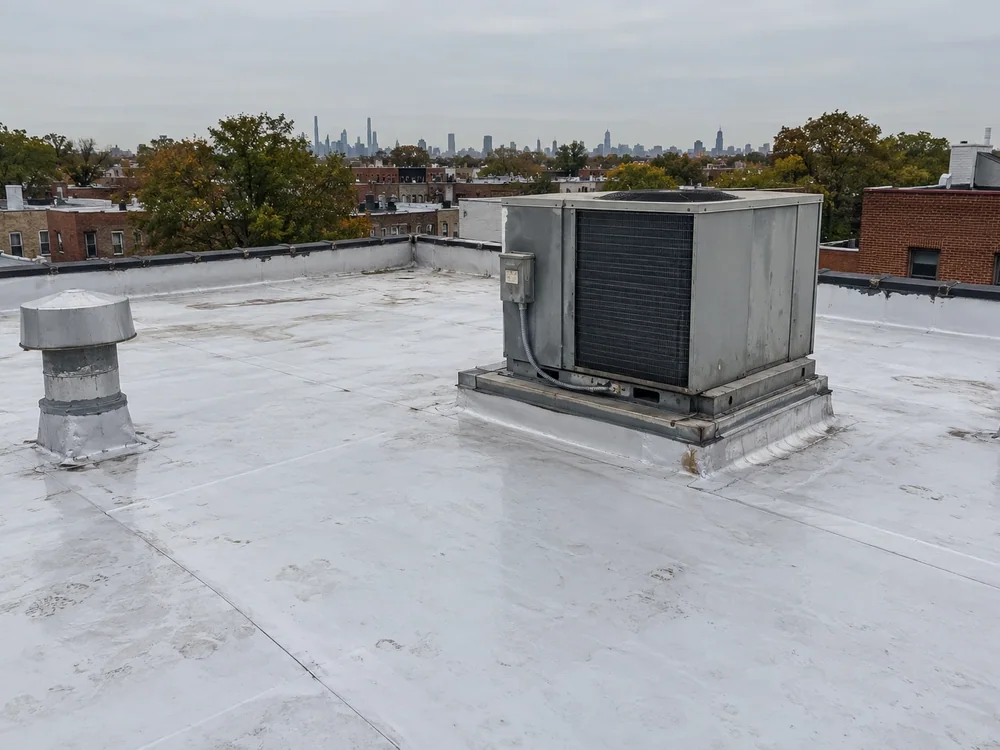
Carlisle SynTec
Carlisle SynTec single-ply roofing in Queens, NY: EPDM, TPO and PVC categories, how each is installed, repaired and maintained, and how to read the paperwork.
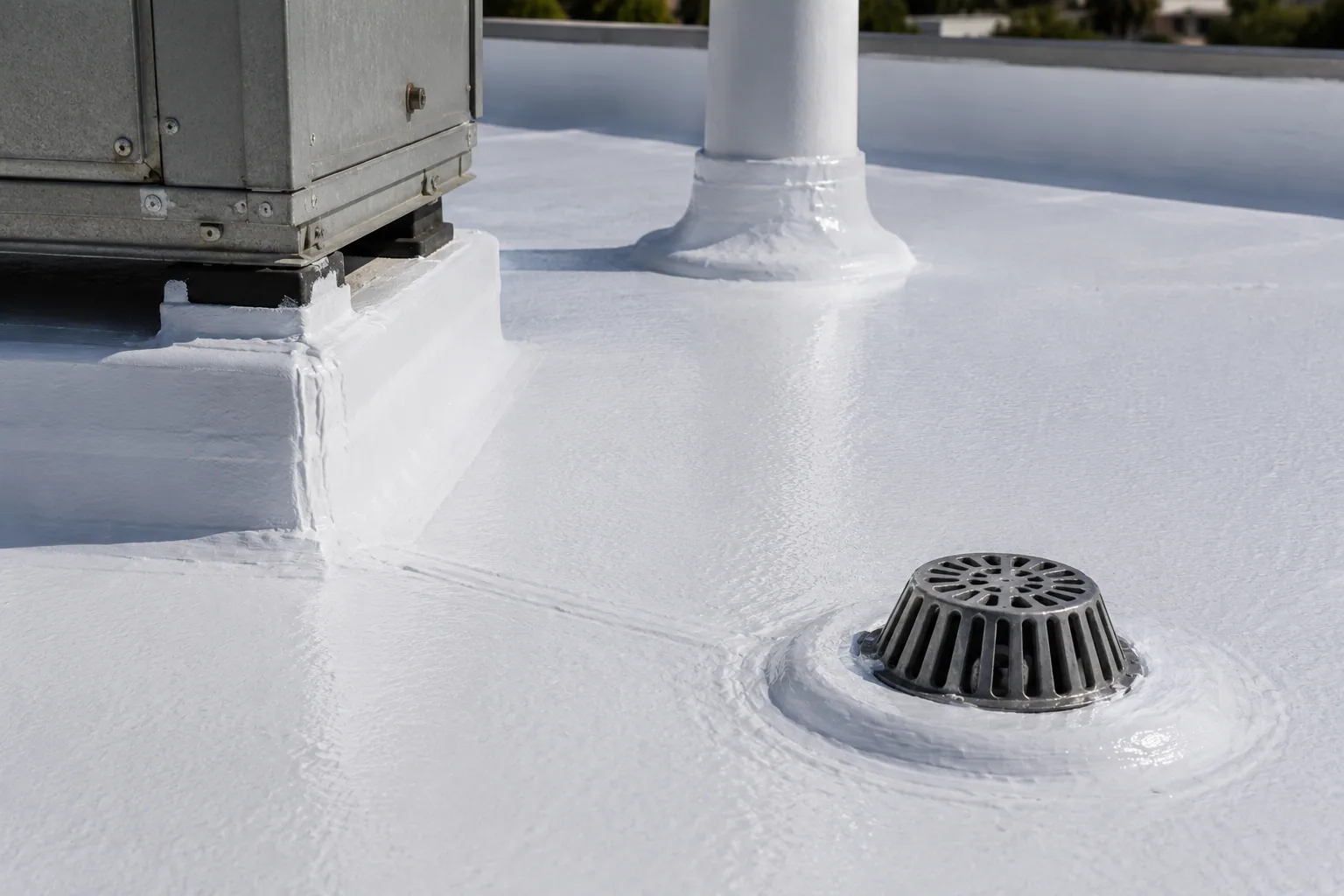
PVC Roofing
PVC roofing in Queens, NY: welded single-ply membranes for roofs that see grease, exhaust and chemicals, with repair, recover and replacement explained plainly.
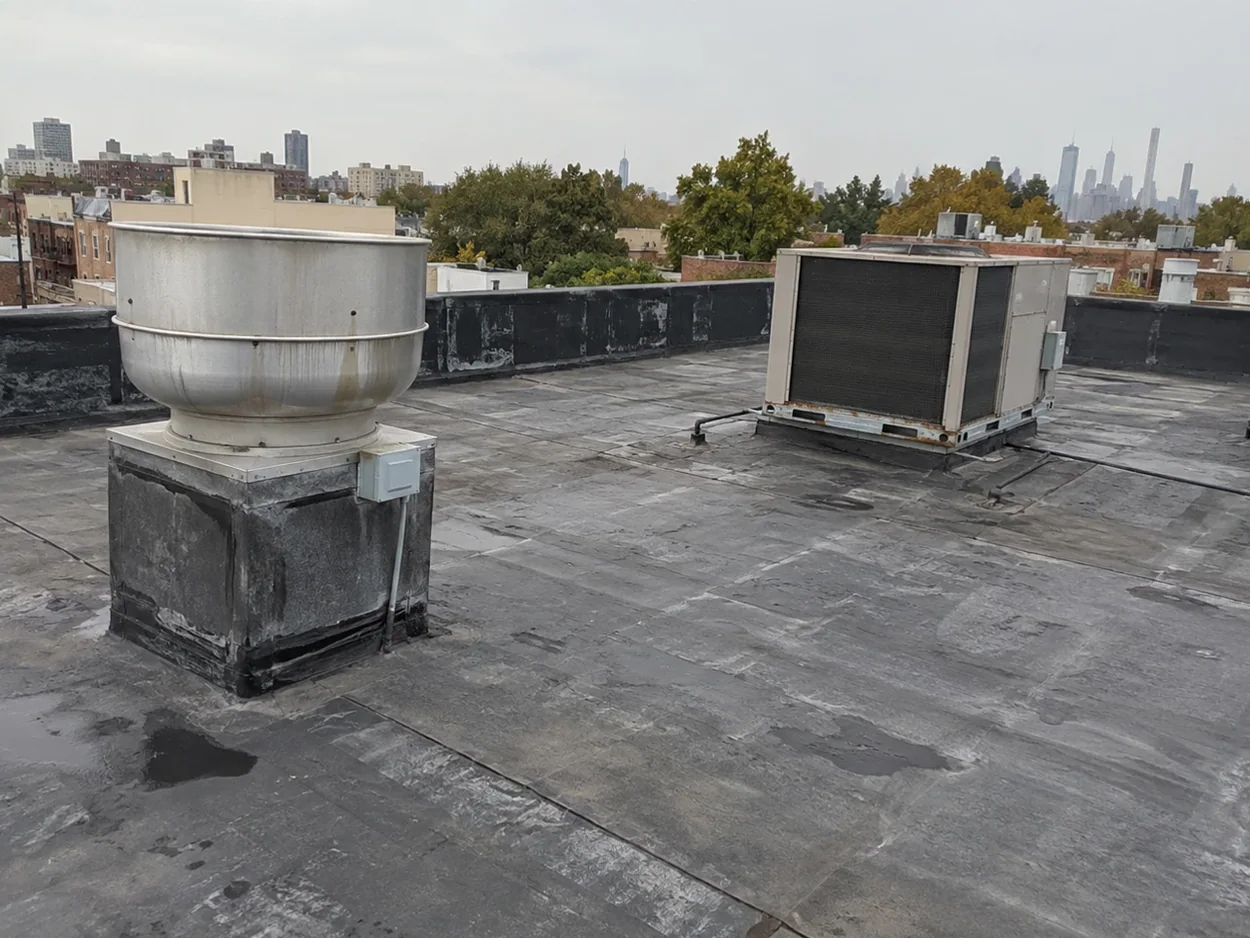
Restaurant Roofing
Roof repair for Queens, NY restaurants: grease on the membrane, exhaust curbs, small flat roofs and work scheduled around service so the kitchen keeps cooking.
Ready to Talk About Duro-Last?
Tell us about the building and what you are seeing. We will schedule a roof walk and send photos and a written scope.