
A downspout that runs clear in a light rain and chokes in a heavy one is the commonest complaint from shop owners in Richmond Hill, Queens, NY, and it points at the gutter or drain before it points at the roof. In a cloudburst the water arrives faster than a half-blocked outlet can carry it, and the excess pours over the edge, soaks the wall and finds its way in at the first weak joint. Fixing the outlet fixes more than the roof.
Jamaica Avenue, Atlantic Avenue and Liberty Avenue are the neighborhood's primary commercial streets. The Long Island Rail Road Montauk Branch crosses the neighborhood diagonally and provides freight service. The Richmond Hill Triangle, bounded by Jamaica Avenue, Myrtle Avenue and 117th Street, was historically the commercial center. Shops, offices and mixed-use buildings along those streets have roofs of several kinds, and we walk each from the outlet back.
What do the avenue shop roofs need?
A building on a busy avenue may well have a small flat roof behind a front parapet, with rooftop fans, ducts, signs and satellite equipment, and its weak points are the parapet cap, the rear flashing and the penetrations. A leak that shows only in wind-driven rain implicates counterflashing or a parapet joint, while one after any rain implicates the drain or a penetration. Suspects are tested with a hose, one at a time, from the lowest up.
Gutters and downspouts matter on any building with a sloped or edge-drained roof. We clear and flush them, check the slope with water, replace split sections and reseal joints. A downspout that empties against the wall of the building rather than away from it is redirected, since that water re-enters at the foundation or freezes on the sidewalk.
Water ponding behind a high front parapet is a quiet problem, because the parapet hides the pond from the street and nobody sees it. We look for ponding on every walk, measure how deep it is and how long it stays, and fix the drain or slope that causes it. A hidden pond ages the membrane quietly and often turns out to be the cause of a leak nobody can explain.
Signs and awnings add another habit to watch. Brackets bolted through the roof or parapet are sealed with a bead of sealant, and over a few seasons the bead cracks. We replace failed seals with flashed brackets or sealed boots, and we close the holes left by signs that have been removed. A short written list of every item fixed to the roof goes in the report.
What does a freight line change?
The Montauk Branch carries freight across the neighborhood. A building near a rail line may live with vibration, dust and in some cases diesel exhaust. Vibration loosens fasteners and sealants over time, and dust and soot collect on the membrane, hold moisture and run hot. For any roof near a rail line, we tighten what vibration loosens, wash the surface before repair and recheck sealants more often.
Access also changes. Lifts and cranes near rail property need clearances, and deliveries must not block crossings. We ask these questions at the first walk and build the answers into the quote.
Rail-side buildings also see more debris. Dust, leaf litter and trash collect in drains and corners, and a drain basket that fills in a week needs a shorter cleaning interval than one that fills in a season. We set the interval from what we find, and we write it into the maintenance calendar.
What about older buildings around the Triangle?
The Richmond Hill Triangle was historically the commercial center, and older commercial buildings in a district like it often share the issues of age: layers of old roofing, masonry parapets with open joints and flashing patched repeatedly. Whether a recover is possible depends on a core sample, which shows how many layers lie over the deck and if the lower ones have stayed dry. A mason repairs open mortar joints at the parapet before new flashing goes on, since flashing cannot hold on a failing wall.
Work on an older building is staged in small sections. A section is opened, repaired and closed in one day, so an overnight shower never meets an open deck. On a building whose tenants run shops or offices, we agree hours and protect the interior below the work area. Materials come up in a sequence that keeps the sidewalk usable, and the crew leaves the roof clean each evening.
What do the large early-1900s houses mean for roofs?
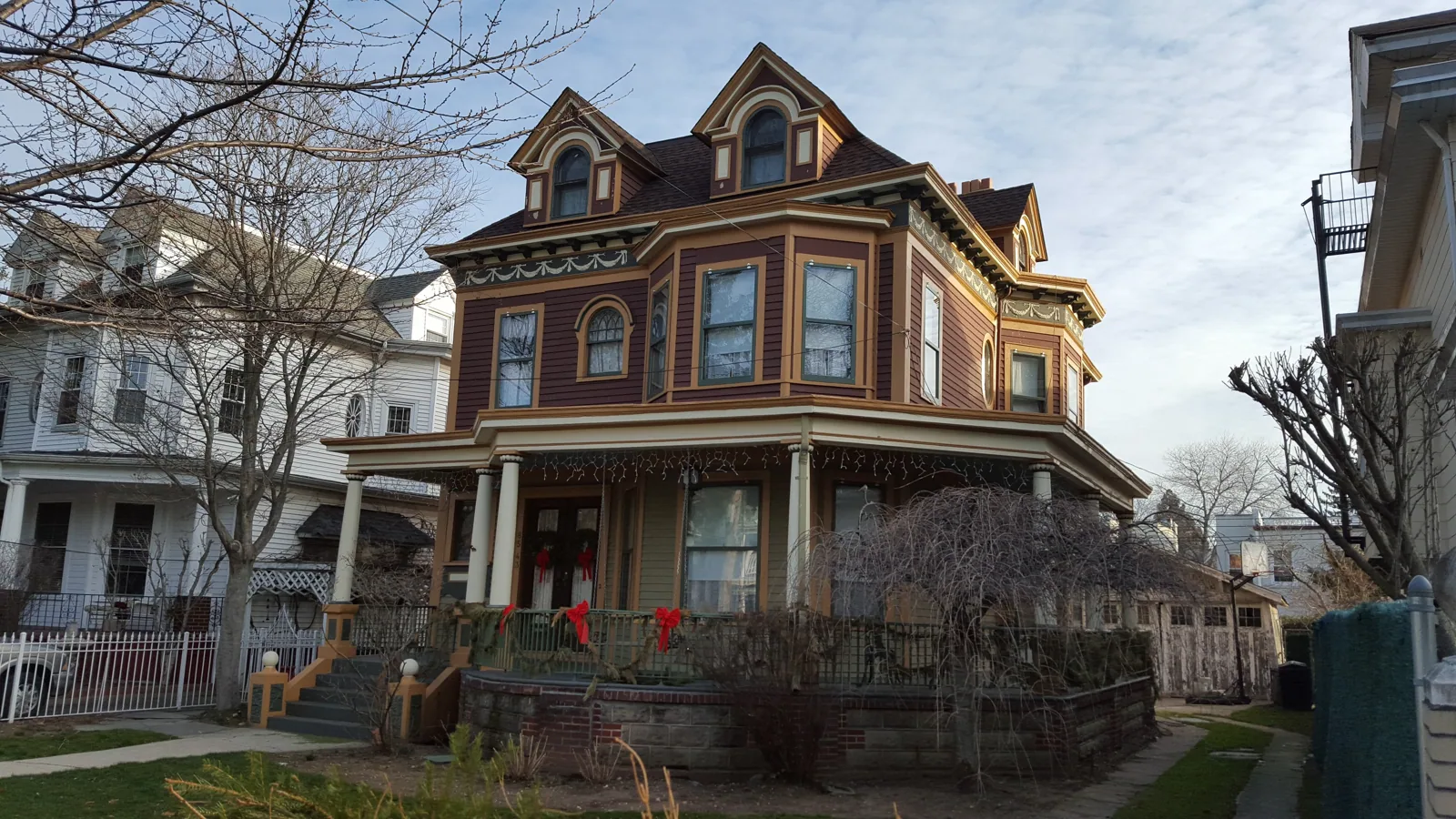
Large single-family houses from the early 1900s remain in Richmond Hill, including Queen Anne Victorian homes. Those are homes rather than commercial buildings, but a house put to business use keeps its sloped roof, gutters, valleys and chimneys, and its roofing needs differ from a flat commercial roof. Where an owner uses a house for business, we treat the sloped sections and any flat additions separately, and give each its own scope. The junction between them is the first place to check.
How do storms and winter test these roofs?
Most of the deaths in the city's first flash flood emergency were in Queens; Hurricane Ida's remnants brought it on September 1, 2021. A roof drain that handles ordinary rain may be overwhelmed in a storm like that, so we check for an overflow route. The city averages about 29.8 inches of snow a year, and freeze-thaw cycles open sealants and seams. Repairs after winter are usually about drains and scuppers and the edge. The edge metal and gutters go on the same visit.
After the walk we write a short scope with photographs. Each item has a location, a cause and a cost driver: the length of parapet, the number of penetrations, the layers to remove, access and the weather window. The owner chooses what to do first, and we do not start until that choice is made.
What is the next step?
Photos of the overflowing gutter or stain and of the drain come first, then the street and the roof age. We inspect the roof, describe in plain steps what it is doing, and only then move to price. Owners in Jamaica and Ozone Park follow the same sequence.
Questions Owners Ask
What building owners and managers usually ask before a roof visit.
The outlet or downspout is partly blocked or too small for the volume. In light rain it keeps up, in a cloudburst it does not. We clear and flush the line, check the slope and, where needed, add a second outlet.
Yes, with attention to access and clearances. We tighten fasteners that vibration has loosened and wash dust before repairs, and we confirm crane and delivery rules at the first walk.
We cut a core, check that the lower layers are dry, and choose between recover and tear-off on that basis. Wet layers come off. Dry, sound layers can sometimes stay under a recover.
Often yes. A sloped roof needs shingle, tile or metal repair, with valleys and chimney flashing, while a flat addition needs membrane work. We write a separate scope for each and check the junction between them.
We need photos of the overflowing gutter or stain, the downspout and the roof edge, with the street and the roof age as far as you know them. Before any price, you will have a plain-steps explanation of the roof's condition.
Related Roofing Work
Other pages that connect to Richmond Hill.
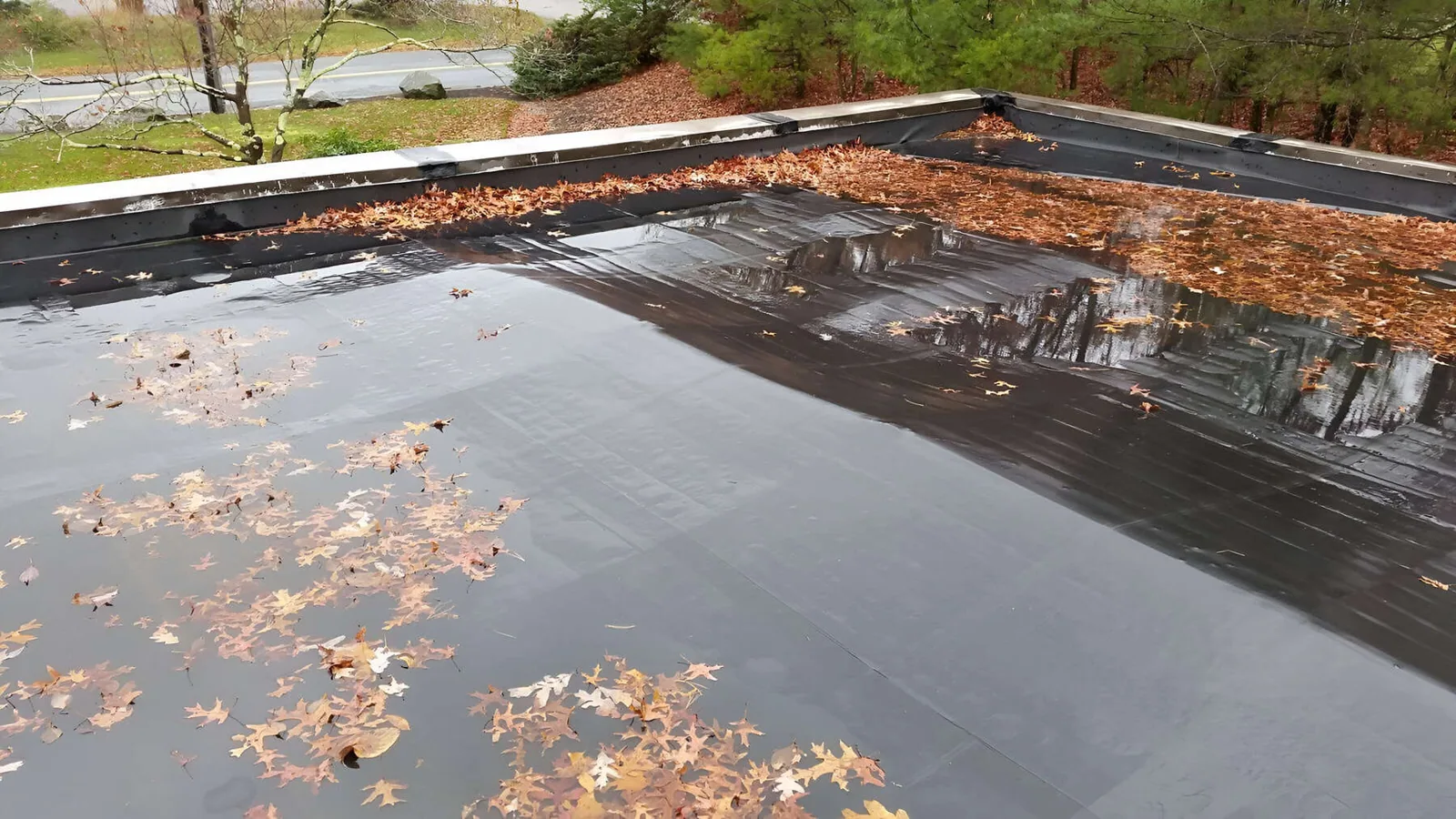
Ponding Water Roof Repair
Ponding water roof repair in Queens, NY: why standing water forms on flat roofs, how it ages the membrane and the drain, slope and insulation fixes that end it.
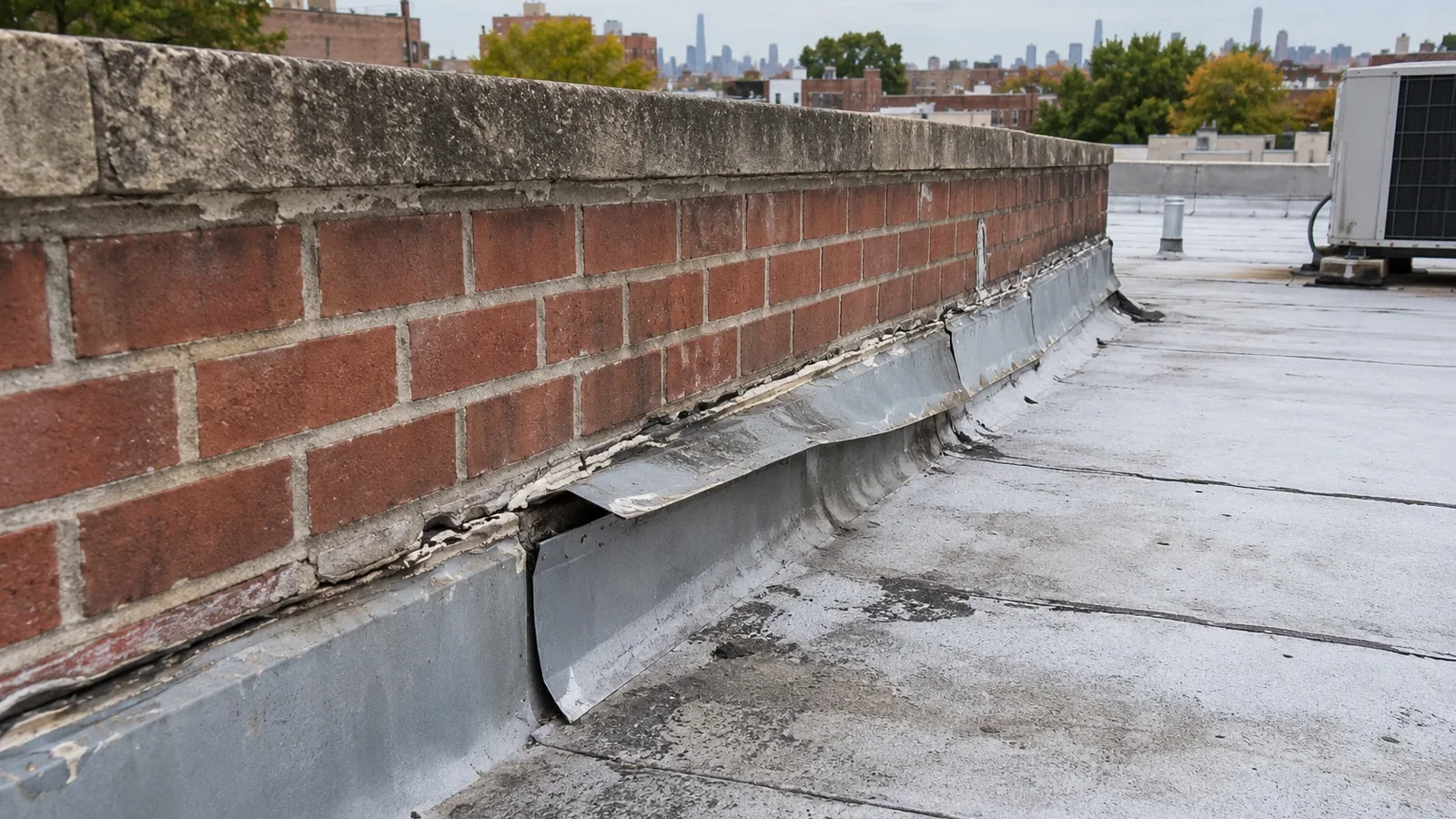
Flashing Failure Repair
Flashing failure repair in Queens, NY: cracked tar, lifted base flashing, open counterflashing and parapet leaks traced and rebuilt on commercial flat roofs.
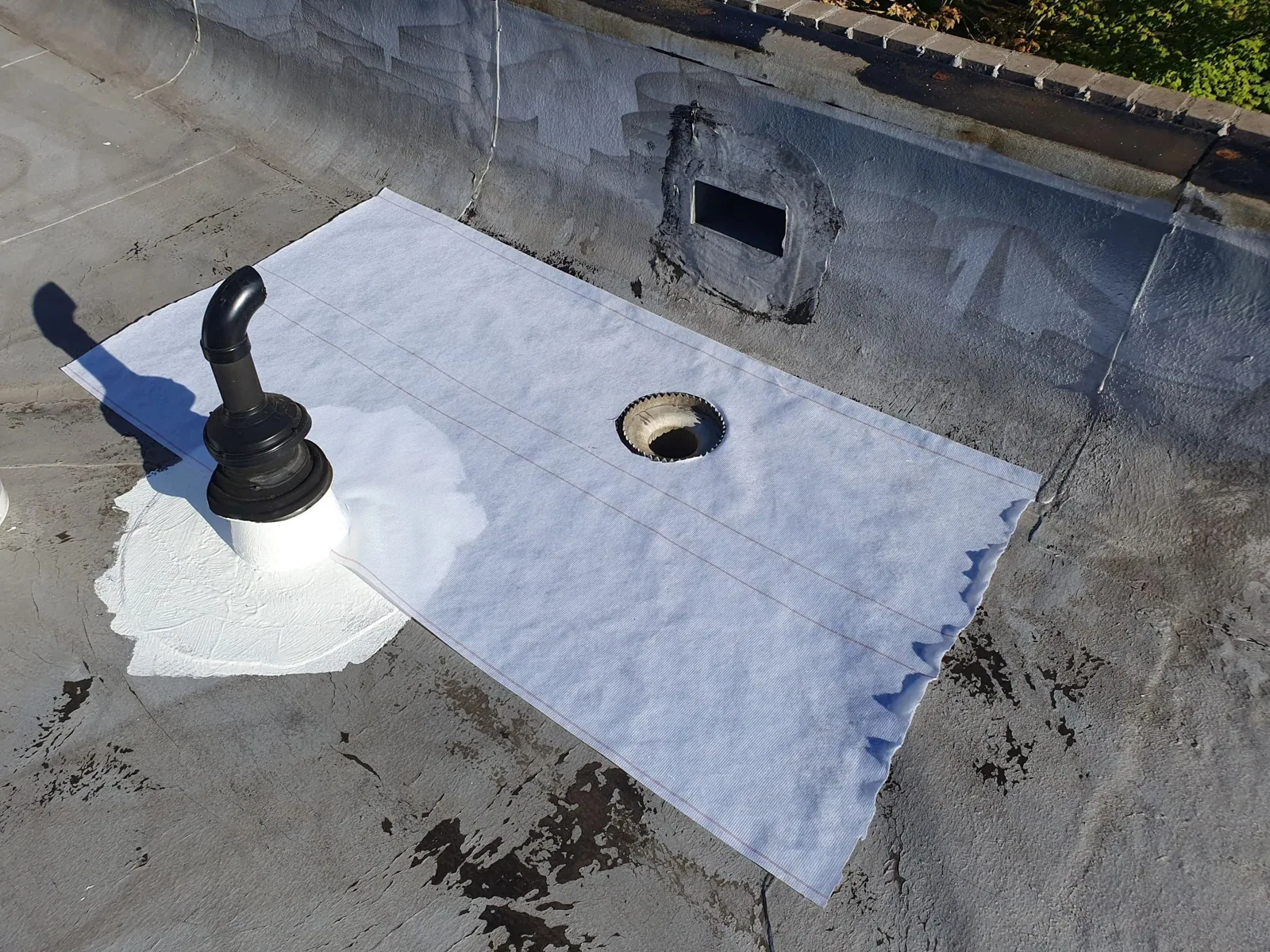
Roof Drains and Scuppers
Roof drain, scupper, cricket and ponding correction in Queens, NY: sizing, strainers, overflow paths and tapered fixes for flat roofs hit by cloudbursts.
Ready to Talk About Richmond Hill?
Tell us about the building and what you are seeing. We will schedule a roof walk and send photos and a written scope.