
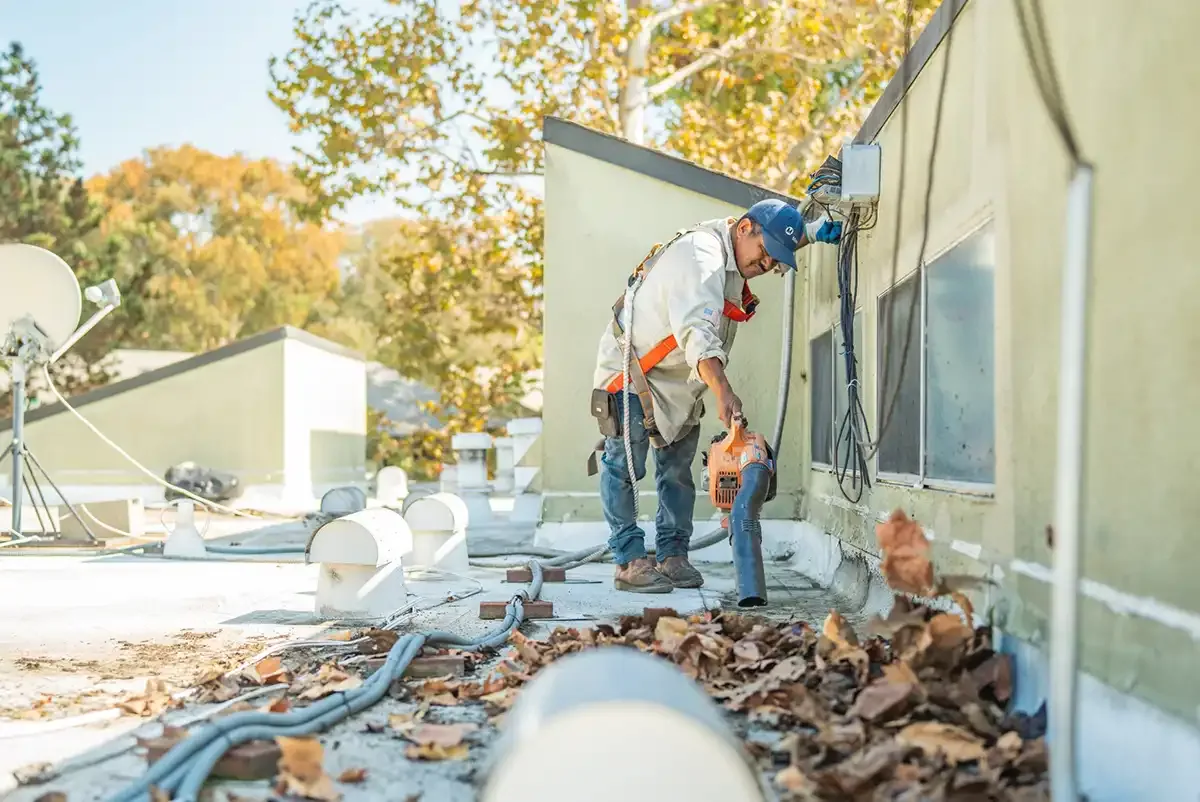
The morning after a storm, an owner usually sees one of three things: water on the floor, a strip of membrane flapping at a corner, or nothing at all until a stain spreads across a ceiling days later. Each of those points to a different kind of storm damage, and each needs a different first move. Wind lifts roofing from the edges. Flood-day rain finds drains that cannot keep up and pushes water under flashing. Heavy snow loads the roof and then melts into every weak joint.
Storm damage repair is a two-stage job. The first stage stops the water getting in, quickly and temporarily if it must be. The second stage fixes the cause so the same storm does not do the same damage twice. We explain both stages in plain steps on each Queens, NY roof, and we keep the photographs that show what the storm changed.
What should I do first after the storm?
Keep people away from wet areas under the roof, protect equipment and stock where it is safe to do so, and photograph everything before moving it. Do not climb onto a wet or damaged roof; a membrane that is lifted can hide a soft deck, and wet surfaces are slick. Call us with the room that is wet and the direction the wind came from, and we will tell you what to look for until we arrive.
On arrival we start from the outside edge and work in. We look at the perimeter metal, the corners, the parapet and the first rows of membrane, because wind almost always starts there. Then we check the drains, since a blocked drain turns a rainstorm into a standing pond. Last, we walk the field with a seam probe, looking for lifted laps, punctures from debris and soft spots underfoot.
Tenants help us most with timing. Knowing when the leak began, whether it stopped when the rain stopped and which rooms are affected lets us trace the opening faster. A water line on a wall, a stained pipe chase or a wet spot under a rooftop unit each says something different about where the roof let go.
How can I tell wind damage from water damage?
Wind damage shows as movement: membrane pulled from its fasteners, edge metal bent or missing, coping displaced, a corner peeled back. It often runs in a line, in the direction the gusts came from. Water damage shows as saturation: stains on ceilings, wet insulation under a dry-looking surface, ponding that has stained the membrane, and flashing that has leaked where water rose above it.
Both can be present at once, and one often causes the other. A wind-opened corner lets rain into insulation, and a clogged drain that floods a section of roof can drive water under a seam. We sort them out with an infrared moisture survey when wet insulation is likely, and we document wind loss separately, starting with the edge details that a wind damage roof repair turns on.
What have Ida and Sandy shown about Queens roofs?
Hurricane Ida's remnants, on September 1, 2021, set off the first flash flood emergency New York City had ever declared, and Queens counted most of the deaths. For a roof the lesson is drainage: one built for ordinary rain can be overwhelmed in minutes, and the building below pays for it. The roofs that deserve the hardest look are those with few drains, small strainers and no overflow route through the parapet.
Maspeth stood in six feet of water after Hurricane Sandy in October 2012, and the Rockaway peninsula was emptied under a mandatory evacuation order. A surge does not reach a roof, but the wind and rain around it do, and hurricane-force gusts crossed the metro area. Buildings near the water, in Far Rockaway or Howard Beach, deserve an edge-by-edge check before and after storm season, which is the heart of any hurricane damage roof repair.
And what about snow and ice?
On January 23, 2016, the city's record single-day snowfall of 27.3 inches buried the five boroughs. A load that deep rests on the deck and the drains, and it melts into the same seams that rain finds. Meltwater that refreezes at a drain or scupper pushes water backward under flashing. After a heavy snow we check that drains are open before the melt, and we look for damage from shoveling or ice removal, since a shovel can cut a membrane as easily as a branch. Repairs after a heavy winter are usually snow and ice roof damage repair at the drains, flashings and seams.
Snow on a roof is not the same as snow on the ground. Drifts form behind parapets and rooftop units, and a drift can carry several times the load of the open field beside it. If a roof shows a sagging ceiling, a door that sticks on the top floor or a deck that deflects underfoot after a storm, stay off the area and call us. A structural engineer may need to look at the framing before any roofing crew goes on it, and we will say so plainly rather than put a crew at risk.
How is the repair staged?
Stage one is dry-in. Depending on the damage, that means a temporary patch, a tarp tied down to a framed edge, or a sealed repair at the failed detail, so that the next rain stays out. Wet material that can be removed is removed, and the area is photographed. If a repair needs emergency roof repair at night, the same steps apply, only faster.
Stage two is the permanent repair, matched to the failure. A pulled-up edge gets new metal and a better fastening pattern. A flooded roof gets its drains rebuilt or enlarged and its ponded areas corrected. A split seam is welded or patched with a rounded-corner piece. Wet insulation is cut out and replaced, since drying it in place rarely works. Cost follows the extent of the damage, the number of details involved, access and how much wet material must go. Insurance paperwork is a separate track that we support with claim documentation.
Questions Owners Ask
What building owners and managers usually ask before a roof visit.
No. Stopping further water entry is part of protecting the building, and insurers generally expect it. Photograph the damage first, keep receipts for temporary work and save removed material if you can. The permanent repair can follow once the claim is documented.
Yes. Lifted laps, loosened fasteners and wet insulation do not show from below. A roof can look intact and still be holding water in its layers. That is why we walk the roof and, when it is warranted, scan it.
It depends on the number of damaged details, material availability and weather windows. A localized edge repair can be done in a day. A broad repair after a flood day can take longer, and many roofs in a neighborhood may be queued for the same crews, so we give the owner a firm sequence and a realistic window.
Clear the drain strainers, check that any overflow path through the parapet is open, remove loose items from the roof and make sure edge metal and coping are tight. A short walk by us in spring and fall catches most weak points.
Send photos of the stain, the drain area and any displaced edge metal, plus the street the building is on. Before we raise price, we will tell you what the storm did and in what order the repairs should go.
Related Roofing Work
Other pages that connect to Storm Damage Roof Repair.
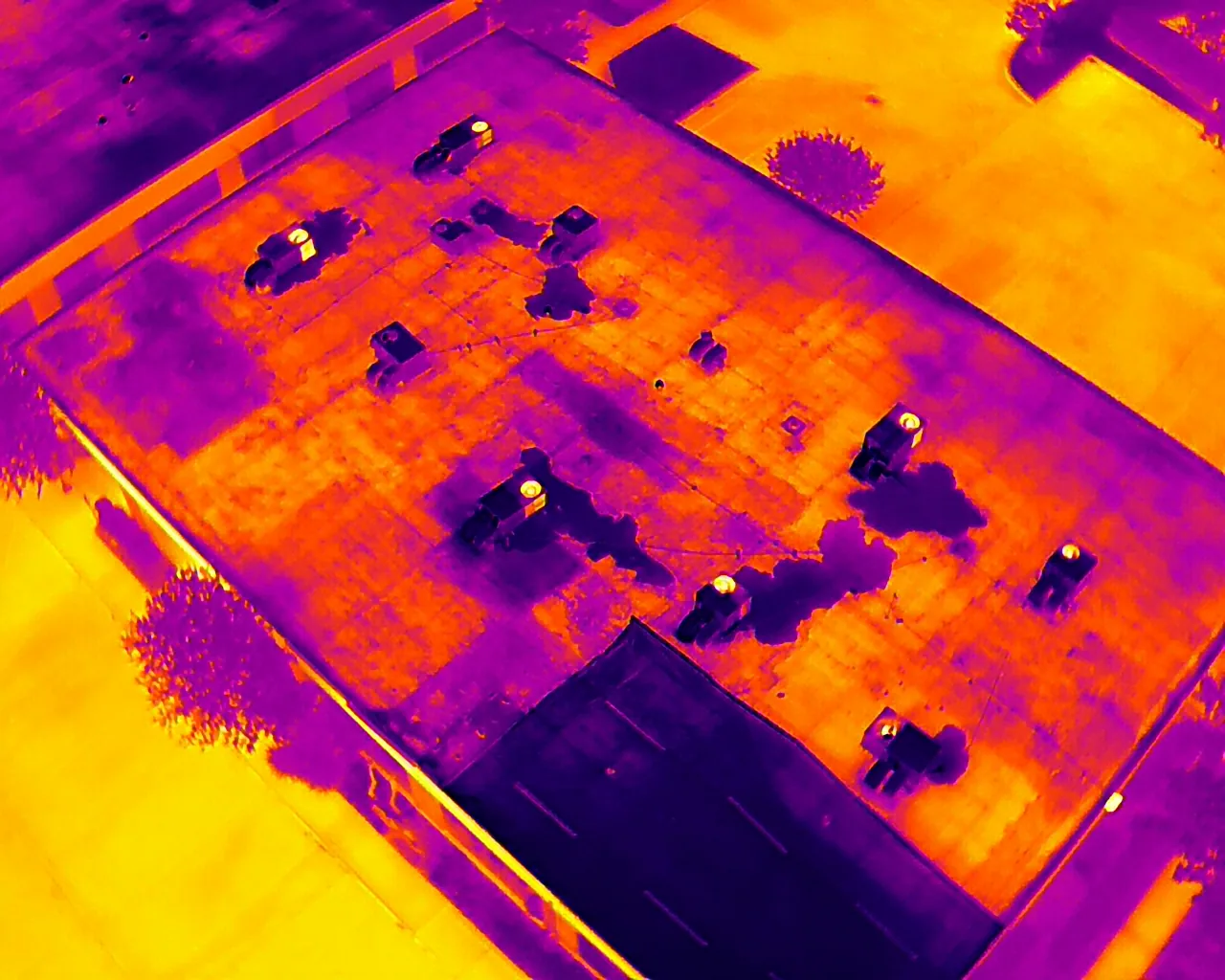
Infrared Roof Moisture Surveys
Infrared scans and core-cut moisture surveys for Queens, NY commercial roofs that locate wet insulation before the owner commits to repair or replacement.
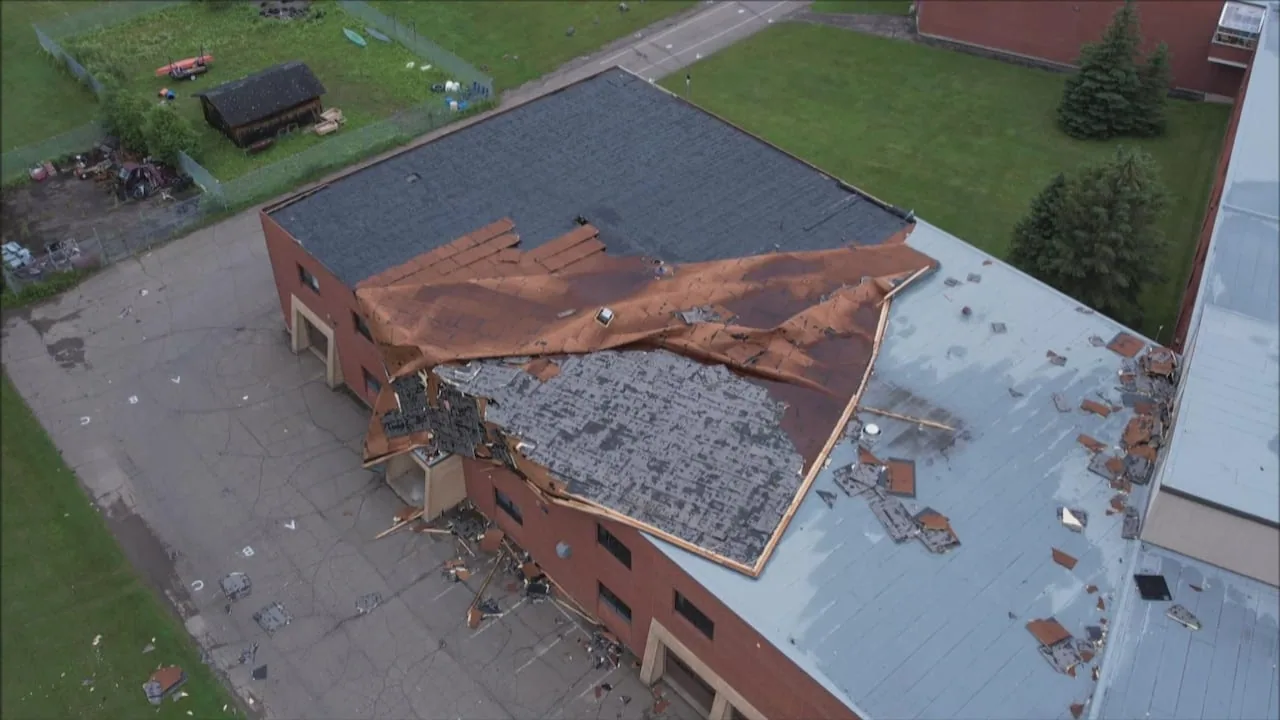
Wind Damage Roof Repair
Wind damage roof repair in Queens, NY: lifted edge metal, peeled membrane and loosened fasteners found, explained in plain steps and repaired at the edge first.
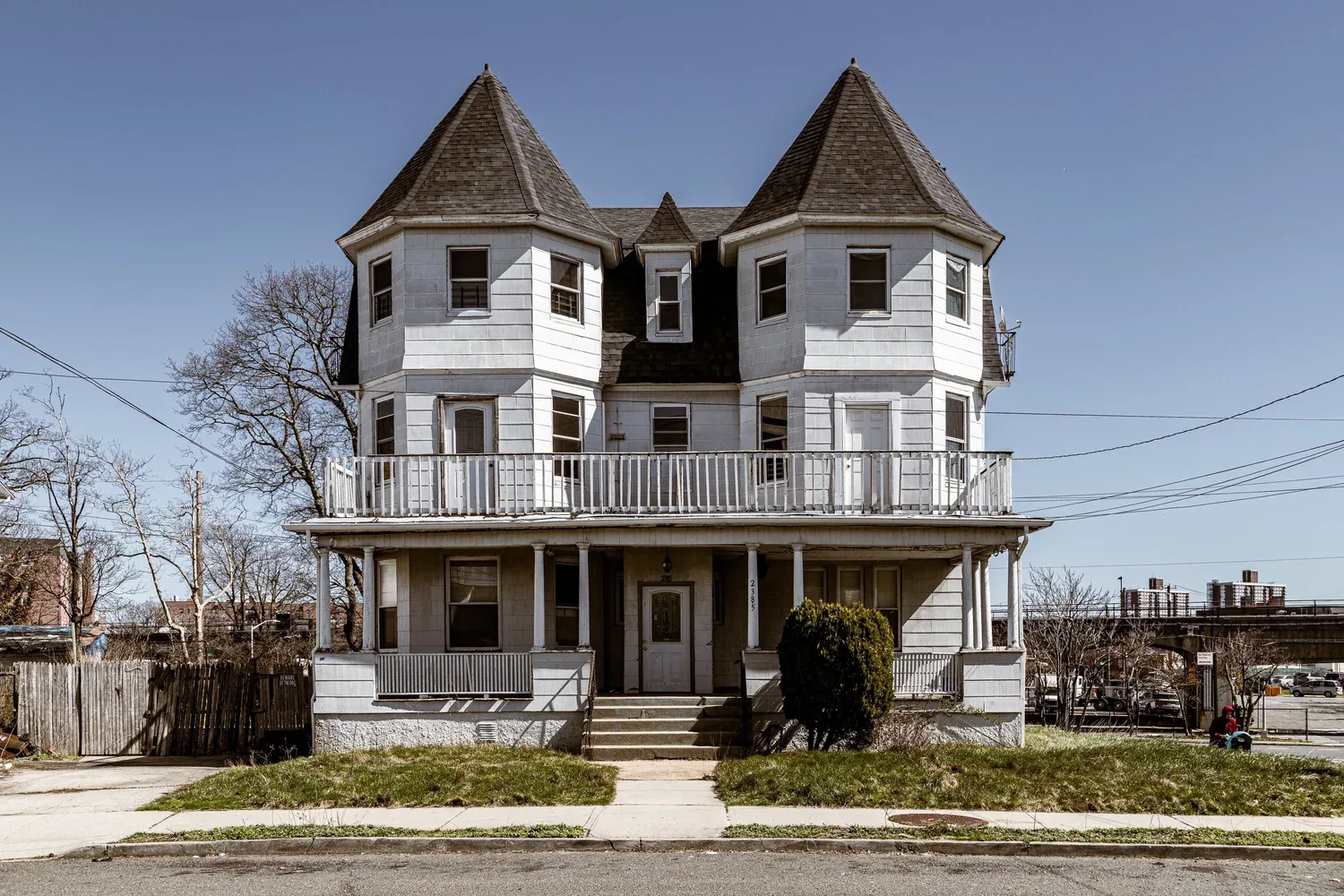
Far Rockaway
Commercial roof repair, coating and replacement in Far Rockaway, Queens, NY, for oceanfront-exposed mixed-use, retail and apartment buildings.
Ready to Talk About Storm Damage Roof Repair?
Tell us about the building and what you are seeing. We will schedule a roof walk and send photos and a written scope.