
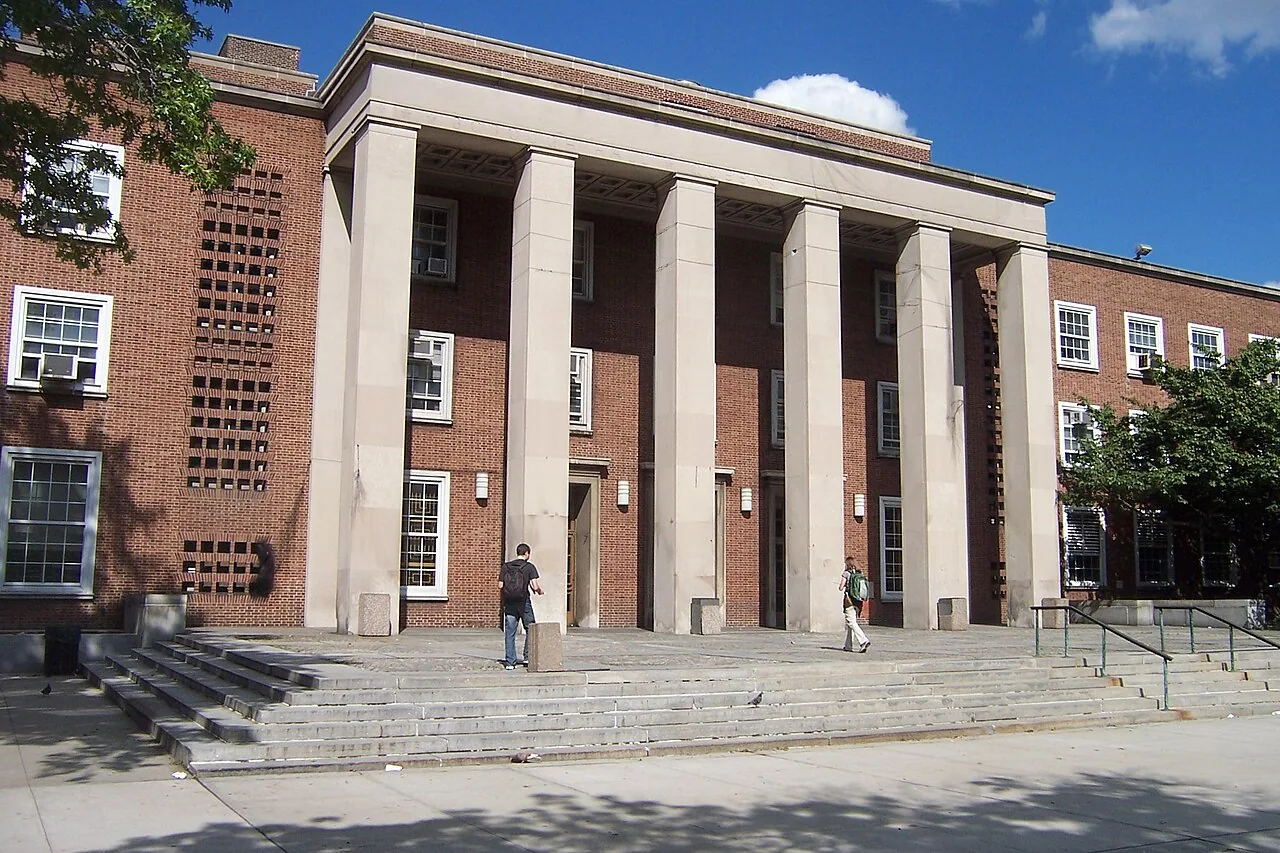
One ceiling tile that keeps getting replaced in the same corner, and a work order history showing the same repair three or four times, is how a public building's roof problem usually surfaces, and nobody on the staff can say what the roof is actually doing. The tile is the end of a trail. Above it sit wet insulation, an open seam or a flashing that has pulled loose, and each new tile resets the clock without touching the cause. Public buildings in Queens, NY receive the same commercial repair and replacement work, starting at that tile and tracing the way back to the roof one step at a time.
Alongside the repair, the agency needs a document it can use.
What does a public owner need from a roof visit?
Beyond a dry ceiling, a public owner needs three things from a roof visit: a record of what was found, a reasoned choice among options, and a scope that survives review. The record is a rating for each roof area, photographs tied to a numbered plan, and an inventory of drains and penetrations. The choice sets a repair, a recover and a replacement side by side with prices. The scope says what the work will include and how success will be checked.
Chapter 15 of the NYC Building Code covers roof assemblies and rooftop structures, and the Department of Buildings publishes the 2022 NYC Construction Codes, which lets a scope spell out the assembly expected and the details required. Findings are written so that an engineer or program manager can work from them with no repeat visit.
Alternates make review simpler. A recover priced next to a tear-off, and a coating priced next to both, lets the agency show why it chose one, and each assumption sits inside the price, so a change order is not a shock later.
What kinds of public roofs are there in Queens?
Queens Borough Hall and a county criminal court stand at the northern end of Kew Gardens on Queens Boulevard. In Jamaica, the Joseph P. Addabbo Federal Building is a 12-story masonry and steel office structure of about 932,000 square feet, built in 1989, and the large employers nearby include FAA regional offices, a Social Security Administration program center, Jamaica Hospital and Queens Hospital Center. The Bulova Corporate Center in East Elmhurst houses the headquarters of the New York City Department of Correction, which also keeps a training academy in the three-story Metro Mall in Middle Village.
Those are facts about the setting, not about the roof on any building. A courthouse may have a flat roof behind a parapet, a training facility may have a large low-slope deck, and a federal tower may have mechanical roofs on several levels. Each roof gets read, rated and listed on its own.
Rooftop equipment ties them together. Different contractors set the air handlers, exhaust, generators and antennas on public buildings over the years, and each one left a curb or a penetration behind. Each is numbered on the plan, each base flashing is checked, and abandoned ones are marked for removal and capping.
How do we confirm what is wrong before a bid goes out?
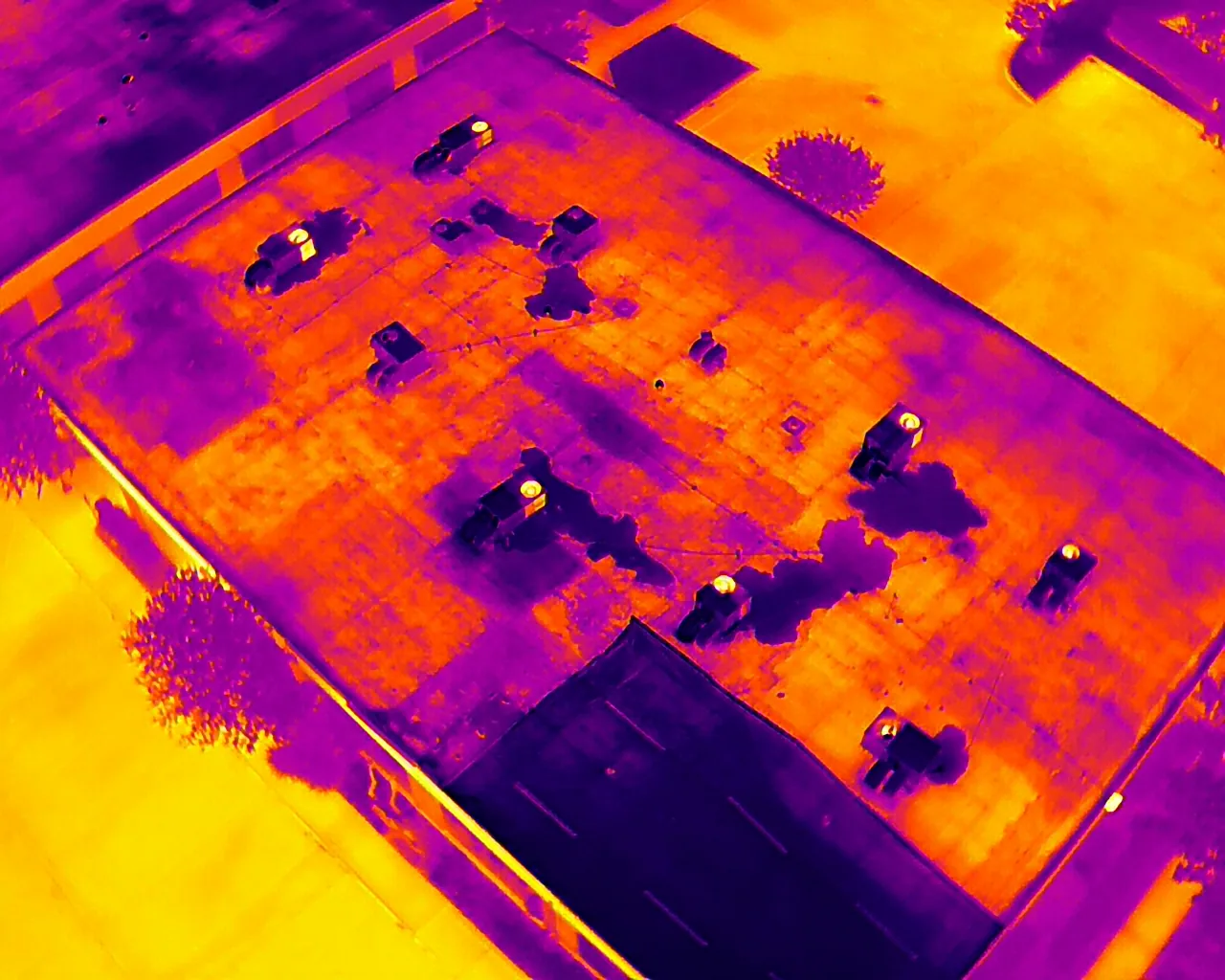
An infrared scan shows where insulation holds water. Probing seams and flashings turns up soft and open places, and cores show the number of layers over the deck and the state of the lower ones, dry or wet. What comes out is a map and a log that anyone can read before a bid goes out.
The map separates local repairs from system failures. A roof with dry insulation and a few failed flashings can be fixed now at modest cost, while one with saturated insulation across most of its area cannot, and the report says so with evidence. An infrared moisture survey costs little against a replacement ordered in the dark.
Heat gets its own line. Central Park's July afternoons average near 85 degrees, LaGuardia in Queens once recorded 107 F, and the heat island holds the warmth. A dark membrane over occupied offices raises cooling load and ages seams faster, so a reflective surface is worth pricing as an alternate wherever the roof is sound.
What does Queens weather do to public roofs?
Ida's remnants produced the first flash flood emergency in city history on September 1, 2021, and the deaths were counted mostly in Queens. In a cloudburst a drain that manages ordinary rain chokes, and on a big flat roof the water backs up against the parapet flashing. Snow brings weight and ice, with about 29.8 inches in an average year and 27.3 inches on January 23, 2016.
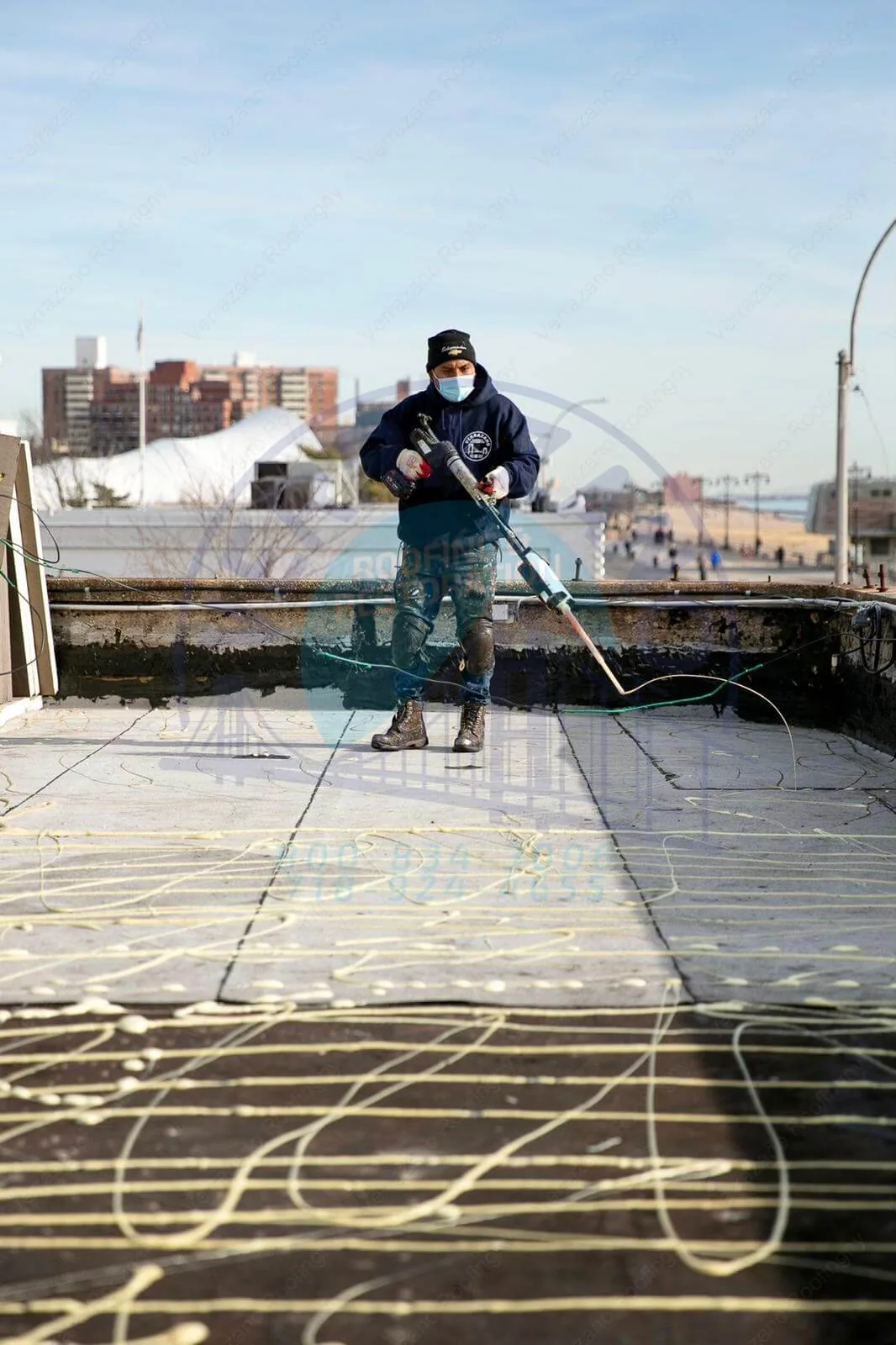
Neither a courthouse nor a municipal office can shut for a leak, which calls for drains that move water and a roof that stays closed. We check overflow paths, scupper sizes and the state of each outlet, and zone the work so offices keep running. Our approach to occupied building reroofing keeps public access routes clear.
What are the repair options and what do they cost to wait on?
Repair suits a dry roof with local failures. A recover suits a roof whose insulation is dry and whose deck is sound, since it adds a layer with no removal. Replacement suits a roof with wet insulation or a failed deck, and a restoration coating can stretch a sound membrane at lower cost. Every option is priced with its assumptions listed, such as dry insulation or a sound deck, and the test that confirms each.
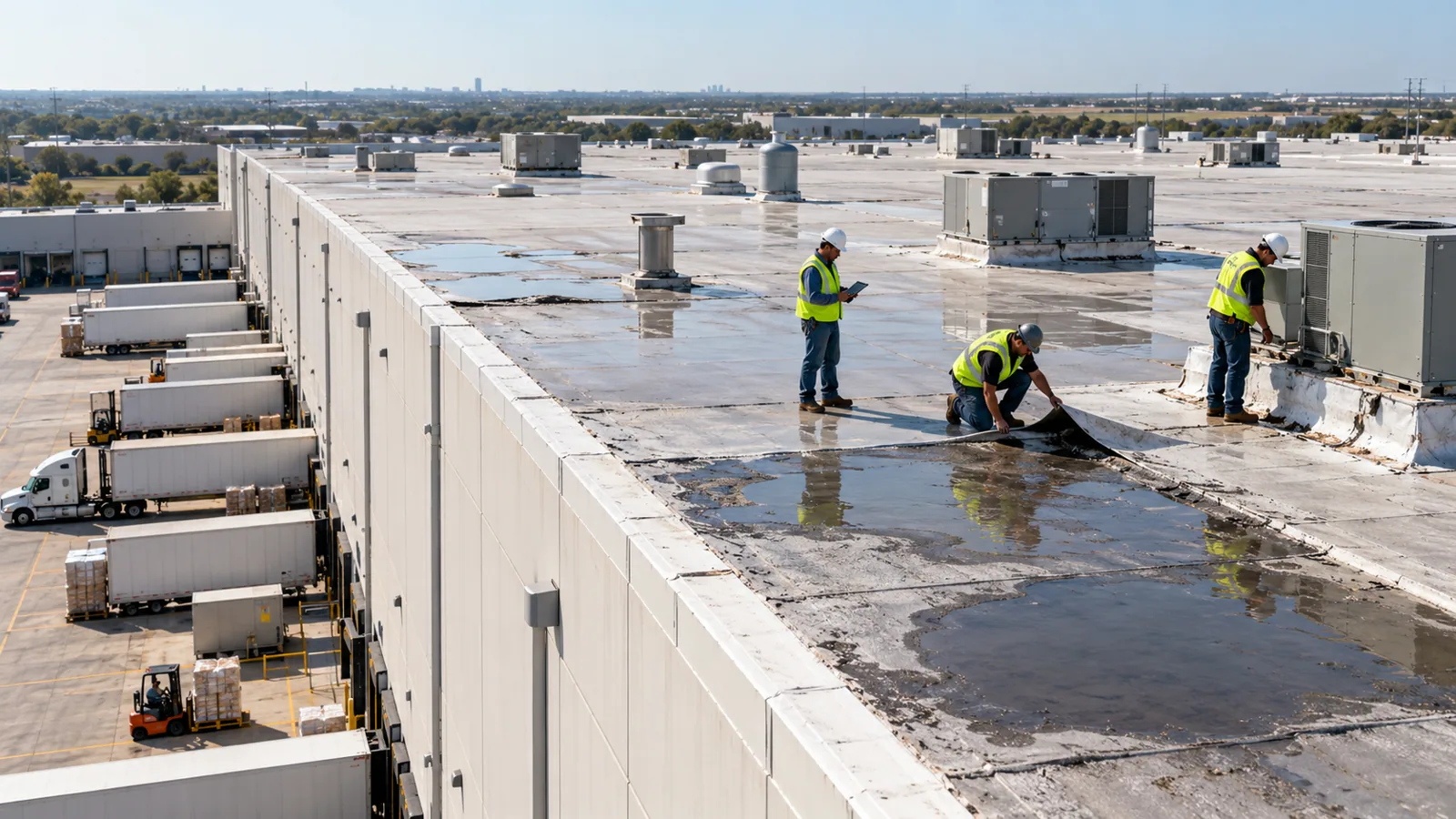
The cost of waiting grows. Wet insulation stays wet and adds weight, and each season of freeze-thaw opens seams, so an agency that holds off a year may turn a recover into a tear-off. A roof capital plan keeps the order of work visible, so a budget office can see the next three years.
Procurement sets the pace. Bid periods, notices and approvals take months, so a survey belongs months ahead of the fiscal year in which the money is meant to be spent. An emergency dry-in cannot wait for any of that, and it is documented so that it never becomes the permanent repair.
What is the next step?
The next step is a walk with the facilities lead and then a written report. Every flashing and drain is photographed, the roof plan and core log are handed over, and the open items are listed in order of urgency. Public records change hands, and a clean file lets the next manager find answers quickly. The same format fits a school board or a college facilities office, as in school roofing and college roofing, and offices near Jamaica or Kew Gardens can be rated on one scale.
Questions Owners Ask
What building owners and managers usually ask before a roof visit.
A rating for each roof area, photographs, a numbered plan, an inventory of drains and penetrations, and priced options with alternates. With those, an engineer can write a specification without another visit.
In most cases. Work moves zone by zone, doors and loading areas stay passable, every shift closes in dry, and the building manager picks the quiet hours. If the agency prefers, nights and weekends can carry the noisiest steps.
The temporary dry-in is photographed and dated, the report states what it covers and what it does not, and the permanent scope is listed in the same document. That keeps emergency work from standing in for the real repair.
The survey, the rating, the core log, the drain inventory, approvals and warranty terms. A short table of building, roof age, rating and next action keeps a whole portfolio readable.
Photos of the stain and the nearest drain, with the building address and the roof age if known. From those we can lay out for your office, in order, what the roof is doing.
Related Roofing Work
Other pages that connect to Government Building Roofing.
Infrared Roof Moisture Surveys
Infrared scans and core-cut moisture surveys for Queens, NY commercial roofs that locate wet insulation before the owner commits to repair or replacement.
Occupied Building Reroofing
Occupied building reroofing in Queens, NY: how a roof is replaced over working offices, shops, clinics and apartments without closing the doors below.
Roof Capital Planning
Roof capital planning in Queens, NY: budgets and replacement timing built from moisture data, condition ratings and building plans, so roof work is scheduled.
Ready to Talk About Government Building Roofing?
Tell us about the building and what you are seeing. We will schedule a roof walk and send photos and a written scope.